
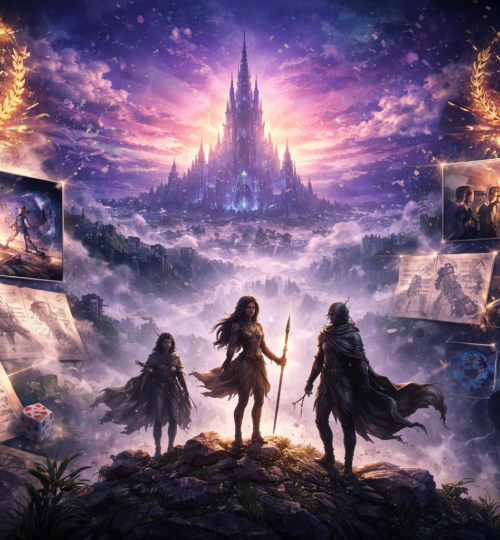

In a year crowded with blockbuster sequels, licensed franchises, and marketing juggernauts, few expected a mid-sized, original role-playing game to dominate the Game of the Year conversation. Yet by the end of the 2025 awards season, Clair Obscur: Expedition 33 had done exactly that. Its ascent from cult curiosity to industry darling became one of the most discussed stories in modern gaming, not just because it won, but because of what its victory represented.
This was not a win powered by brand recognition or massive advertising budgets. Instead, it was the culmination of creative risk-taking, cohesive artistic vision, and an audience hungry for something different. Expedition 33 did not simply compete with the giants of 2025. It quietly redefined what excellence looked like in an era often dominated by scale over soul.
A Landscape Dominated by Giants
The 2025 release calendar read like a greatest-hits playlist of gaming’s biggest names. Long-running franchises returned with technical polish and familiar mechanics refined to near perfection. Budgets climbed higher than ever, cinematic presentation rivaled film, and live-service roadmaps stretched years into the future. On paper, it seemed almost impossible for a new intellectual property to stand out, let alone win.
Players, however, were showing signs of fatigue. While the industry continued to push fidelity, many gamers felt something was missing: surprise. Familiarity bred comfort, but also predictability. By mid-year, conversations across forums, Discord servers, and social platforms began to shift. The question was no longer “Which big release will win?” but “Is anything truly new this year?”
Clair Obscur: Expedition 33 arrived precisely at that moment of collective restlessness.
An Unusual First Impression
From its first trailers, Expedition 33 stood apart. Its world was surreal and melancholic, inspired more by painterly impressionism than photorealism. Environments looked like living canvases, with color palettes that shifted emotionally rather than realistically. Characters moved through spaces that felt symbolic as much as physical, creating an immediate sense of mystery.
Early previews did not fully explain the premise, and that ambiguity became part of the intrigue. Rather than overwhelming audiences with lore dumps or cinematic exposition, the game invited curiosity. Players were not told what to think or feel. They were asked to explore and interpret.
This restraint proved powerful. Word of mouth spread rapidly, driven not by hype campaigns but by genuine fascination.
Storytelling That Trusted the Player
At the heart of Expedition 33 was its narrative, which avoided many of the genre’s common pitfalls. Instead of leaning on apocalyptic stakes or chosen-one tropes, the story focused on inevitability, time, and collective sacrifice. The expedition itself was not a heroic quest destined for victory. It was a ritual shaped by loss, memory, and acceptance.
The game’s writing treated players as thoughtful participants rather than passive consumers. Dialogue was sparse but deliberate. Themes were woven into gameplay mechanics instead of being confined to cutscenes. The result was a story that lingered long after the credits rolled, prompting discussion and interpretation rather than closure.
In an industry where narrative ambition is often measured by word count or cinematic length, Expedition 33 demonstrated that emotional impact comes from coherence and intent, not scale.
Reinventing Turn-Based Combat
One of the game’s biggest risks was its combat system. Turn-based RPGs have experienced periodic revivals, but they are often considered niche in a market dominated by action-heavy experiences. Expedition 33 embraced turn-based mechanics while modernizing their pacing and presentation.
Combat blended strategy with rhythm-based timing elements, keeping players mentally and physically engaged. Encounters felt tense and expressive, not routine. Visual feedback reinforced emotional stakes, making battles feel like extensions of the story rather than mechanical interruptions.
Critically, the system respected player intelligence. There was depth for those who sought optimization, but accessibility for those who preferred intuition. This balance widened the game’s appeal without diluting its identity.
Artistic Cohesion Over Technical Excess
While many 2025 releases pushed hardware limits, Expedition 33 focused on cohesion rather than spectacle. Its art direction, sound design, music, and interface all served a unified emotional goal. Nothing felt accidental or purely decorative.
The soundtrack became a standout element, blending orchestral themes with subtle experimental textures. Music responded dynamically to player choices and environmental shifts, reinforcing immersion without demanding attention. Silence was used just as intentionally as sound, allowing moments of reflection rarely seen in modern design.
This commitment to cohesion impressed critics and players alike. The game did not need cutting-edge technology to feel next-generation. It felt timeless.
The Power of Community Discovery
Another key factor in the game’s success was how it spread. Expedition 33 did not rely on aggressive monetization or influencer saturation. Instead, it grew through organic discovery. Players shared screenshots, theories, and emotional reactions, often without spoilers, encouraging others to experience the journey firsthand.
Discussion threads focused less on optimization or meta and more on meaning. What did certain symbols represent? Why did specific mechanics change over time? These conversations turned the game into a shared cultural experience rather than a disposable product.
In many ways, the community became part of the storytelling process, extending the game’s life well beyond its initial release window.
Critical Reception and Awards Momentum
By the time awards season arrived, Clair Obscur: Expedition 33 had built an undeniable case. Critics praised its originality, emotional resonance, and mechanical confidence. Importantly, praise was consistent across outlets with very different priorities, from narrative-focused reviewers to systems-oriented analysts.
As nominations rolled in, the game began appearing alongside far larger productions. At first, its inclusion felt symbolic. Then it started winning category after category: art direction, narrative design, music. Momentum built steadily, shifting expectations.
When Expedition 33 ultimately secured top honors at major ceremonies such as The Game Awards, the reaction was less shock than validation. The industry had recognized something many players already felt.
What the Win Represented
The Game of the Year win was about more than one title. It symbolized a recalibration of values within the industry. Expedition 33 proved that originality could compete with scale, that emotional honesty could rival spectacle, and that players were eager to reward creative risk.
For developers, the message was clear: ambition does not always mean bigger. Sometimes it means more focused, more personal, and more willing to trust the audience. For publishers, it challenged assumptions about what kinds of projects deserve support and visibility.
Perhaps most importantly, for players, it reaffirmed why games matter as an art form.
A Lasting Legacy
Whether Clair Obscur: Expedition 33 inspires direct imitators remains to be seen. What is certain is that its influence will be felt. It has already become a reference point in discussions about narrative design, turn-based mechanics, and artistic cohesion.
Years from now, when people look back on 2025, they may not remember every technical achievement or franchise milestone. But they will remember the year an underdog reminded the industry that innovation does not require permission, only conviction.
In winning Game of the Year, Expedition 33 did more than claim a trophy. It changed the conversation.