
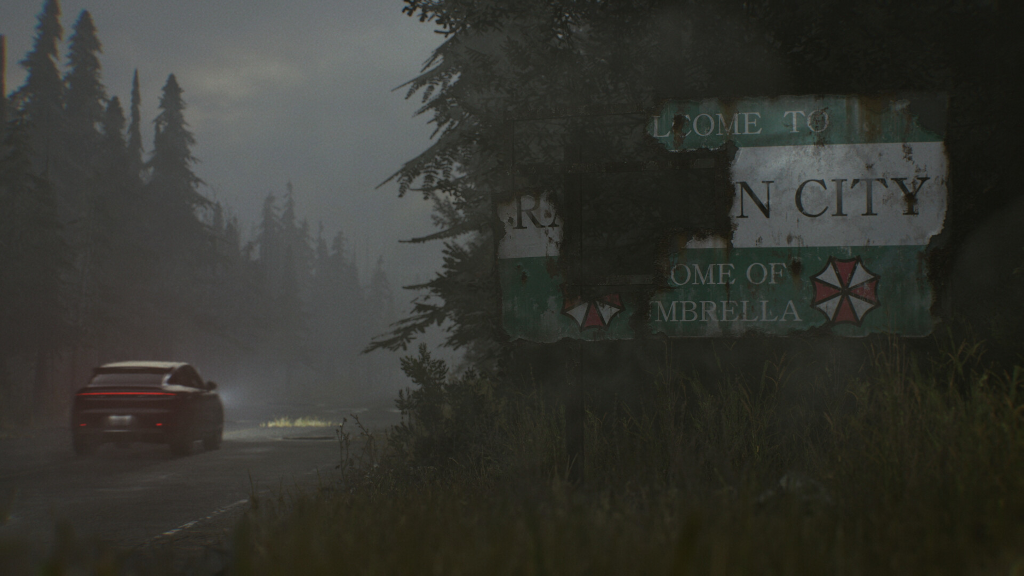
For more than two decades, the Resident Evil franchise has existed in a rare space where horror, action, and atmosphere collide in a way few series have managed to replicate. It has reinvented itself multiple times, stumbled, recovered, and in recent years, surged back into relevance through carefully crafted remakes. Now, with Resident Evil Requiem looming on the horizon, the spotlight once again turns to the ruined streets, abandoned police halls, and biological nightmares of Raccoon City.
While Capcom has not officially revealed every detail, a growing body of credible leaks, developer hints, and industry patterns paint a fairly clear picture of what Resident Evil Requiem is aiming to be. More importantly, they explain why February has quietly become one of the most anticipated months for survival horror fans in years.
This is not just another remake. It represents a philosophical return to the series’ roots, a technical showcase for modern hardware, and a chance to reconnect players with a location that helped define an entire genre.
Why Raccoon City Still Matters
Raccoon City is more than a setting. It is the emotional and narrative core of the Resident Evil universe. It is where the franchise cemented its identity through claustrophobic exploration, limited resources, and the creeping realization that something far worse than zombies was lurking behind every locked door.
From the Spencer Mansion outskirts to the Raccoon City Police Department and the city streets themselves, this fictional Midwestern city created a sense of continuity rarely seen in horror games. Players did not just survive encounters. They learned the layout, memorized escape routes, and internalized the geography as if it were a real place.
Modern remakes have already revisited parts of this city, but Resident Evil Requiem is widely believed to aim for something broader. Instead of focusing on a single character’s escape or a narrow slice of events, it appears positioned to recontextualize Raccoon City as a living, collapsing ecosystem. The emphasis seems to be on the city itself as the main antagonist, with Umbrella’s failures unfolding across multiple locations in parallel.
What Resident Evil Requiem Is Reportedly Remaking
While Capcom has remained careful with official messaging, multiple industry insiders suggest that Resident Evil Requiem is not a simple one to one remake of a single classic entry. Instead, it is expected to function as a unified retelling of the Raccoon City outbreak era.
This means drawing narrative threads, environments, and characters from multiple classic titles and weaving them into a cohesive experience built from the ground up. The goal appears to be clarity and immersion rather than strict historical accuracy.
Players can likely expect familiar landmarks, reimagined routes through the city, and story moments that overlap or converge in new ways. This approach allows long time fans to experience something genuinely fresh while preserving the emotional beats that made the originals memorable.
It also aligns with Capcom’s recent remake philosophy, which prioritizes reinterpretation over rigid preservation.
Gameplay Direction and Design Philosophy
If recent Resident Evil remakes are any indication, Requiem will lean heavily into tension driven gameplay rather than nonstop action. That means limited ammunition, meaningful inventory decisions, and enemies that are designed to intimidate rather than simply overwhelm.
The modern third person camera is expected to return, building on the successful systems introduced in recent entries. Environmental storytelling will likely play a central role, with audio cues, lighting, and environmental decay communicating danger long before enemies appear on screen.
Enemy placement is expected to be more dynamic than in older titles. Instead of fixed encounters, modern AI systems allow threats to patrol, respond to sound, and pressure players into making mistakes. This reinforces the feeling that Raccoon City is actively hunting you rather than passively waiting to be cleared.
Visual and Technical Expectations
Built for current generation hardware, Resident Evil Requiem is expected to leverage Capcom’s RE Engine to its fullest extent. This means realistic lighting, dense environmental detail, and facial animations capable of carrying emotional weight without excessive dialogue.
Raccoon City itself is likely to be more interconnected than ever before. Loading screens between areas should be minimal, allowing for seamless transitions that reinforce immersion. Weather effects, smoke, fire, and environmental destruction are all expected to play a role in selling the scale of the outbreak.
Sound design will also be critical. The series has increasingly relied on subtle audio cues to build tension, and a city wide outbreak offers endless opportunities for distant screams, collapsing structures, and unseen threats echoing through alleyways and corridors.
Story Themes and Tone
Rather than focusing purely on survival, Requiem appears poised to explore the collapse of systems. Law enforcement, medical infrastructure, corporate oversight, and civic order all fail in rapid succession during the outbreak. The horror is not just biological. It is institutional.
This thematic focus resonates strongly with modern audiences. It grounds the horror in recognizable failures and human decisions rather than abstract evil. Umbrella’s role is not simply that of a villainous corporation but a symbol of unchecked ambition and negligence.
Character stories are expected to be more intimate and grounded. Instead of exaggerated heroics, the narrative emphasis will likely be on ordinary people navigating extraordinary circumstances. This aligns with the tone of recent remakes, which have shifted away from camp and toward emotional realism.
Why February Is the Perfect Release Window
February has quietly become a strategic release window for games that want attention without competing directly with massive holiday launches. For horror titles in particular, the quieter release schedule allows atmosphere and word of mouth to drive momentum.
A February release also gives Resident Evil Requiem room to dominate conversation. With fewer blockbuster distractions, players and content creators alike are more likely to engage deeply with the game, dissect its details, and share discoveries.
From a franchise perspective, it also positions Requiem as a tone setter for the year. Instead of being lost in a crowded fall lineup, it becomes the first major statement of what modern survival horror can be in the coming generation.
Community Expectations and Speculation
The anticipation surrounding Resident Evil Requiem is not just driven by nostalgia. It is fueled by trust. Capcom has earned credibility through its recent handling of the franchise, demonstrating a willingness to respect source material while embracing innovation.
Fans are actively speculating about playable characters, interconnected storylines, and potential surprises hidden within the city. There is also strong interest in post launch support, including challenge modes, alternate scenarios, and expanded lore content.
Community hubs, forums, and Discord servers are already buzzing with theory crafting and wish lists. This kind of organic engagement is a strong indicator that Requiem is tapping into something deeper than surface level hype.
The Bigger Picture for Survival Horror
If Resident Evil Requiem delivers on its promise, it could further cement the remake as a legitimate creative format rather than a fallback strategy. By reimagining Raccoon City as a unified narrative experience, Capcom has an opportunity to set a new standard for how legacy franchises evolve.
It also reinforces the idea that survival horror does not need to abandon its roots to remain relevant. Tension, atmosphere, and vulnerability still resonate when executed with care and modern technology.
For players who missed the original era, Requiem offers an accessible entry point. For veterans, it provides a chance to revisit familiar nightmares through a sharper, more emotionally grounded lens.
Final Thoughts
Resident Evil Requiem is shaping up to be more than a nostalgic return trip. It is a statement about the enduring power of place, atmosphere, and carefully paced horror. By centering its experience on Raccoon City as a living, failing environment, it taps into the core of what made the franchise iconic in the first place.
February’s most wanted remake is not just about revisiting the past. It is about proving that survival horror still has something vital to say in the present. If the pieces fall into place, Raccoon City may once again become the benchmark by which all horror settings are judged.