
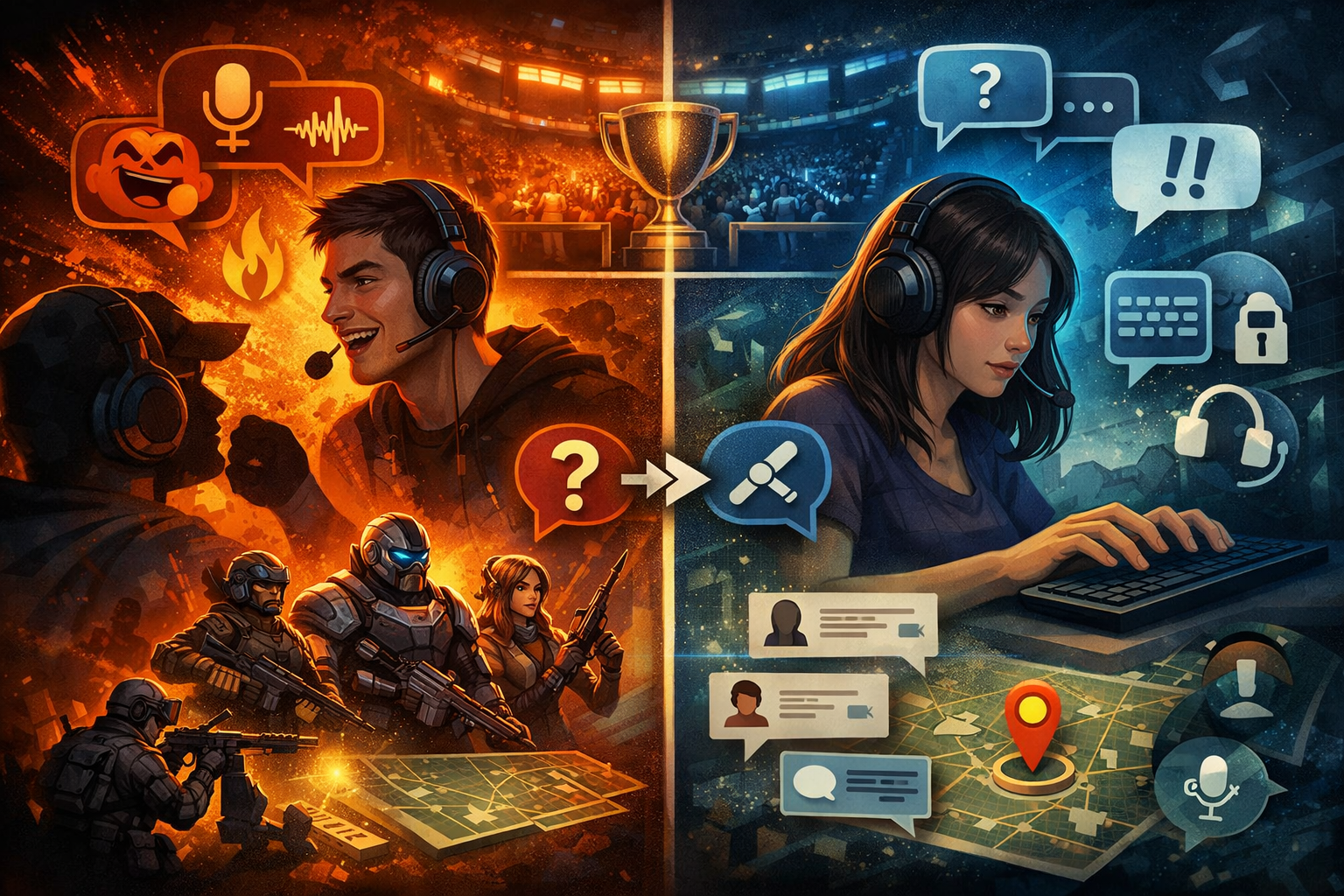
Communication has always been one of the most powerful tools in gaming. From shouting directions across a couch during split screen matches to coordinating strategies with teammates across the world, how players communicate can define not just the outcome of a match, but the entire experience surrounding it. Today, most multiplayer games offer two primary ways to communicate: voice chat and text chat. Each comes with strengths, weaknesses, and social implications that directly shape gameplay, teamwork, and community culture.
As online gaming continues to evolve, understanding how these communication styles influence player behavior, performance, and inclusivity has become more important than ever.
The Role of Communication in Competitive and Cooperative Play
Multiplayer games rely on shared information. Whether it is calling out enemy positions, coordinating abilities, or simply signaling intent, communication reduces uncertainty. The clearer and faster that information travels, the more effectively a team can act.
In cooperative games, communication often determines whether players feel connected or isolated. In competitive environments, it can be the difference between a coordinated victory and a chaotic defeat. The format of that communication matters because it affects speed, tone, accessibility, and emotional impact.
Voice chat and text chat solve the same problem in very different ways.
Voice Chat: Speed, Clarity, and Immersion
Voice chat is often seen as the most direct form of communication in online games. Speaking is faster than typing, especially during high intensity moments where every second matters.
Advantages of Voice Chat
Real time coordination – Voice chat allows instant communication. Players can react to unfolding events without diverting their attention away from the game. This is especially valuable in fast paced genres like shooters, MOBAs, and battle royale games where situations change by the second.
Tone and emotional context – Unlike text, voice carries tone, urgency, and emotion. A calm callout can reassure teammates, while a raised voice can signal danger or urgency. This added layer of meaning helps players interpret intent more accurately.
Stronger social bonds – Hearing another person’s voice creates a stronger sense of presence. Voice chat often leads to friendships, recurring teams, and long term communities because it feels more personal and human than lines of text on a screen.
Lower cognitive load in action heavy games – Typing requires attention and hand movement. Voice chat allows players to keep their hands on controls and their eyes on the game, reducing distractions during critical moments.
Limitations of Voice Chat
Noise and audio clutter – Poor microphones, background noise, echo, and overlapping voices can make voice chat difficult to understand. In larger groups, too many people speaking at once can overwhelm useful information.
Social pressure and anxiety – Not all players feel comfortable speaking. Some avoid voice chat due to shyness, anxiety, language barriers, or fear of harassment. This can lead to players opting out of a communication channel that might otherwise benefit their team.
Toxicity amplification – Harassment can feel more personal when delivered through voice. Insults, yelling, and discriminatory language often carry more emotional weight when heard rather than read. This has led many players to mute voice chat entirely in public matches.
Accessibility challenges – Players with hearing impairments or speech difficulties may find voice chat unusable without robust accessibility features such as speech to text or alternative communication tools.
Text Chat: Control, Permanence, and Inclusivity
Text chat remains a core feature of online gaming, even in titles that heavily promote voice communication. Its slower pace and different social dynamics offer advantages that voice chat cannot replicate.
Advantages of Text Chat
Deliberate communication – Text allows players to think before responding. This can reduce impulsive reactions and misunderstandings. In strategy based games or slower paced multiplayer experiences, this deliberation can be beneficial.
Persistent information – Messages remain visible for a period of time. Instructions, plans, or warnings can be reread, reducing the chance that critical information is missed in the heat of the moment.
Lower barrier to entry – Text chat does not require a microphone, quiet environment, or speaking confidence. Players who are uncomfortable with voice chat can still participate and contribute meaningfully.
Greater moderation potential – Text is easier to log, filter, and moderate. Automated systems can flag abusive language more reliably, and players can review chat logs when reporting misconduct.
Accessibility benefits – For players with hearing impairments, text chat can be more accessible than voice, especially when paired with customizable font sizes and contrast options.
Limitations of Text Chat
Slower response time – Typing takes longer than speaking. In fast paced games, this delay can render text communication ineffective during critical moments.
Divided attention – Reading and typing pulls focus away from gameplay. This can lead to missed cues, delayed reactions, or mistakes caused by momentary distraction.
Loss of tone – Text lacks vocal nuance. Messages can be misinterpreted as hostile or sarcastic even when that was not the intent. This ambiguity can lead to unnecessary conflict.
Language and typing skill dependency – Players who type slowly or are not fluent in the game’s dominant language may struggle to communicate efficiently through text.
How Communication Style Shapes Gameplay Outcomes
The choice between voice and text does not just affect convenience. It actively shapes how games are played.
Tactical Decision Making
Voice chat favors rapid tactical adjustments. Teams can adapt on the fly, call out threats, and coordinate complex maneuvers. Text chat favors pre planning, structured strategies, and deliberate execution.
Games designed around split second decisions often lean heavily on voice communication, while turn based or slower paced games can thrive on text alone.
Team Hierarchies and Leadership
Voice chat often encourages informal leadership. Confident speakers naturally take charge, issuing calls and organizing teammates. This can improve coordination but may also silence quieter players.
Text chat distributes influence more evenly. Written plans give everyone equal opportunity to contribute ideas, though they may lack the immediacy of spoken leadership.
Player Behavior and Sportsmanship
The social friction of speaking can humanize teammates, reducing dehumanization and promoting empathy. However, it can also intensify emotional outbursts.
Text chat creates distance. This can lower emotional stakes, but it can also make it easier for players to behave poorly without immediate social consequences.
Inclusivity and Community Health
Communities that rely exclusively on voice chat may unintentionally exclude players who cannot or prefer not to speak. Text based communication provides an alternative path for participation, helping communities remain diverse and welcoming.
Hybrid Approaches: The Best of Both Worlds
Many modern games recognize that no single communication method fits all players or situations. As a result, hybrid systems are becoming more common.
Ping systems allow players to communicate key information without typing or speaking. These systems bridge gaps for players who mute voice or avoid text.
Speech to text and text to speech tools improve accessibility and allow players to choose how they send and receive information.
Context sensitive quick messages provide predefined callouts that reduce typing time while preserving clarity.
Customizable communication settings empower players to decide what works best for them without penalizing their effectiveness.
When implemented thoughtfully, these tools reduce friction and create a more flexible communication environment.
Choosing the Right Tool for the Right Game
There is no universal answer to whether voice chat or text chat is better. The ideal choice depends on several factors:
- Game pace and genre
- Team size and structure
- Player comfort and accessibility needs
- Competitive stakes versus casual play
- Community norms and moderation quality
Successful gaming communities often encourage multiple communication options rather than enforcing a single standard.
Looking Ahead: Communication as a Design Choice
As online games continue to emphasize social interaction, communication systems are no longer just utility features. They are design choices that shape player culture, inclusivity, and long term engagement.
Developers who invest in flexible, accessible communication tools empower players to collaborate on their own terms. Communities that respect those choices tend to last longer and feel healthier.
Whether through voice, text, or a combination of both, communication remains the backbone of multiplayer gaming. How players choose to connect will continue to define not just how games are played, but how communities grow around them.
In the end, the strongest teams are not always the loudest or the fastest typers. They are the ones that communicate clearly, respectfully, and in a way that allows every player to participate.