
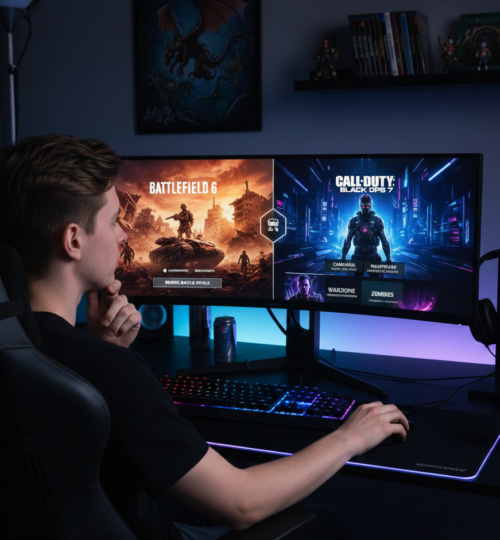
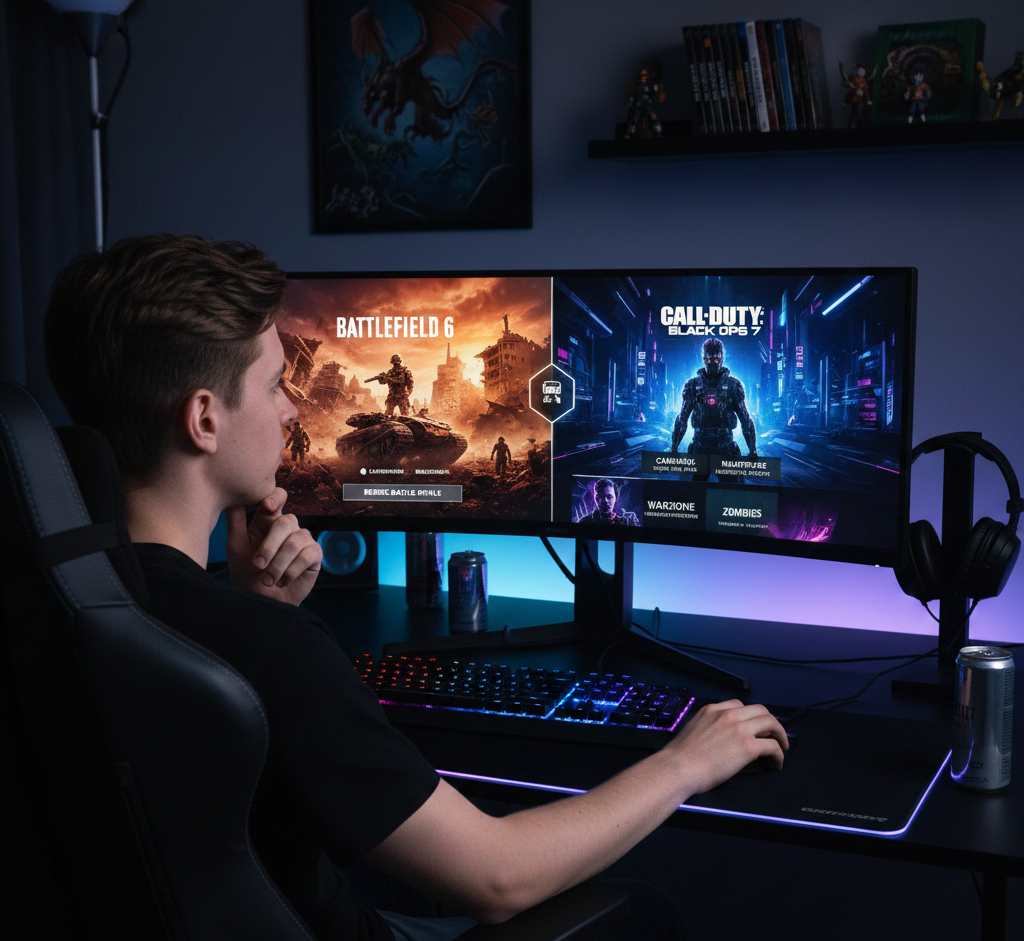
The dust has finally settled on the most chaotic holiday shopping season the first person shooter genre has seen in years. For the first time in a decade, the rivalry between Battlefield and Call of Duty felt like a heavyweight title fight rather than a foregone conclusion. While our community here has spent the last few months diving into the technical nuances of these two titans, the industry data for the final quarter of 2025 has arrived to tell the story of the ledger.
It was a year defined by a return to roots for one franchise and a gamble on the future for the other. As we look back from the vantage point of early 2026, the winner of the sales crown depends entirely on whether you are looking at raw unit volume or the momentum of a community.
The Return of a Giant
Battlefield 6 arrived on October 10, 2025, with a weight of expectation that would have crushed a lesser development team. Following the divisive nature of previous entries, EA and the newly formed Battlefield Studios promised a return to the grounded, squad focused gameplay that made the franchise a household name during the 2005 to 2015 era.
The strategy worked. Battlefield 6 launched to staggering numbers, moving over seven million units in its first three days alone. By early November, reports from market analysts like Circana confirmed that Battlefield 6 had claimed the top spot as the best selling game of 2025 in the United States. This was a historic milestone for the franchise, marking the first time it truly unseated the Call of Duty juggernaut in the year to date charts before the holiday rush.
The appeal was rooted in nostalgia paired with modern tech. The Kinesthetic Combat System provided a tactile feel to movement that resonated with veterans, while the return of a robust class system provided the tactical depth that had been missing. Maps like Mirak Valley became instant classics, offering the “all out warfare” scale that fans had been craving. For many of us who grew up on the leaderboards of the mid 2000s, this felt like the Battlefield we remembered, modernized for a new generation.
The Call of Duty Pivot
Call of Duty: Black Ops 7 faced a different set of challenges when it launched on November 14, 2025. Developed by Treyarch and Raven Software, this installment took the series into a dystopian 2035 setting. It introduced the Omnimovement system, a high speed mechanic that allowed for wall running and fluid jumping, pushing the game further into the “twitch shooter” category.
While Black Ops 7 was the best selling game of November, the broader sales data told a more complex story. In the United States and Europe, full game dollar sales saw a double digit percentage decline compared to 2024’s Black Ops 6. However, looking at raw sales is misleading in the modern era of gaming. For the first time, a main series Black Ops title launched day one on subscription services like Xbox Game Pass.
This shift in distribution fundamentally changed how we measure “success.” While physical and digital storefront sales were down significantly (some reports suggested a 60% drop in physical copies), the player count remained massive. Activision reported that Black Ops 7 was the “biggest Black Ops ever” in terms of total engagement. The question for the industry was no longer just about how many people bought the box, but how many people were staying in the ecosystem.
Breaking Down the Holiday Numbers
When we look at the holiday window specifically (November through December), the competition became a three way fight. In a surprise twist, the extraction shooter ARC Raiders emerged as a major disruptor, siphoning off a significant portion of the audience that typically splits between the big two.
Despite the surge of new competitors, Battlefield 6 held its lead for total units sold in 2025. EA’s decision to focus on a premium, standalone experience without a day one subscription offering meant that every player was a verified sale. By the end of December, Battlefield 6 remained the revenue king for the year.
Black Ops 7, meanwhile, dominated the “active user” charts. The addition of the massive round based Zombies map and the integration with Warzone kept the servers humming throughout the winter break. However, the game faced a “Mostly Negative” reception on platforms like Steam at launch, with users citing a 161 GB install size and a reliance on generative AI for some assets as points of contention.
Performance and Community Reception
The technical divide between these two games has been a major talking point on our Discord. Battlefield 6 utilized an upgraded Frostbite Engine to deliver destruction that felt more meaningful than anything we have seen since the Bad Company days. The ability to level structures to create new flanking routes changed the flow of Conquest matches entirely.
Call of Duty focused its technical prowess on the “Endgame” mode, a co-op PVE experience that served as the finale to its hallucinogenic campaign. While the campaign was praised for its bold, psychological thriller narrative, the multiplayer maps faced criticism for being too focused on the new movement mechanics, sometimes at the expense of traditional lane design.
By the time the January sales reports were finalized, the narrative was clear. Battlefield 6 won the “sales crown” by sticking to a traditional, high quality premium model that lured back a lapsed audience. Call of Duty: Black Ops 7 won the “engagement crown” by leveraging the power of subscription services to reach the widest possible audience, even if it meant sacrificing traditional sales figures.
The Impact On the Competitive Landscape
For those of us interested in the competitive side of gaming, 2025 was a year of transition. The revival of Battlefield has reignited interest in squad based competitive play. We are seeing a resurgence of community run tournaments and tactical leagues that rely on the deep class mechanics of Battlefield 6.
Call of Duty continues to dominate the high speed, reflex based esports scene, but the fragmented nature of its player base between those who own the game and those who play via subscription has created a unique challenge for tournament organizers. The “Omnimovement” system has raised the skill ceiling, making professional matches a spectacle of high speed maneuvers that are as much about movement as they are about aim.
Looking Ahead to 2026
As we move further into 2026, both franchises are entering their “live service” phases. Battlefield 6 has already launched its Season 1, “Rogue Ops,” which introduced the RedSec battle royale mode. This free to play expansion is EA’s attempt to capture the long term engagement that Call of Duty has enjoyed for years.
Black Ops 7 is leaning heavily into its winter refreshes for Warzone and its legendary Zombies mode. The goal for Activision is to prove that the subscription model can provide sustained revenue through battle passes and in game purchases that outweigh the initial dip in “box” sales.
For the average gamer, the “winner” of 2025 comes down to personal taste. If you wanted a return to large scale, destructive, tactical warfare, Battlefield 6 was the undisputed champion. If you wanted a fast paced, experimental, and highly accessible shooter with a trippy campaign, Black Ops 7 delivered.
Final Thoughts
Watching these two giants clash in 2025 reminded me of why we started this site back in 2005. There is something special about the energy of a community when the “big games” are actually competing for our time and attention. Whether you are climbing the ranks in a Battlefield squad or grinding camos in a Black Ops lobby, the shooter genre is currently in a healthier place than it has been in a long time.
We are currently working on restoring our legacy leaderboards for these franchises, and as we look at the data from the 2025 holiday season, it is clear that there is a massive hunger for competitive tracking and community community organized play. The sales numbers are just the beginning. The real story will be told by the communities that form around these games in the months to come.
I would love to hear from you in our Discord. Did you pick up both titles during the holiday sales? Which one are you still playing as we head into February? The 2025 sales crown might belong to Battlefield 6, but the battle for 2026 is only just starting.