Game: Team Fortess 2
Rankings: GWL Legacy Leaderboard for Team Fortress 2
GWL Game Review: Team Fortress 2: The Class Shooter That Refused to Age
Steam: Team Fortress 2
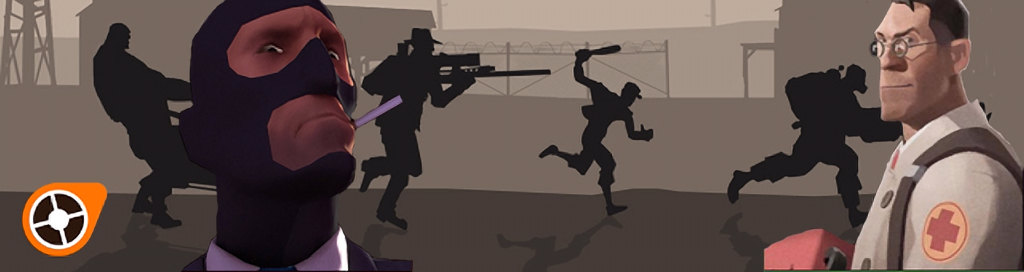
 Team Fortress 2 launched in 2007 with a style that immediately set it apart. Bold, animated visuals. Distinct character silhouettes. Nine classes, each with clearly defined roles. It was colorful, accessible, and chaotic on the surface but underneath, it was one of the most mechanically demanding team shooters of its era.
Unlike traditional arena or military shooters, TF2 was built around class synergy. Scouts created pressure. Soldiers controlled space with rocket splash damage. Medics dictated tempo through ÜberCharge timing. Demomen locked down choke points. Team composition and coordination mattered just as much as aim.
By 2009, the competitive TF2 scene had already carved out its identity. The most widely accepted format was 6v6 Standard, emphasizing mobility-heavy class combinations that were typically Scouts, Soldiers, Demoman, and Medic. Highlander (9v9, one of each class) also existed elsewhere, but 6v6 remained the competitive backbone.
1v1 formats were less common in official circuits but popular in skill-testing environments, especially Soldier duels, where rocket jumping, airshots, and splash control became a pure mechanical showcase.
We opened TF2 competition on August 8, 2009. Over the life of the ladders, we recorded 45 matches across two primary ladders, 1v1 – Soldier and the 6v6 – Standard. We also hosted a 1v1 – Soldier Tournament. In all, the team ladder attracted 10 teams and the player ladder saw 17 individual competitors. That’s not insignificant.
Initial interest was strong. TF2 had a dedicated following from it’s original Team Fortress, and its reputation as a competitive class-based shooter made it feel like a natural fit for our league. The 6v6 format aligned with established competitive standards elsewhere. The Soldier 1v1 ladder carved out a niche that emphasized individual mastery within the class system.
For a period, activity was steady. But by June 22, 2010, momentum had clearly slowed. While we kept the ladders open for a couple more months, new matches became sparse. Teams became less active. Scheduling gaps widened.
 Why? TF2’s competitive ecosystem was highly centralized during that era. Established leagues and community hubs already had deeply rooted team structures, scrim cultures, and tournament circuits. Competitive TF2 wasn’t fragmented. It was organized. That organization made it harder for new platforms to capture sustained slices of the scene.
Did we capture a meaningful slice of it? Yes, but a modest one. Forty-five matches, ten teams, and seventeen individual competitors shows that we weren’t an empty experiment. We had real engagement. We successfully ran a tournament. We provided a legitimate outlet for players who chose to compete within our structure.
But we didn’t become a primary competitive home for TF2. The gravitational pull of established competitive hubs remained strong. Teams often preferred to anchor themselves where the broader competitive visibility already existed. Still, the activity we did have was well received.
Matches were structured. Competition was real. The Soldier duels were legitimate displays of mechanical skill and the 6v6 ladder reflected authentic competitive standards.
Team Fortress 2 didn’t become one of our dominant chapters, but it wasn’t a footnote either. It represents a middle ground. A game where we successfully hosted structured competition, ran a tournament, and built teams, even if long-term growth plateaued.
Forty-five matches matter. Seventeen players matter. Ten teams matter.
We may not have owned a large share of the TF2 competitive landscape but we carved out a respectable corner of it.
And like every game we supported, that corner is part of our history.
