Game: Unreal Tournament ’99
Rankings: GWL Legacy Leaderboard for Unreal Tournament ’99
Old Unreal: Unreal Tournament ’99
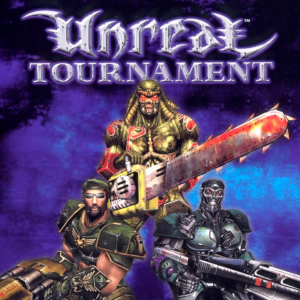
 Unreal Tournament, often referred to simply as UT ‘99, is one of the foundational pillars of arena shooter competition. Released at the height of the late-90s PC FPS boom, it stood shoulder to shoulder with Quake in defining what pure, skill-based multiplayer looked like. There were no loadouts, no progression systems, no unlock trees, just weapon spawns, armor control, map timing, and raw mechanical precision.
Maps like Facing Worlds became cultural landmarks. 1v1 Deathmatch was the purest proving ground: controlling shock rifle angles, timing armor pickups, predicting opponent movement, and maintaining positional dominance. Competitive UT ‘99 demanded awareness of spawn cycles and a constant mental map of resource control. It wasn’t flashy. It was disciplined.
For years, UT ‘99 thrived in LAN tournaments and online leagues. It built a reputation for mechanical purity and high skill ceilings. Many of the players who later moved into other shooters carried that arena foundation with them.
When we introduced Unreal Tournament ‘99 to our league, it wasn’t because we lacked arena representation, we already had a UT2004 community actively competing. It was because the game still had competitive relevance elsewhere, and there was interest expressed in giving it a place within our structure.
So we did what we’ve always done. We opened the door. In the end, we recorded one match of 1v1 – Deathmatch (Weapons) with Players: illicit vs. RoadKillGrill
One match may seem symbolic, but it represents something larger than the number itself. It reflects our willingness to support the request. It shows that if members asked for a ladder, even for a legacy title, we were prepared to build it.
 What we discovered, however, was that our active Unreal Tournament 2004 community wasn’t inclined to step backward in engine generation. Movement felt different. Weapon balance felt different. The rhythm was different. For players already invested in UT2004, the return to ‘99 didn’t spark momentum.
And momentum is everything in competitive ecosystems. We didn’t see follow-up matches or ladder growth. We saw a respectful attempt that simply didn’t scale. Still, that single match matters because it documents participation. It documents two players who showed up and it documents a moment where our league honored its commitment to give games a fair chance when requested.
Unreal Tournament ‘99 carries immense competitive history globally. Within our league, its chapter was brief. But even brief chapters deserve acknowledgment.
One match. Two players. A ladder that existed because someone asked for it. And that says as much about our philosophy as it does about the game itself.