
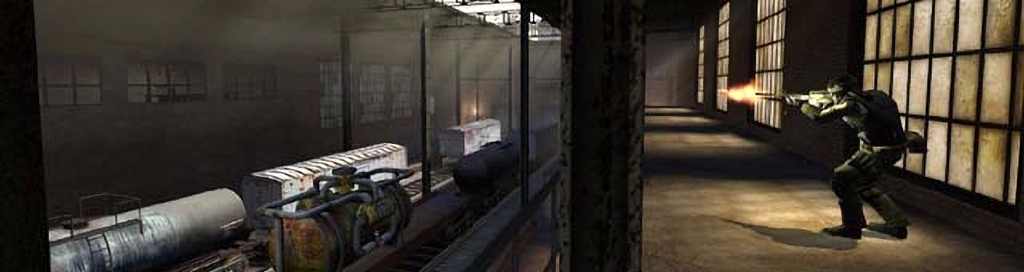
Game: Counter Strike: Source
Rankings: GWL Legacy Leaderboard for Counter Strike: Source
Steam: Counter Strike: Source
 Counter-Strike: Source was Valve’s reimagining of the original Counter-Strike on the Source engine. Released in 2004, it modernized visuals, physics, and hit registration while preserving the core formula that made Counter-Strike one of the most respected competitive shooters of all time: terrorists vs. counter-terrorists, economy management, tight map control, and one-life-per-round tension.
By the mid-2000s, Counter-Strike in all its forms was synonymous with competitive integrity. LAN tournaments were packed. Online leagues were deeply structured. Teams practiced executes, perfected utility usage, and drilled coordinated site takes. Maps like de_dust2, de_inferno, and de_nuke were more than arenas. They were competitive institutions.
But Counter-Strike also had something else: gravity.
When a competitive ecosystem becomes deeply rooted, it doesn’t fragment easily. Established leagues had already become the recognized homes for serious CSS competition. Teams were loyal to their platforms. Rivalries were entrenched. Breaking into that structure wasn’t just about opening ladders. It required shifting habits that had already solidified.
We supported Counter-Strike: Source from March 22, 2007 through April 21, 2008. During that time, we recorded 14 matches.
The effort was real. The matches were legitimate. The players who competed here brought the same seriousness you would expect from any Counter-Strike environment with disciplined play, tactical awareness, structured team movement. But growth never followed.
Like other titles here at Global Warfighter League that didn’t take off, this wasn’t about the quality of the game.
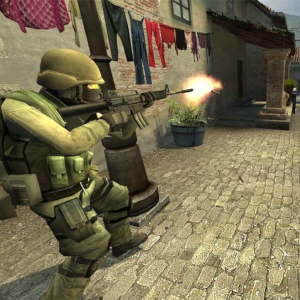 Counter-Strike: Source was unquestionably competitive. It had one of the strongest esports infrastructures of its era. The issue wasn’t whether CSS could sustain competition, it absolutely could. The issue was that it was already sustained elsewhere.
Competition sometimes consolidates around certain platforms, and once that consolidation happens, alternative hubs face an uphill climb. That’s the chapter CSS represents for us. We weren’t launching into an empty field. We were entering one already claimed.
After just over a year of support, and with activity remaining limited to 14 matches, we made the decision to close the ladder. It wasn’t abrupt, and it wasn’t emotional. It was practical. Without momentum, a competitive ladder becomes a placeholder rather than a living ecosystem.
Today, the Counter-Strike landscape has evolved, with Counter-Strike 2 (often referred to as the successor in the CS:GO lineage) representing the current competitive standard. Counter-Strike: Source itself is now largely a legacy title remembered for its role in bridging the gap between the original Counter-Strike and later generations.
But our chapter still exists. Fourteen matches. One year of effort with teams and players who chose to compete here, even when larger homes were available.
CSS didn’t take hold within our league, but it remains part of our competitive history. The matches mattered to those who played them. The teams mattered. The attempt mattered.
Not every game becomes a flagship and not every ladder becomes a centerpiece, but every chapter tells part of the story.