

Game: Prey (2006)
Rankings: GWL Legacy Leaderboard for Prey (2006)
Wikipedia: Prey (2006)
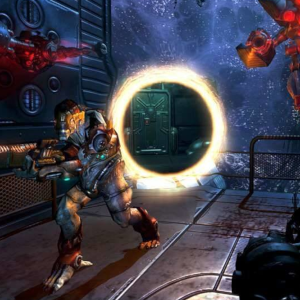
 Prey released in 2006 with a distinct identity. Built on a modified Doom 3 engine, it blended dark sci-fi horror with unconventional mechanics, most notably portals, gravity shifts, and wall-walking sequences. While its single-player campaign earned attention for atmosphere and innovation, Prey also shipped with a multiplayer component built around classic arena-style Deathmatch formats.
Multiplayer in Prey wasn’t as widely recognized as the competitive staples of the time, but it had its own flavor. Portals weren’t static map features like in later shooters, they were interactive, placed elements that could radically alter positioning and sightlines. Gravity zones could flip the orientation of combat. Fights weren’t always horizontal; they were vertical, unpredictable, and occasionally disorienting in the best way.
In the broader competitive landscape of 2006–2007, Prey existed in the shadow of more established franchises. Arena shooters were already facing pressure from tactical and military-focused titles. Games like Counter-Strike and Call of Duty were consolidating much of the structured competitive scene. Prey had depth and creativity, but it never became a dominant competitive hub.
Within our league, we opened a single ladder: 1v1 – Deathmatch. In total, we recorded 12 matches, played by 12 players. The symmetry is fitting.
Prey’s 1v1 format suited its mechanics well. With fewer players on the map, portal usage and gravity manipulation became tactical tools rather than chaotic distractions. Positioning mattered. Timing mattered. Reading your opponent’s movement through vertical space mattered.
 The players who competed here weren’t testing something casually. They were exploring how Prey could function under structured competition. They gave it a fair run. They scheduled matches. They stepped into an environment that wasn’t guaranteed to grow. It didn’t take hold.
Momentum never built beyond those initial participants. New challengers didn’t flood in. The ladder remained small and contained. In a competitive era dominated by established ecosystems, Prey struggled to break into sustained prominence, not just within our league, but broadly. But those 12 matches still matter.
They represent experimentation. They represent openness to new mechanics. They represent our willingness to support games that showed competitive potential, even when that potential remained niche. Prey wasn’t a flagship or a breakout success but it was part of our competitive history.
Twelve players. Twelve matches. A ladder that existed because we believed every game with competitive possibility deserved its chance.
And that chance was given.