
Game: Quake 4
Rankings: GWL Legacy Leaderboard for Quake 4
Steam: Quake 4
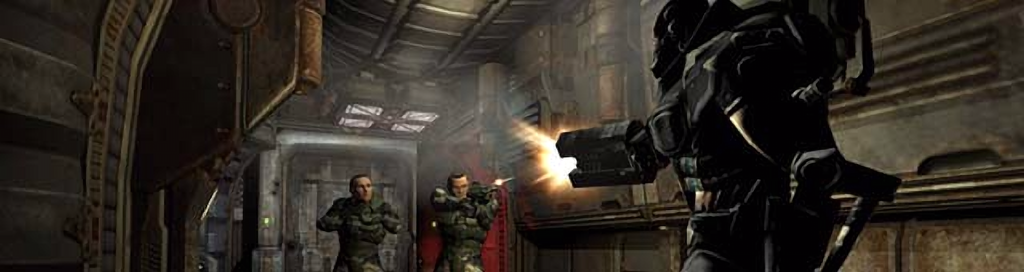
 Quake 4 released in 2005 as the next chapter in one of the most respected names in competitive FPS history. Built on the Doom 3 engine but carrying the DNA of Quake III Arena, Quake 4 was designed to bridge classic arena speed with modern visuals and physics. For longtime arena players, it represented the continuation of a lineage built on movement mastery, weapon control, and duel discipline.
At its core, Quake 4 was about control. Control of armor spawns. Control of power weapons. Control of timing.
1v1 Deathmatch, often simply called “duel”, was the purest expression of that control. Two players. No randomness. No objectives beyond survival and score. Success required tracking spawn cycles down to the second, denying resources to your opponent, and capitalizing on even the smallest positional mistake. It was one of the most demanding competitive formats in FPS history.
In the broader competitive landscape of 2005, Quake 4 had real visibility. Major tournaments featured it. Established arena communities transitioned into it. High-level duelers migrated over from Quake III. The game had strong competitive support elsewhere, particularly in established Quake-centric ecosystems.
Within our league, we opened a 1v1 – Deathmatch ladder. Between October 23, 2005 and December 7, 2005, we recorded 14 matches with 12 players participating. For a short window, interest was genuine. Our community responded. Players stepped into duel format knowing exactly what it demanded. There were no illusions about difficulty. Quake competition has never been casual. Those who competed did so with intent. But sustained momentum didn’t materialize.
 While Quake 4 had competitive traction globally, much of that traction was consolidated within long-standing Quake communities and tournament circuits. Arena shooters, particularly Quake titles, have historically thrived in tight-knit ecosystems. Breaking into that structure, especially during a title’s early competitive life required significant gravity.
We captured interest and participation but we didn’t capture long-term growth. As activity declined and matches became infrequent, we faced the same decision we had with other titles. Leave a dormant ladder open, or close it respectfully. We chose to close it.
That closure wasn’t a reflection of the game’s quality. Quake 4 was, and remains, a mechanically demanding arena shooter with a respected competitive pedigree. It simply found its competitive home more strongly elsewhere. But looking back, we had fourteen matches and twelve players. A brief but real chapter.
Every duel required preparation, discipline and every duel mattered.
Quake 4 represents another moment where we gave our community what it asked for, supported it fully, and honored the competition that took place even when the long-term momentum wasn’t there.
And like every other game we’ve documented, those matches remain part of our story.