
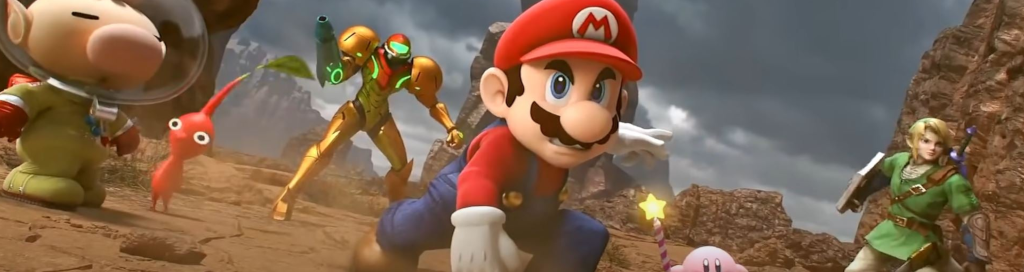
Game: Super Smash Bros. Brawl
Rankings: GWL Legacy Leaderboard for Super Smash Bros. Brawl
Steam: Super Smash Bros. Brawl
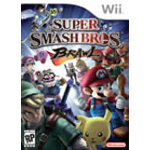 Super Smash Bros. Brawl arrived on the Wii as both a celebration of Nintendo history and a competitive lightning rod. Released in 2008, Brawl brought together characters from across Nintendo franchises, and beyond, into a platform fighter that blended accessibility with surprising depth.
The Wii itself was an unconventional competitive platform. Known more for motion controls and casual party games, it wasn’t immediately associated with structured esports. Yet Brawl carved out a serious competitive identity despite that perception. While the console attracted families and casual players, Smash communities were already evolving into disciplined, tournament-driven scenes.
At the time, the competitive Smash community largely centered around in-person tournaments. Online play existed, but lag and platform limitations made offline events the gold standard. Still, competitive rulesets were well defined: 1v1, no items, neutral stages, most commonly Final Destination or Battlefield variants. Removing items eliminated randomness and shifted focus entirely onto spacing, movement, reads, and execution.
Within our league, Brawl represented something different. It was the only Wii title we enabled for competition. From July 7, 2008 to November 15, 2009, we recorded 44 matches on a single ladder: 1v1 – No Items
Twenty-three players participated over that span. While 44 matches isn’t overwhelming volume, it marked genuine engagement, especially considering it was a new platform for us. Supporting Wii competition wasn’t something we had historically done, and there was uncertainty about whether it would translate into structured activity within our system.
It did.
The ladder opened with solid interest. Players embraced the 1v1 no-items format, aligning with established competitive standards elsewhere. There were no tournaments hosted for Brawl at our league, but the consistent match flow over more than a year showed that it had carved out its own space.
Brawl itself was somewhat polarizing in the broader Smash competitive community. Some players preferred the faster mechanics of Super Smash Bros. Melee, while others embraced Brawl’s mechanics, including directional air dodging changes and the controversial random “tripping” mechanic. Despite debates, Brawl maintained a steady tournament presence during that era.
Within our ecosystem, it became something quietly significant. It surprised us. Not because it exploded in size but because it proved that a Wii title, under the right structure, could sustain meaningful competitive activity. It broadened the identity of our league beyond PC and Xbox titles. It showed that competitive interest wasn’t limited to traditional shooters.
Forty-four matches. Twenty-three players. One ladder. One console we hadn’t supported before. It wasn’t our largest chapter. It wasn’t our loudest. But it was a successful experiment and one that gave a segment of our community another outlet to compete under structured rules.
And that, like the others, is worth preserving.
