
Game: Tribes 2
Rankings: GWL Legacy Leaderboard for Tribes 2
Play Tribes 2: Tribes 2
 Tribes 2 wasn’t just another title we supported. It was the beginning.
Released in 2001, Tribes 2 represented one of the most ambitious multiplayer shooters of its era. Massive outdoor maps. Jetpacks. Skiing mechanics that allowed players to convert downhill slopes into blistering horizontal speed. Projectile-based weapons that demanded prediction instead of hitscan reflexes. Large-scale team coordination built around Capture the Flag.
Tribes 2 didn’t reward passive play. It rewarded momentum.
The competitive scene was built around coordinated flag routes, disciplined base defense, mid-field control, and players who could duel at high velocity across open terrain. The skill ceiling wasn’t just high. It was layered. Movement mastery, aim prediction, map knowledge, and team structure all intertwined. In its prime, Tribes 2 had one of the most uniquely demanding competitive identities in online gaming.
Where We Began
Keen-eyed visitors to our Tribes 2 leaderboards will notice something unusual. Our league officially launched in 2004 but Tribes 2 matches on our site date back to December 9, 2003.
There’s a reason for that.
Before we were a multi-game league, we were a single-game competitive hub known as t2warfare. Founded by Judge Doom and Spellbinder, the site was created as an alternative home for Tribes 2 competition. At the time, there was community strife like disagreements about structure, administration, and direction within the broader T2 ecosystem. Rather than accept the status quo, our founders built something new.
It started with one game, one database and one competitive community… and it worked.
 Competition was so well received that what began as a dedicated Tribes 2 site evolved into something larger. As participation grew and the structure proved stable, the decision was made to expand beyond T2 and open the doors to other competitive titles.
The name changed in early 2004. The mission expanded. But Tribes 2 competition continued uninterrupted, using the same underlying database of matches, ladders, players, and teams.
That’s how Global Warfighter League was born.
The Competitive Impact
From December 9, 2003 to October 18, 2005, we recorded 541 matches and 20 ladders. That wasn’t modest participation. That wasn’t experimental growth. That was a serious slice of the Tribes 2 competitive world.
Competition was so active that we opened multiple European ladders to account for ping fairness and regional balance. That decision reflected something important. We weren’t just hosting matches. We were building infrastructure around competitive integrity with multiple formats and multiple ladders in North America and Europe.
The structure was respected, the administration was trusted and the community responded.
The Broader Scene
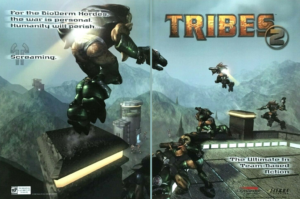 The Tribes competitive ecosystem was passionate but it was also turbulent. As time passed, the community began to splinter. New titles emerged that attempted to capture or modernize the formula like “Tribes: Vengeance”, “Legions: Overdrive”, “Tribes: Ascend” and eventually Tribes 3: Rivals.
Each new release pulled players in different directions. Developers shifted focus. Outside interests fragmented what had once been centralized energy. The tapering of Tribes 2 competition wasn’t the result of internal failure. It was part of a broader evolution and division within the franchise itself.
But during our active years with T2, we were not a footnote. We were a pillar.
Why It Matters
Tribes 2 is more than a ladder in our archive. It was the foundation of our league. Without Tribes 2, there is no t2warfare. Without t2warfare, there is no expansion. Without expansion, there is no Global Warfighter League. From one high-speed, jetpack-driven battlefield grew an entire multi-game competitive ecosystem.
Five hundred forty-one matches. Twenty ladders. Regional expansion. A respected structure. A community that believed in an alternative.
We didn’t just support Tribes 2… We were born from it.