
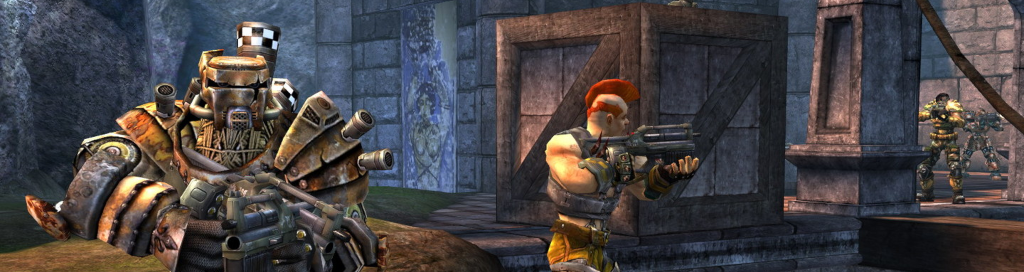
Game: Unreal Tournament 2004
Rankings: GWL Legacy Leaderboard for Unreal Tournament 2004
Sub Reddit: Unreal Tournament 2004
 Unreal Tournament 2004 arrived during the golden age of arena shooters. Fast, vertical, unapologetically skill-driven, it represented a style of competition that rewarded mechanical mastery above all else. There were no loadouts, no perks, no progression systems, just movement, timing, weapon control, and raw aim.
By 2004-2006, the competitive arena shooter scene was already mature. Titles like Unreal Tournament and Quake had cultivated players who understood spawn timing, item control, and the art of reading an opponent’s movement. UT2004 refined that formula with smoother movement, expanded modes, and improved netcode. Dodge-jumping, wall-dodging, lift jumps, mobility wasn’t optional; it was fundamental.
Within our league, Unreal Tournament 2004 carved out a meaningful chapter. We recorded 173 matches across 11 ladders. While it wasn’t our most dominant title, that’s far from insignificant.
The Dominant Format: InstaGib with our standout ladder as 1v1 – DeathMatch (InstaGib) with 88 matches. InstaGib stripped the game down even further. Every player spawned with a shock rifle capable of one-hit kills. No weapon pickups. No armor control. No health stacking. It was pure aim, positioning, and reaction time. In 1v1 form, it became brutally honest. You either hit your shots or you didn’t.
That ladder alone accounted for more than half of our UT2004 activity. It reflected a common truth in competitive gaming: smaller formats are often easier to sustain, and pure skill formats tend to resonate.
We did have team ladders that added competitive depth. While 1v1 InstaGib dominated, the majority of our ladders were team-based, reflecting UT2004’s broader competitive diversity.
Capture the Flag was a natural competitive staple. Coordinated flag runs, mid-map control, timed defensive rotations, CTF demanded teamwork and discipline. In InstaGib variants, defense and positioning became even more critical since a single shot could reset a push.
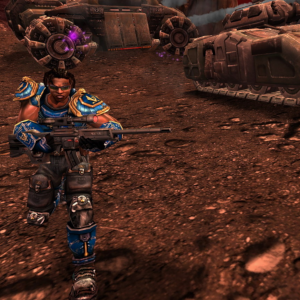 Team Deathmatch emphasized spawn awareness and map control. Classic Domination focused on holding control points, rewarding organized rotations. Bombing Run, UT2004’s hybrid sports-style mode, combined elements of CTF and basketball, requiring both mechanical skill and structured team play.
Frag Ops (MIS) introduced a more tactical, objective-driven layer, blending arena mechanics with mission-style structure.
The diversity of ladders shows something important. UT2004 wasn’t a one-mode game. It offered flexibility, and we reflected that flexibility in our competitive structure.
By the mid-2000s, arena shooters were facing increasing competition from slower, more tactical titles. Counter-Strike was entrenched. Call of Duty was rising. Battlefield had scale. The pure arena formula was beginning to feel niche compared to emerging military shooters.
But niche doesn’t mean irrelevant. The UT community was dedicated, highly skilled, and deeply competitive. It may not have been the loudest scene during that period, but it was one of the most mechanically demanding.
Within our league, UT2004 didn’t explode in popularity the way some other titles did. But 173 matches represents sustained engagement. It represents players who valued the precision and speed of arena combat. It represents teams coordinating in CTF and individuals grinding in InstaGib duels.
It wasn’t our flagship or the loudest chapter. But it was active and structured and it had depth.
Unreal Tournament 2004 stands as a reminder of a different era of competition, one built on movement mastery and pinpoint aim rather than loadout optimization.
The matches happened. The ladders were real. And for a community that appreciated pure arena skill, that mattered.