
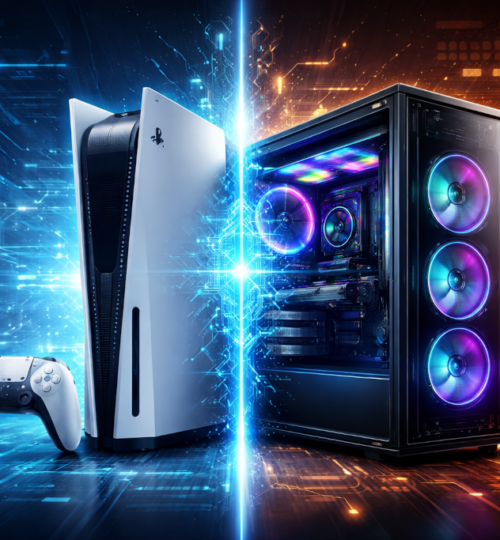
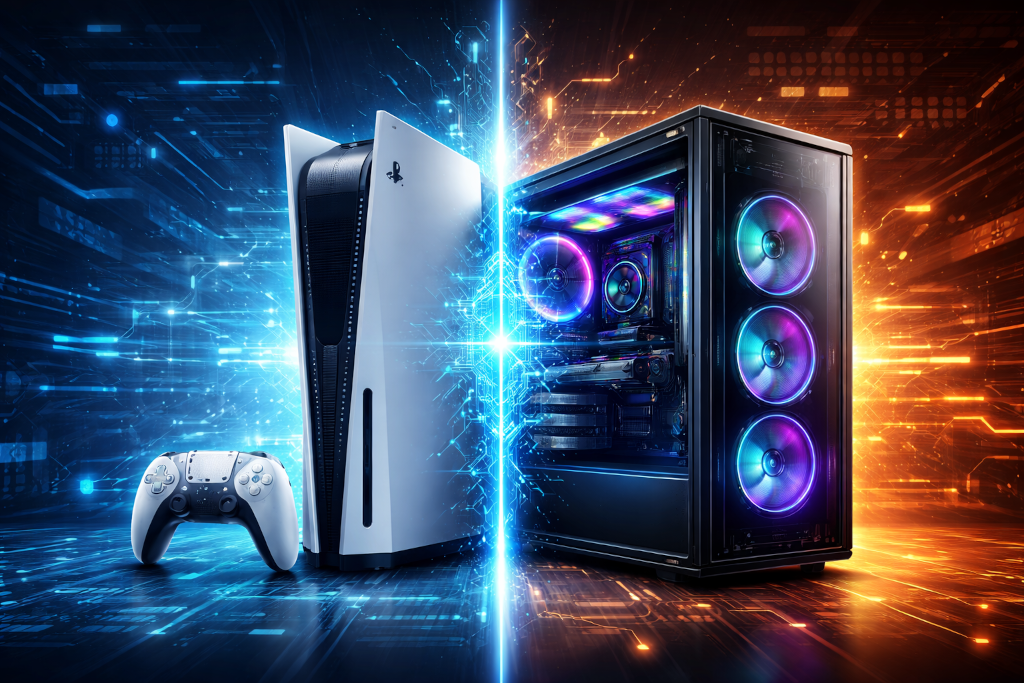
For decades, the line between console gaming and PC gaming felt clear and rigid. Consoles were defined by simplicity, fixed hardware, curated storefronts, and tightly controlled ecosystems. PCs were defined by openness, customization, modding, and the freedom to tinker. You bought a console because you wanted a plug-and-play experience. You built or upgraded a PC because you wanted control.
In recent years, that line has started to blur. Modern consoles now share architectural DNA with PCs, use familiar operating systems under the hood, support features once reserved for desktops, and increasingly resemble locked-down computers rather than purpose-built gaming machines. This shift has sparked a growing question within the gaming community. Are consoles slowly turning into closed PCs?
The answer is not a simple yes or no. It depends on how you define a PC, how much openness matters to you, and whether convenience or control sits higher on your personal gaming priority list.
The Hardware Convergence Was the First Clue
The transformation did not happen overnight. The first major signal came from hardware design. Earlier generations of consoles relied on highly specialized, custom chips that were difficult to compare directly with consumer PC parts. Today, that is no longer the case.
Modern consoles use x86-based CPUs and GPUs that share a common lineage with PC components. This architectural alignment allows developers to build games using similar tools and optimization strategies across platforms. It also explains why performance comparisons between consoles and mid-range PCs have become more meaningful than they once were.
From a technical standpoint, modern consoles are closer to prebuilt gaming PCs than ever before. They use solid-state storage, unified memory architectures, advanced cooling solutions, and high-speed data pipelines that would have sounded like PC-exclusive talking points a decade ago.
Yet despite this convergence, consoles remain locked systems. You cannot swap components, install alternative operating systems, or meaningfully customize performance settings beyond what the manufacturer allows. The hardware may look familiar, but the ownership model has not changed.
Operating Systems Without the Freedom
Underneath the user interface, modern consoles run operating systems that resemble stripped-down desktop environments. They manage background processes, suspend applications, handle networking, and support multitasking features that mirror PC behavior.
The key difference is access.
On a PC, the operating system belongs to you. You can install software from virtually anywhere, modify system settings, run background utilities, and experiment freely. On a console, the operating system belongs to the platform holder. Users interact only with approved layers, while everything else remains sealed.
This design choice is intentional. A locked operating system improves security, reduces piracy, and ensures consistent performance across millions of identical devices. It also limits user agency. You cannot install third-party tools, community mods, or alternative launchers unless they are explicitly supported.
In effect, consoles operate like managed computers. Powerful, capable, and efficient, but tightly governed.
Digital Storefronts as Walled Gardens
One of the most PC-like changes to consoles has been the rise of digital-first ecosystems. Physical media still exists, but digital storefronts now dominate how games are purchased, updated, and accessed.
Console storefronts function much like app stores. Games must pass certification, follow platform rules, and share revenue with the platform owner. Updates, patches, and downloadable content are distributed centrally, ensuring consistency but limiting flexibility.
On PC, multiple storefronts coexist alongside direct downloads, open-source projects, and independent distribution. Players can choose where to buy games and how to manage them. Consoles do not offer that level of choice.
This difference highlights a core distinction between closed PCs and open ones. Consoles may resemble computers in capability, but they are locked behind a single gatekeeper. That gatekeeper controls pricing policies, content standards, and access to features.
For developers, this can be both a blessing and a constraint. Certification ensures stability and visibility but also introduces delays and restrictions that do not exist on open platforms.
Performance Modes and Graphics Settings Feel Familiar
Another sign of convergence lies in how consoles handle performance settings. Older generations offered a single experience. Games ran as they ran, and players had no say in resolution, frame rate, or graphical trade-offs.
Modern consoles often include performance modes, quality modes, and customizable settings that mirror PC options. Players can choose higher frame rates or better visual fidelity depending on preference. Some titles allow toggling motion blur, film grain, field of view, and other settings traditionally associated with PC gaming.
This shift reflects a broader change in how console audiences are perceived. Players are now expected to understand technical trade-offs and make informed choices. That expectation aligns closely with PC culture.
However, these options remain curated. You cannot fine-tune individual settings to the same degree, install performance monitoring tools, or override system-level constraints. The choice exists, but only within approved boundaries.
Backward Compatibility and Software Libraries
Modern consoles increasingly treat games as software libraries rather than generation-bound experiences. Backward compatibility, digital entitlements, cloud saves, and cross-generation updates mirror how PC libraries function.
On PC, your games follow your account rather than your hardware. Consoles are now moving in that direction, allowing players to carry digital purchases forward across generations.
This approach reinforces the idea of consoles as managed computing platforms rather than disposable appliances. The system evolves, but your software persists.
At the same time, ownership remains conditional. Access depends on account status, storefront availability, and platform policies. You own licenses, not files, and that distinction matters when servers shut down or storefronts change.
Modding Remains the Biggest Divide
If there is one area where consoles still clearly differ from PCs, it is modding.
On PC, mods are a core part of gaming culture. They extend game lifespans, fix bugs, add content, and empower communities to shape their own experiences. Many iconic games owe their longevity to mod support.
Consoles offer limited modding, usually through curated systems that restrict file access and functionality. While some titles support mods, they are heavily sandboxed and subject to platform rules.
This limitation reinforces the closed nature of consoles. They may resemble PCs in hardware and performance, but they do not offer the same creative freedom.
For communities built around competition, customization, and longevity, this distinction matters. User-generated content thrives where systems allow experimentation. Closed platforms tend to centralize control.
Online Services Blur the Lines Further
Subscription services, cloud saves, cross-platform play, and integrated social features have made consoles feel more like networked PCs than isolated devices. Friends lists, voice chat, party systems, and integrated streaming tools resemble desktop ecosystems.
These services strengthen convenience and accessibility. They also reinforce dependency on centralized infrastructure.
On PC, alternative services exist. On consoles, platform services are mandatory. If servers go offline or policies change, users have limited recourse.
This trade-off highlights the core tension behind the closed PC question. Consoles provide stability, simplicity, and consistency at the cost of autonomy.
Are Consoles Losing Their Identity?
The evolution of consoles raises a philosophical question. If consoles become too PC-like, do they lose what made them appealing in the first place?
For many players, the answer is no. Consoles still offer curated experiences, predictable performance, and minimal setup. Those qualities matter to players who value time and reliability over customization.
For others, the convergence feels restrictive. They see powerful hardware constrained by artificial limits. They wonder why a device capable of running complex software cannot be treated as a general-purpose computer.
Both perspectives are valid. Consoles are not becoming PCs in the traditional sense. They are becoming specialized computers optimized for gaming, media consumption, and controlled ecosystems.
In other words, they are closed PCs by design.
The Future Likely Favors Hybrid Models
Looking ahead, the most likely outcome is not full convergence but selective overlap. Consoles will continue adopting PC-like features where they enhance usability, performance, and accessibility. At the same time, platform holders will preserve closed ecosystems to maintain security, revenue, and quality control.
Cloud gaming, streaming, and cross-platform development will further blur boundaries. Players may care less about hardware distinctions and more about access, performance, and community.
For gaming websites and communities, this shift presents both challenges and opportunities. Closed platforms reduce customization but expand reach. Open platforms empower creativity but demand technical investment.
Understanding where consoles sit on the closed-to-open spectrum helps frame discussions about competition, preservation, and community-driven gaming.
So Are Consoles Closed PCs?
In practical terms, yes. Modern consoles function like highly optimized computers with locked operating systems, curated software distribution, and controlled user access. They share architecture, features, and workflows with PCs while deliberately restricting freedom.
In spirit, they remain consoles. Purpose-built, user-friendly, and designed to reduce friction rather than invite experimentation.
Whether that balance feels right depends on what you value as a gamer. Some want control. Others want convenience. Most want a reliable place to play, compete, and connect.
As gaming continues to evolve, the distinction between console and PC may matter less than the communities built around them. Hardware can converge, ecosystems can shift, but the desire to play, compete, and belong remains constant.
And in that sense, the platform matters less than what players do with it.