
There are very few games in history that can claim to still command millions of active players more than two decades after release. Diablo II is one of them. Whether through nostalgia, tight itemization loops, or the enduring appeal of seasonal ladder resets, the action RPG that helped define a genre continues to thrive. Diablo II: Resurrected brought modern visuals and infrastructure to that legacy foundation, and now Blizzard is making a bold move by introducing an entirely new class to a game many considered complete.
The Warlock is arriving in Diablo II: Resurrected as a paid optional addition priced at $24.99. For purists who believe the original class lineup represents a sacred balance of design, nothing changes unless they choose it to. The core experience remains intact. Classic ladder runs, traditional builds, and the established meta stay exactly as they are for players who prefer the untouched experience.
For those willing to step into something new, however, the Warlock represents both fresh gameplay and meaningful quality of life updates that modernize Diablo II’s structure without compromising its identity.
Diablo II: Resurrected, A Living Legacy
Since its remastered launch, Diablo II: Resurrected has continued to post strong seasonal engagement numbers. Ladder resets still attract waves of returning players. Trading communities remain active. Hardcore mode maintains a dedicated following. The game’s item hunt, with its rare rune drops and perfectly rolled uniques, still creates the kind of tension modern ARPGs often struggle to replicate.
Blizzard’s decision to add a new class to such a stable ecosystem is not trivial. Diablo II’s class design is deeply intertwined with its loot tables, skill synergies, and multiplayer dynamics. Every class historically brought a distinct mechanical identity.
- The Amazon excelled at ranged elemental and physical damage.
- The Sorceress dominated teleport mobility and spellcasting burst.
- The Necromancer leveraged minions and curses to control the battlefield.
- The Paladin provided powerful auras that shaped group play.
- The Barbarian offered durability and melee scaling through weapon mastery.
- The Warlock enters this environment as something designed to complement rather than overwrite.
The Warlock in Diablo II: Resurrected
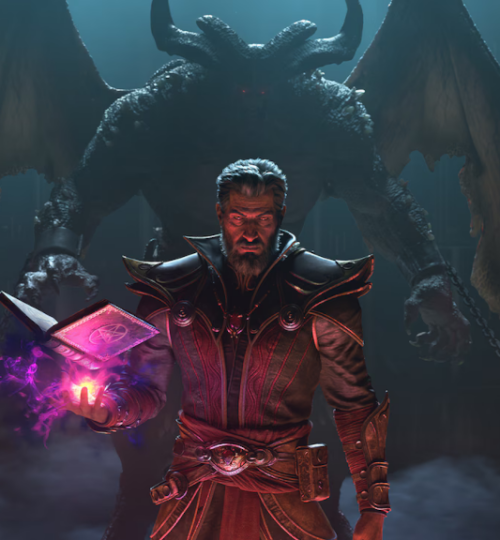
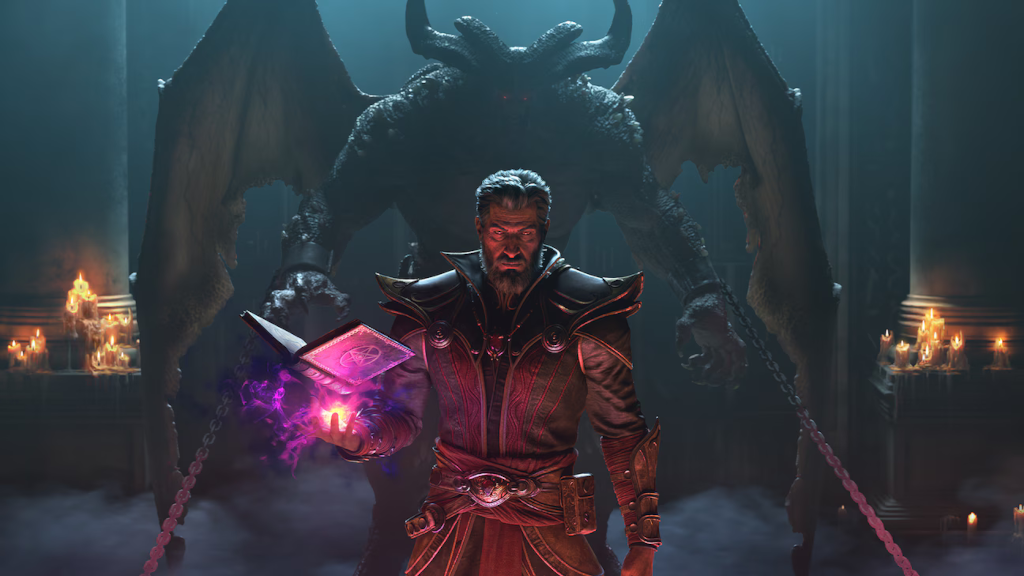
While Blizzard has not replaced any existing archetypes, the Warlock introduces a darker, risk-reward spellcasting philosophy. The class centers around life manipulation, curse amplification, and pact-based abilities that trade survivability for power.
Key gameplay elements include:
- Pact Mechanics: Temporary self-sacrifice abilities that enhance damage output or summon destructive forces at a cost.
- Enhanced Curses: Expanded debuff systems that stack and synergize differently than the Necromancer’s curse tree.
- Shadowfire Abilities: Hybrid elemental damage types designed to interact uniquely with enemy resistances.
- Siphon Skills: Sustain tools that reward aggressive play rather than passive kiting.
Importantly, Blizzard has designed the Warlock to avoid invalidating the Necromancer. Where the Necromancer excels at controlling space through minions and layered curses, the Warlock is more personal and volatile. It is a high skill ceiling class built around calculated risk.
For longtime players who enjoy theorycrafting, the Warlock opens up new build diversity without erasing established favorites like Hammerdin, Blizzard Sorceress, or Whirlwind Barbarian.
Optional Purchase and Preservation of the Classic Experience
One of the most significant aspects of this release is Blizzard’s decision to keep the Warlock entirely optional. If a player does not purchase the Warlock expansion pack, their Diablo II: Resurrected client functions exactly as before.
Matchmaking pools remain intact. Ladder systems continue. Classic characters are unaffected. For those who opt in, the $24.99 purchase includes more than just a class.
Quality of Life Improvements
Players who purchase the Warlock bundle gain access to several long-requested enhancements:
- Integrated Loot Filter: Customizable item highlighting to reduce visual clutter during high-density farming sessions.
- Expanded Stash Sorting Tools: Improved organization options for shared stash tabs.
- Advanced Stat Comparison UI: Better item evaluation without external calculators.
- Deeper Endgame Modifiers: Optional late-game scaling mechanics that increase replayability for optimized builds.
These changes reflect modern ARPG expectations while maintaining Diablo II’s core structure. They streamline friction points without turning the game into something it was never meant to be.
This approach may serve as a model for how legacy titles can evolve without alienating their base.
Diablo IV Expansion – The Paladin and the Warlock
While Diablo II’s update leans into preservation with optional modernization, Diablo IV’s upcoming expansion takes a more forward-driving approach.
The expansion introduces two new classes to Diablo IV’s darker open-world ecosystem:
The Paladin Returns
The Paladin has long been one of the most requested returns in the Diablo franchise. In Diablo IV’s engine and design philosophy, the Paladin arrives with:
- Shield-Based Combat Systems that emphasize reactive blocking and timed counterattacks.
- Holy Ground Mechanics that alter battlefield zones to buff allies or weaken enemies.
- Conviction Auras Reimagined for Diablo IV’s multiplayer world events.
- Faith-Based Skill Trees offering branching paths between defensive tank builds and aggressive smite-focused damage builds.
Unlike Diablo II’s aura stacking environment, Diablo IV’s Paladin integrates into large-scale world events, Nightmare Dungeons, and PvP zones with abilities designed for modern encounter design.
The Warlock in Diablo IV
The Warlock transitions into Diablo IV with expanded systems built around the franchise’s current mechanics.
Players can expect:
- Resource Binding Systems that interact with Diablo IV’s cooldown-heavy skill design.
- World Event Synergies that allow pact-based abilities to scale during cooperative battles.
- Expanded Paragon Board Options tailored for curse amplification and self-sacrifice builds.
- Dynamic Visual Transformations reflecting the severity of a player’s chosen pacts.
Because Diablo IV supports seasonal progression models with evolving balance patches, the Warlock will likely receive iterative updates tied to each season’s theme.
What This Means for the ARPG Landscape
Blizzard’s strategy reveals two parallel philosophies. For Diablo II: Resurrected, they are protecting the integrity of a legacy system while offering optional evolution.
For Diablo IV, they are leaning fully into live service expansion with class diversity meant to reshape the endgame meta. The inclusion of a loot filter and deeper endgame mechanics in Diablo II: Resurrected acknowledges that player expectations in 2026 are different from those in 2000.
At the same time, making those features tied to an optional purchase avoids forcing change onto purists.
Meanwhile, Diablo IV’s expansion appears built around long-term seasonal sustainment. The return of the Paladin satisfies nostalgia while the Warlock pushes darker experimentation. Both approaches aim to satisfy different segments of the Diablo community without collapsing them into a single design direction.
Community Impact and Player Choice
Diablo II still maintains millions of active players across seasonal resets and offline modes. Introducing a new class into that ecosystem could have destabilized trust if done poorly. By making it optional, Blizzard preserves player agency.
Players who view Diablo II as a museum piece can keep it pristine. Players who see it as a living ARPG can embrace evolution.
In Diablo IV, the conversation shifts toward competitive builds, world event synergy, and class balancing discussions that will likely dominate community forums and theorycrafting channels for months.
Both games now move forward in parallel. One honors the past while cautiously adapting. The other expands into the future with a broader canvas.
Final Thoughts
Adding a new class to a game that helped define an entire genre is not a small move. It signals confidence in the longevity of Diablo II and continued investment in Diablo IV’s evolving ecosystem.
The Warlock represents risk and reward not only within its gameplay mechanics but also within Blizzard’s development strategy. It tests how far legacy games can evolve while preserving their identity. It also reinforces that player choice remains central to the Diablo experience.
Whether players stay loyal to their classic Hammerdins and Blizzard Sorceresses or embrace pact-bound spellcasting chaos, Sanctuary continues to grow.
And for a franchise that has already spanned decades, that might be the most impressive achievement of all.