
Competitive gaming has reached a point where preparation matters just as much as raw talent. Professional players do not simply launch a game and queue into a ranked match or scrim cold. Much like traditional athletes, they follow structured warm-up routines designed to sharpen focus, improve mechanics, and reduce the risk of burnout or injury. These routines are not about showing off flashy skills. They are about consistency, reliability, and entering competition in the right mental and physical state.
For players looking to improve their own performance, understanding how professionals warm up can be more valuable than copying advanced strategies or meta picks. Warm-ups form the foundation of good play, regardless of game genre or platform. Whether someone plays first-person shooters, MOBAs, fighting games, or real-time strategy titles, the underlying principles remain surprisingly similar.
Why Warm-Ups Matter in Competitive Gaming
At a glance, gaming might not appear physically demanding, but the reality is more complex. High-level play requires rapid decision-making, precise motor control, and sustained concentration. Jumping straight into intense matches without preparation often leads to sloppy mechanics, poor positioning, and frustration that compounds over time.
Professional players warm up to achieve several goals:
- Prime hand and finger coordination
- Improve reaction time and accuracy
- Reinforce muscle memory
- Establish mental focus and emotional control
- Reduce strain on wrists, hands, neck, and shoulders
Warm-ups are not about grinding for hours. In fact, many professionals keep them relatively short and intentional. The goal is readiness, not exhaustion.
Physical Preparation Before Touching the Keyboard or Controller
One of the most overlooked aspects of esports preparation is physical readiness. Many pros begin their routine away from the screen.
Stretching and Mobility
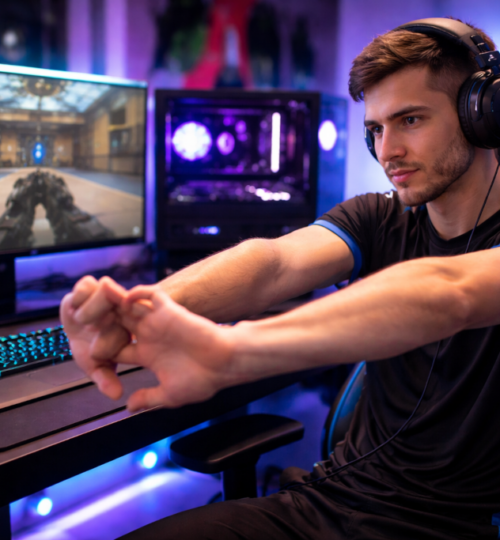
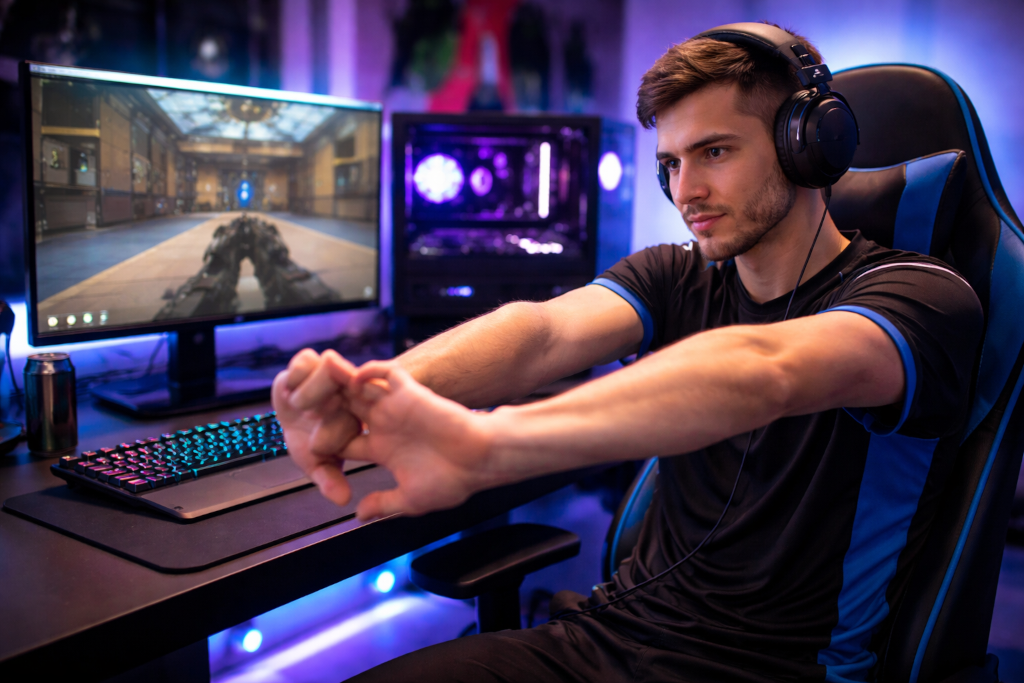
Hand, wrist, and forearm stretches are common. These help increase blood flow and reduce stiffness, especially after sleep or long breaks. Some players also stretch their shoulders, neck, and upper back to prevent tension that can interfere with posture and endurance.
Simple stretches include slow wrist rotations, finger extensions, and gentle forearm stretches held for 10 to 20 seconds. These are not aggressive movements. They are controlled and deliberate.
Posture and Setup Checks
Before loading a game, many professionals adjust their chair height, monitor position, and desk alignment. Poor posture can lead to discomfort that distracts during matches. Pros often take a minute to ensure their wrists are neutral, their feet are grounded, and their screen is at eye level.
This step seems mundane, but small ergonomic adjustments can significantly impact performance over long sessions.
Mechanical Warm-Ups and Muscle Memory Activation
Once physically prepared, most players move into mechanical warm-ups tailored to their game.
Aim Training for Shooter Players
In first-person and third-person shooters, aim training is a staple. This can include:
- Dedicated aim trainers
- Custom practice maps
- Bot matches with reduced pressure
The focus is not on winning but on consistency. Players practice tracking moving targets, flick shots, recoil control, and crosshair placement. Many limit this phase to 10 to 30 minutes.
The key is repetition with intention. Pros often focus on accuracy rather than speed during warm-ups, gradually increasing tempo as they feel locked in.
Combo and Execution Practice in Fighting Games
Fighting game professionals warm up by running bread-and-butter combos, practicing confirms, and revisiting defensive options. Training mode is used to refresh timing and execution rather than learn new techniques.
This phase helps eliminate early-match execution errors that often occur when hands are cold or timing feels off.
Last-Hitting and Movement in Strategy and MOBA Games
In MOBAs and real-time strategy games, warm-ups often involve:
- Last-hitting drills
- Pathing and movement practice
- Camera control exercises
Some players enter custom games alone to practice fundamentals without pressure. This reinforces muscle memory and ensures early-game mechanics feel automatic.
Mental Warm-Ups and Focus Building
Mechanical skill alone is not enough at high levels. Mental preparation plays a massive role in professional routines.
Setting Intentions – Many pros mentally outline what they want to focus on before playing. This might include improving map awareness, communication, or positioning. By setting a narrow goal, players avoid becoming overwhelmed or tilted by mistakes.
This practice also helps separate warm-up matches from competitive ones. Early errors are treated as information, not failure.
Breathing and Reset Techniques – Some players use short breathing exercises to calm nerves and sharpen focus. Slow, controlled breaths can reduce adrenaline spikes and improve decision-making under pressure.
This is especially common before tournaments or ranked sessions where stakes feel higher.
Reviewing Notes or VOD Clips – Rather than watching full match replays, some professionals glance at notes or short clips highlighting specific habits they want to reinforce or avoid. This keeps lessons fresh without overloading the mind.
Warm-Up Matches Versus Real Matches
A common mistake among non-professional players is treating warm-up matches as must-win games. Professionals approach them differently.
Warm-up matches are often unranked, scrims, or lower-stakes environments. The emphasis is on execution and awareness, not the scoreboard. Dying, missing shots, or losing rounds is acceptable if the player is gathering information about their readiness.
Once mechanics feel consistent and focus is steady, pros transition into serious competition.
Time Management and Consistency
Contrary to popular belief, professional warm-ups are not endlessly long. Many fall within a 30 to 60 minute window, depending on the game and individual preference.
What matters more than duration is consistency. Players warm up the same way each day, creating a ritual that signals to the brain that it is time to perform. This routine reduces anxiety and helps players reach a reliable performance baseline.
Skipping warm-ups is rare at the professional level, even on busy schedules.
Adapting Pro Routines for Everyday Players
Not everyone has hours to dedicate to gaming preparation, and that is fine. The value of professional routines lies in their structure, not their scale.
A simplified routine might look like this:
- Five minutes of hand and wrist stretches
- Ten minutes of mechanical drills
- One or two low-pressure matches
- A brief mental check-in before ranked play
Even a short warm-up can dramatically improve consistency and enjoyment.
Avoiding Burnout During Warm-Ups
One risk of poorly designed routines is burnout before real matches begin. Professionals avoid this by keeping warm-ups focused and stopping once they feel ready.
Grinding aim trainers for hours or playing multiple ranked games just to warm up often leads to fatigue and frustration. Pros recognize when diminishing returns set in and move on.
Listening to the body and mind is part of high-level play.
The Bigger Picture of Preparation
Warm-ups are only one piece of a professional player’s preparation puzzle. Sleep, nutrition, hydration, and recovery all influence performance. However, warm-up routines are the most visible and accessible element for everyday players to adopt.
They represent a mindset shift from casual play to intentional practice. By warming up properly, players respect their time, their health, and their desire to improve.
Final Thoughts
Professional gamers treat warm-ups as non-negotiable. They understand that peak performance does not happen by accident. It is built through preparation, consistency, and self-awareness.
For players rebuilding communities, leaderboards, and competitive spaces, promoting healthy preparation habits can be just as important as promoting wins and rankings. Warm-ups encourage longevity, improvement, and a more positive competitive environment.
Whether you are chasing higher ranks, preparing for tournaments, or simply trying to play your best on a given day, adopting a warm-up routine inspired by professional players is one of the simplest and most effective steps you can take.