
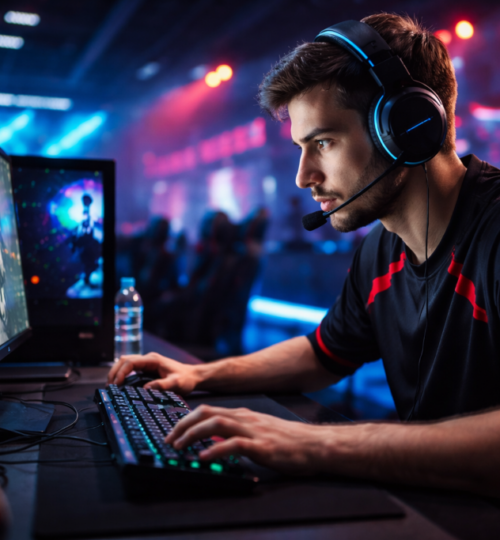
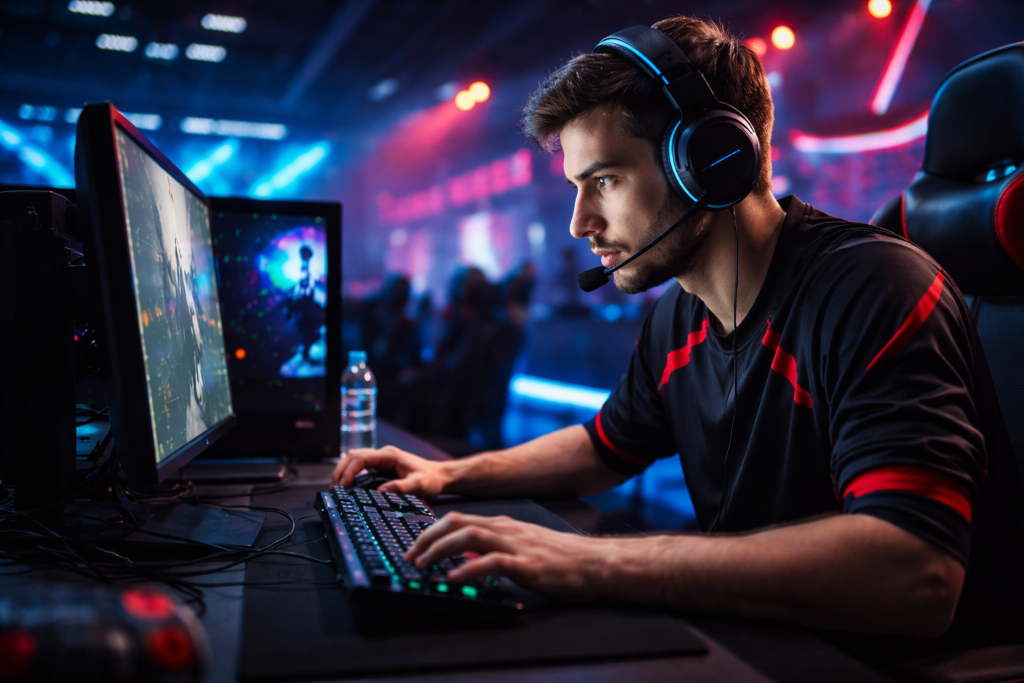
In competitive gaming, few debates last longer than the argument between mechanical skill and game sense. It shows up in every era, across every genre. The aim duel in a tactical shooter. The perfect combo execution in a fighting game. The flawless last hit timing in a MOBA. On the other side, the clutch rotation call. The unexpected flank. The patient decision not to peek.
One side looks flashy. The other looks invisible.
If you have ever watched a match and thought, “How did they even see that?” you were probably witnessing mechanical precision. If you have ever watched a player win a fight they had no business winning and wondered how they predicted everything correctly, you were seeing game sense at work.
The real question is not just which one matters more. It is how they interact, and when each one takes the lead.
What Is Mechanical Skill?
Mechanical skill refers to the physical execution required to control a game. It is the measurable side of performance. Mouse precision. Controller stick control. Reaction time. Button timing. Accuracy under pressure. Movement consistency.
In first person shooters such as Counter-Strike 2 or Call of Duty, mechanical skill shows up in crosshair placement, recoil control, flick shots, tracking, and movement control. In MOBAs like League of Legends or Dota 2, it appears in last hitting, skill shot accuracy, animation canceling, and combo execution. In fighting games such as Street Fighter 6, it is your ability to execute complex inputs without error.
Mechanical skill can be trained in isolation. Aim trainers. Practice modes. Drills. Repetition. It is often the first thing new players focus on because it is tangible. You can see improvement in your accuracy percentage. You can feel when your movement becomes smoother. You can measure reaction time.
It is also the most visible skill to spectators. A highlight reel rarely features a patient rotation. It features a triple headshot or a frame perfect combo.
Mechanical skill has a ceiling, and in modern esports that ceiling is high. With higher refresh rate monitors, low latency peripherals, and stable internet connections, execution has become razor sharp. The margin for error shrinks every year.
But mechanical skill alone does not explain why some players dominate across multiple titles or why certain veterans remain competitive even as their reaction time declines. That is where game sense enters the conversation.
What Is Game Sense?
Game sense is the mental model of the match. It is the ability to read patterns, predict behavior, manage risk, and make decisions under uncertainty. It includes map awareness. Resource management. Understanding power spikes. Recognizing opponent tendencies. Knowing when to push and when to disengage. It is about context.
In a tactical shooter, game sense means knowing when an enemy is likely to rotate. It means predicting a fake plant. It means recognizing that silence in one area of the map is information, not safety.
In a MOBA, it means tracking jungle pathing, anticipating ganks, managing wave states, and understanding macro objectives. A player with strong game sense can be mechanically average and still outperform a stronger duelist simply by being in the right place at the right time.
Game sense cannot be trained the same way mechanical skill can. You cannot load into a pure prediction trainer. It develops through experience, review, study, and pattern recognition. Watching replays. Analyzing mistakes. Studying opponents. Understanding patch changes and meta shifts.
It is slower to build, but it compounds over time.
The Illusion of the Carry
Many players fall into a common trap. They assume the top fragger or highest damage dealer is the most impactful player. Sometimes that is true. Often it is not.
In games like Valorant or Overwatch 2, a player might lead in eliminations but repeatedly take low percentage fights that expose their team to risk. Another player might have fewer kills but consistently trade, secure objectives, and control tempo.
Mechanical skill wins duels. Game sense wins rounds. At the professional level, this becomes even clearer. Many pros have near identical mechanical ceilings. What separates them is decision making speed and accuracy. When to peek. When to save. When to rotate. When to sacrifice positioning for information.
Game sense creates situations where mechanical skill can shine. Without it, raw aim becomes reactive instead of proactive.
When Mechanical Skill Dominates
There are scenarios where mechanics matter more.
Early skill tiers – In lower ranks, poor execution is often the limiting factor. Missed shots, sloppy movement, inconsistent combos. Improving mechanical consistency can produce rapid rank gains.
High pressure clutch moments – When the round comes down to a 1v1, decision making still matters, but execution becomes decisive. If you know the correct play but fail to hit the shot, the theory does not save you.
Meta shifts toward aggression – Some patches or game updates reward faster, high tempo play. In these environments, players with elite mechanics can overwhelm slower thinkers before complex strategy even unfolds.
In these cases, mechanical gaps are large enough to overshadow game sense differences.
When Game Sense Takes Over
As skill tiers rise, mechanical gaps narrow. At that point, the invisible layer becomes dominant.
Team coordination – In organized play, coordinated utility, timing, and positioning reduce the number of raw aim duels. Smart setups beat flashy entries.
Adaptation – Opponents adjust. They study tendencies. Game sense allows players to pivot mid match instead of repeating predictable patterns.
Longevity – Reaction time peaks early in many competitive disciplines. Yet veteran players continue to succeed. They compensate with anticipation, positioning, and efficient movement.
Game sense is also what allows players to transition between titles. A mechanically gifted player may struggle when switching genres. A player with strong strategic thinking adapts faster because they understand universal principles such as spacing, timing, and information control.
The Feedback Loop Between the Two
The debate often frames mechanics and game sense as opposites. In reality, they reinforce each other. Better game sense creates easier mechanical situations. If you anticipate an enemy angle, your crosshair is already positioned correctly. Your required reaction time decreases. Your effective accuracy increases.
Better mechanics allow you to execute high risk high reward strategies. If your aim is consistent, you can hold tighter angles or attempt faster peeks with confidence. Think of it as preparation and execution. Game sense prepares the scenario. Mechanics execute it. When both are strong, performance looks effortless.
Training Both Without Burning Out
Players rebuilding their skill, especially those returning after years away, often ask where to start. If your execution feels rusty, begin with mechanical consistency. Short, focused sessions. Aim drills. Movement practice. Combo repetition. Track measurable improvement.
But do not ignore the mental side. Review matches. Identify patterns in your deaths. Ask whether you were surprised and why. Surprise is often a signal of missing information processing.
Watching high level gameplay can also accelerate game sense. Pay attention not just to kills but to positioning before the fight begins. Notice rotations, timing windows, and economy decisions.
Community discussion helps too. Breaking down rounds with others forces you to articulate why a play worked or failed. That reflection sharpens awareness.
The Psychological Layer
There is another factor that blends mechanics and game sense: composure. Stress affects both reaction time and decision quality. A player who panics loses mechanical precision and makes poor strategic choices. A calm player preserves both.
Confidence often begins with mechanical comfort. If you trust your aim, you hesitate less. That hesitation window can be the difference between winning and losing a duel.
But overconfidence can erode game sense. Aggressive overpeeks. Unnecessary challenges. Ignoring information. Balancing confidence with discipline is a skill in itself.
Solo Play vs Organized Play
In solo ranked environments, mechanical skill can carry harder because coordination is inconsistent. A mechanically dominant player can brute force advantages.
In structured team play, game sense becomes amplified. Coordinated executes, crossfires, and rotations reduce isolated duels. Teams that think better often outperform teams that simply aim better.
That distinction explains why some ranked stars struggle in professional circuits. Solo ladder rewards different strengths than organized competition.
The Long View
If you look across esports history, trends emerge. Early competitive eras often reward mechanical pioneers. As a title matures, strategy deepens. Systems become mapped. Optimal paths emerge. Data accumulates. The mental layer thickens. The ceiling rises not just because players aim better, but because they think faster and more accurately.
For a community rebuilding around competitive roots, this matters. Highlight clips inspire, but discussion builds depth. Breaking down why a rotation succeeded or why a clutch failed creates smarter players, not just sharper ones. Mechanical skill excites. Game sense sustains.
So What Matters More?
The honest answer is situational.
At entry levels, mechanics often provide the fastest improvement path. At higher levels, game sense differentiates champions from contenders. In the long term, game sense ages better, but it cannot compensate for severe execution gaps.
The healthiest approach is not choosing one over the other, but recognizing which one is limiting you right now.
- If you lose duels you should win, refine mechanics.
- If you die without understanding why, refine awareness.
- If you dominate aim trainers but lose matches, examine decisions.
- If you make smart calls but fail to capitalize, sharpen execution.
Competitive gaming has always balanced mind and muscle. The best players are not just fast. They are prepared. They are not just accurate. They are aware.
In the end, mechanical skill wins moments. Game sense wins matches. And players who cultivate both give themselves the best chance to win consistently, no matter how the meta shifts or how the years pass.