
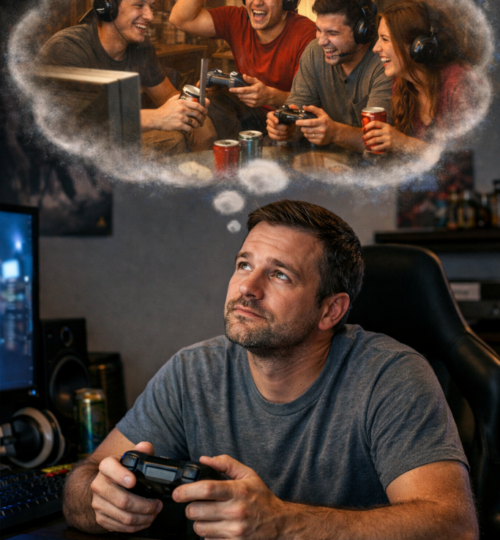
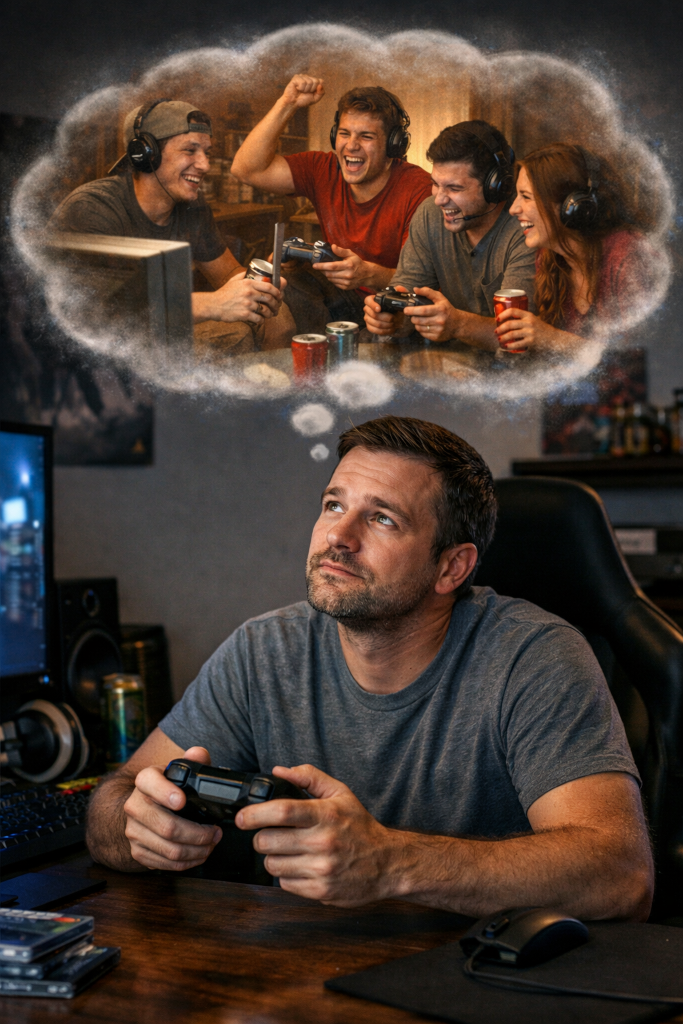
Nostalgia has always had a place in entertainment. Film buffs revisit classic movies. Music fans replay albums from high school. Readers return to beloved novels. Yet in gaming, nostalgia feels different. It feels deeper, more personal, and sometimes even more protective. When gamers talk about a favorite title from years ago, they are not just remembering a story or a soundtrack. They are remembering the hours they spent inside that world, the friends they met there, and the version of themselves who first pressed start.
There is something unique about interactive media that makes nostalgia hit harder than it does in film, television, or music. The reason is not just emotional. It is structural, neurological, and social. Games require participation. They demand attention, decision making, and effort. They often reward skill and persistence. Over time, that combination creates memories that are tied to identity rather than passive observation.
You Were Not Watching. You Were Acting.
When you rewatch a movie from childhood, you revisit a story that played out the same way every time. You can predict each scene. You might notice new details, but the core experience remains fixed.
When you revisit a game from childhood, you step back into a system that once responded directly to you. You remember how you solved puzzles, how you mastered mechanics, and how you overcame challenges that once felt impossible. The memory is not just of what happened. It is of what you did.
Research in cognitive psychology suggests that active participation strengthens memory encoding. When we interact with something, especially in ways that require strategy or problem solving, the brain forms stronger and more durable connections. That means the boss fight you finally conquered or the ladder match you clawed your way up in may leave a deeper imprint than a film scene you passively consumed.
Gamers often remember exact moments of triumph. A clutch round in a tactical shooter. A perfectly timed combo in a fighting game. A long campaign mission that required patience and teamwork. These are not just scenes. They are accomplishments.
Games Are Social Time Capsules
For many players, games are inseparable from the people they played them with. Multiplayer titles in particular become snapshots of a specific social era. Voice chat, LAN parties, clan forums, and late night strategy sessions created bonds that went beyond the screen.
Unlike movies or albums, games often require coordinated effort. You did not just consume content together. You relied on each other. Success might have depended on communication, timing, and trust.
Years later, when someone boots up a classic multiplayer title, they do not just remember the maps or mechanics. They remember the roster. They remember rivalries. They remember inside jokes that only made sense within that digital arena.
That combination of shared struggle and shared success creates strong associative memory. In neuroscience, emotion acts as a powerful amplifier for memory retention. Competitive matches, especially those with high stakes, can trigger adrenaline and stress responses. The brain flags those moments as important. The result is a memory that feels vivid even decades later.
When gamers talk about the golden age of a specific title, they are often talking about a specific time in their lives and the people who were part of it. The game becomes a portal.
Skill and Identity
Other media can influence identity, but games often shape it through performance. A player might be known as a top sniper, a strategic team captain, or the person who always held the objective under pressure. Those reputations mattered within communities.
In competitive environments, leaderboards and rankings formalized that identity. Your name was attached to measurable performance. You could see your progress over time. Wins and losses were recorded. Rivalries were documented.
That kind of visibility leaves a mark. It creates a sense of history. Years later, revisiting a game is not just about replaying it. It is about reconnecting with a former version of yourself who had different skills, reflexes, and responsibilities.
When nostalgia hits in gaming, it is often mixed with self reflection. Players think about how much time they invested, how their skill evolved, and what that effort meant at the time. That depth of involvement is rare in other media.
Technology as a Memory Anchor
Gaming is also closely tied to hardware. Consoles, controllers, keyboards, CRT monitors, early broadband connections, and even the sound of a startup screen can trigger memories.
The sensory cues are strong. The click of a mouse in a quiet room at midnight. The hum of a console fan. The glow of a loading screen in a dark bedroom. These details anchor memories in physical space.
Film and music also have sensory triggers, but gaming often requires a dedicated environment. Players carved out time and space for it. That physical context becomes part of the memory.
When someone sees an old console or hears the boot sequence of a classic system, it can unlock a flood of associated experiences. That is not just nostalgia for the content. It is nostalgia for the ritual.
The Pace of Change in Gaming
Gaming evolves quickly. Mechanics, graphics, and online infrastructure can transform within a few years. That rapid evolution creates clear generational lines.
In film or literature, storytelling fundamentals change more gradually. In gaming, control schemes shift, business models evolve, and online ecosystems rise and fall. A title from the mid 2000s can feel radically different from a modern release.
That contrast makes older experiences feel distinct rather than simply dated. When players revisit a classic, they are reminded of a time before certain systems became standardized. There may have been fewer tutorials, simpler interfaces, or different matchmaking structures. Sometimes those differences feel refreshing. Sometimes they feel challenging. Either way, they highlight how much the medium has shifted.
The faster a medium changes, the more sharply defined its eras become. Nostalgia thrives on clear eras.
Scarcity and Impermanence
Many older games were tied to specific servers, communities, or platforms that no longer exist in their original form. Online matches depended on third party services or small community hubs. When those disappeared, so did the official record of countless hours of play.
That impermanence makes memories feel precious. You cannot always go back and recreate the exact conditions. Even if a game is re released or remastered, the player base is different. The culture is different. The stakes feel different.
In other media, the content usually remains intact. A film from decades ago can still be watched in nearly the same form. In gaming, the context is often lost. Servers shut down. Mods vanish. Community ladders dissolve.
That sense of loss intensifies nostalgia. Players remember not only what they experienced but also what can no longer be experienced in the same way.
Music, Sound, and Emotional Recall
Game soundtracks deserve their own mention. Interactive music often adapts to player actions. A tense buildup during a final objective or a triumphant theme after a victory can tie directly to performance.
Studies on music and memory show that songs from formative years can trigger strong autobiographical recall. In games, those tracks are often linked to moments of high engagement. The brain associates them with achievement or relief.
Hearing an old theme can instantly transport a player back to a specific mission or match. It is not just the melody. It is the context in which it was heard.
Competitive Stakes Amplify Memory
Competitive gaming, whether casual or organized, introduces clear stakes. Rankings, tournament brackets, and seasonal resets create arcs. There is a narrative of rise and fall, improvement and setback.
In psychology, goal oriented behavior tends to strengthen memory consolidation. When effort is directed toward measurable goals, the brain encodes the process more deeply. That is one reason athletes often recall specific games from years ago.
Gamers experience a similar phenomenon. A tense playoff match or a final ladder push before season end can feel as significant as a real world event. The emotional intensity reinforces the memory.
This is one reason competitive titles often generate especially strong nostalgia. They were not just games. They were arenas.
The Role of Community Storytelling
Gaming communities are storytellers. Forums, voice chats, and social platforms allow players to retell moments long after they happen. The more a story is shared, the more it solidifies in memory.
Someone might recount the time a team staged a comeback from impossible odds. Another might remember a rivalry that lasted months. Over time, these stories become part of collective history.
Shared memory strengthens individual nostalgia. When multiple people validate the importance of a moment, it gains weight. It becomes part of a group identity.
Other media have fandoms, but gaming communities often revolve around participation and shared struggle. That difference shapes how memories are formed and preserved.
Why It Matters
Understanding why nostalgia hits gamers so hard is not just an academic exercise. It explains why older titles continue to attract attention. It explains why remasters and re releases generate excitement. It explains why players care about preserving leaderboards, stats, and community archives.
Nostalgia in gaming is not just about graphics or mechanics. It is about identity, community, and time. It is about remembering who you were when you first entered a digital world and who stood beside you there.
For many players, revisiting a classic game is less about escaping into the past and more about reconnecting with it. The medium invites participation, records effort, and ties memories to achievement. That combination makes gaming nostalgia uniquely powerful.
As the industry continues to evolve, new generations will form their own golden eras. The titles may change. The hardware will certainly change. But the structure of interactive memory will remain the same.
When you act, compete, collaborate, and invest yourself in a world, you do not just watch it unfold. You become part of it. And years later, when the music plays or the map loads, it does not feel like a distant memory.
It feels like coming home.