
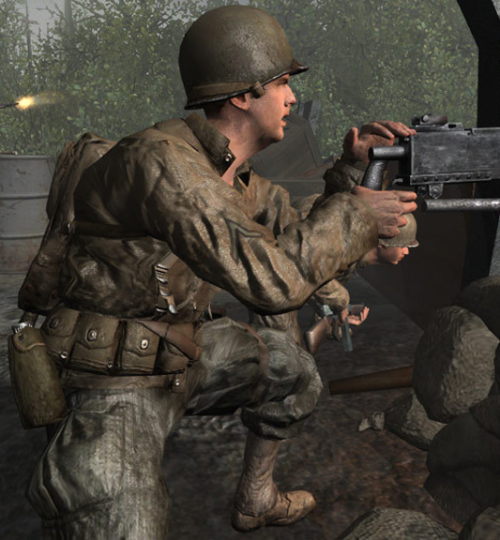
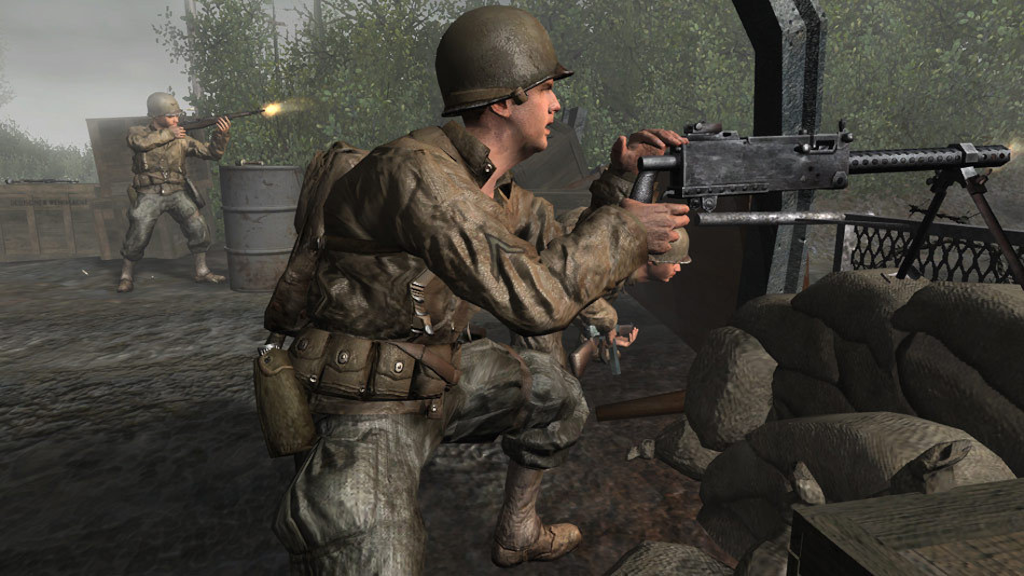
Some games get remembered because they were the first to do something. Others get remembered because they did the fundamentals so well that everything afterward borrowed from them. Call of Duty 2 lands firmly in that second category.
Released in 2005, Call of Duty 2 arrived at a time when WWII shooters were everywhere, but it still managed to feel sharper, louder, and more immediate than most of its peers. It was not trying to be a slow tactical simulator. It was built to keep you moving, keep you under pressure, and keep you scanning corners like your life depended on it. In 2026, plenty of its techniques are familiar because the genre adopted them and carried them forward. That does not make Call of Duty 2 feel obsolete. If anything, it makes it an easy way to see where a lot of “modern shooter language” started to solidify.
This review looks at Call of Duty 2 as it plays today: how it feels, what it does well, what shows its age, and why it still belongs in any conversation about competitive shooter history.
A Campaign Built Like a Highlight Reel, Without Feeling Like a Theme Park
Call of Duty 2’s single-player campaign is structured around multiple Allied perspectives, focusing on the Soviet, British, and American forces across major theaters of war. Even if you do not remember every mission name, you probably remember the rhythm: you get dropped into chaos, the game pushes you toward a clear objective, and you fight your way forward while the battlefield seems to break apart around you.
The campaign’s strongest trait is pacing. Missions are designed to keep you engaged with short-term goals that feel urgent. Capture the building. Hold the position. Push to the next line. Clear the street. The objectives are straightforward, but the game creates tension through enemy pressure, limited cover, and clever sightlines that force you to keep repositioning.
Unlike some WWII shooters that lean heavily into slow creeping movement or extremely open maps, Call of Duty 2 prefers controlled lanes where the action is concentrated. That can sound restrictive, but it is also why the campaign rarely drags. It has momentum. It feels directed.
And importantly, it avoids the vibe of “cinematic on rails” that later entries in the franchise leaned into. Yes, there are scripted moments. But in many missions, the game still gives you enough freedom to choose angles, timing, and approach. You feel like you are playing, not just watching.
The Regenerating Health Choice That Changed Shooter Design
One of Call of Duty 2’s most important design decisions is its health system. Instead of managing health packs, the game uses a “recover if you find safety” approach. Take damage, get to cover, let the screen clear, get back in.
That decision did more than make the game accessible. It changed how firefights are designed. The combat loop becomes about aggression in bursts. You push, you get punished, you retreat, you reset, you push again. It creates a natural tempo that keeps players in motion.
Even if you prefer classic health packs, it is hard to deny how well it fits Call of Duty 2’s style. The levels are built around this system, with cover placed to support quick recoveries and short-distance advances. It also makes the game instantly readable for newer players, even today. The feedback is clear. You know when you are in trouble, you know when you are safe, and you know when it is time to re-engage.
Sound, Smoke, and Visibility: Why Firefights Feel So Intense
Call of Duty 2’s combat has a specific kind of sensory pressure that still works. The audio design hits hard. Rifles crack, machine guns chew through air, grenades punch the room, and distant artillery adds constant unease. The game is not subtle about war being loud, messy, and disorienting.
Then there’s smoke.
Call of Duty 2 uses smoke and dust not just as set dressing, but as gameplay texture. Visibility changes mid-fight. You lose sightlines. You get flanked because you assumed you had a clear lane. It forces you to move carefully even when the game wants you to be bold.
That visibility chaos is a big reason why the campaign still feels intense. In a lot of older shooters, battles are clean and readable. In Call of Duty 2, fights can feel cluttered, not because the game is unfair, but because it is trying to simulate the confusion of a contested space. That confusion is where the tension lives.
Weapons and Handling: Not “Realistic,” But Convincing
Call of Duty 2 is not a hardcore simulation, and it never pretends to be. Weapons are tuned for responsiveness and readability. Recoil exists, sway exists, but the game wants you to shoot often and move frequently.
The weapon roster covers the expected WWII lineup: bolt-action rifles, submachine guns, light machine guns, and a few heavier tools that feel like power spikes when you pick them up. The rifles are especially important. They reward patient aim, but the level design often forces you into medium-range chaos where bolt-actions feel stressful in a good way. You are always aware of the tradeoff: precision versus rate of fire.
Even now, the weapons feel “honest.” When you miss, it usually feels like you misjudged timing, not like the game is playing tricks. When you land shots, the feedback is crisp enough to stay satisfying.
AI and Difficulty: Brutal in Spots, Surprisingly Flexible in Others
Call of Duty 2’s enemy AI is a mix of smart pressure and classic 2005 quirks. Enemies will use cover, reposition, and punish you if you stand still. On higher difficulties, the game becomes a lesson in angle control and patience. You cannot just “walk forward and win.”
That said, Call of Duty 2 also has moments where the design shows its era. Some encounters can feel like enemies are spawning in waves until you cross an invisible threshold. In those spots, the fight can feel less like you are outplaying opponents and more like you are solving the level’s script.
Still, the game’s difficulty balance is generally strong. It rewards tactical movement without demanding perfection. You can play it like an arcade shooter, but it will slap you if you get careless. That’s a good identity for a WWII shooter trying to be intense without becoming inaccessible.
Multiplayer: A Competitive Classic With “Earned” Movement and Map Knowledge
For players who remember Call of Duty 2 as more than a campaign, multiplayer is where the nostalgia gets real. COD2’s multiplayer has a different flavor than modern Call of Duty. It feels closer to classic PC shooter traditions: clean maps, predictable weapon behavior, and a heavier focus on positioning.
There are no elaborate loadout trees, no perk stacks that massively reshape the meta, and no constant unlock treadmill. Skill expression shows up in fundamentals: map routes, pre-aiming common angles, grenade timing, and coordinated pushes.
If you come from modern titles, COD2 multiplayer may feel stripped down. That is the point. The simplicity puts the spotlight on decision-making. It also makes matches feel surprisingly “legible.” You usually understand why you lost a fight. You peeked wrong. You rotated too late. You got caught without cover. That kind of clarity is part of why old competitive communities still respect the game.
Even if you never plan to grind COD2 multiplayer again, it is worth recognizing what it represented. It was one of the titles that helped push Call of Duty from “popular shooter” into “serious competitive platform,” especially in PC circles where server communities and ladders were the lifeblood of long-term play.
What Has Aged, and What Has Not
What still holds up:
- Pacing and mission flow. You rarely get stuck in boring downtime.
- Combat tension. Smoke, sound, and pressure still create intensity.
- Readable gunplay. Simple handling, satisfying feedback.
- Clear competitive fundamentals. Especially in multiplayer.
What shows its age:
- AI scripting in a few big battles. Some fights feel like “trigger the next wave.”
- Limited systemic variety. Modern shooters offer more dynamic tools and sandbox interaction.
- Presentation expectations. The game is not trying to be a cinematic blockbuster in the modern sense, and some players may miss that.
The key point is that the aging here is mostly about expectations, not playability. Call of Duty 2 still feels like a functional, intentional game. It does not feel like a museum piece.
Why Call of Duty 2 Still Matters
Call of Duty 2 matters because it represents a moment where the shooter genre found a new kind of mainstream rhythm. It delivered intense action without demanding simulator-level patience. It presented war as loud and chaotic without making the game unreadable. And it built a multiplayer foundation where skill was not hidden behind systems, but expressed through fundamentals.
If you’re into gaming history, Call of Duty 2 is a clean checkpoint. It shows what the genre valued in 2005 and which ideas survived. If you’re into competitive gaming culture, it is a reminder of the era when communities formed around servers, rivalries, and ladders rather than around seasonal cosmetics and matchmaking algorithms.
And if you just want a good shooter campaign that does not waste your time, it still delivers. You can boot it up, play a mission, and immediately understand why people kept talking about it.
Verdict
Call of Duty 2 remains one of the strongest WWII shooters of its generation, and it still feels surprisingly sharp today. It’s not perfect, and you will see some 2005-era design seams, but its core experience is fast, tense, and satisfying. Whether you’re revisiting it for nostalgia, studying it as a piece of shooter history, or simply looking for a classic campaign with real momentum, Call of Duty 2 earns its reputation.
If your gaming tastes lean competitive, it is also the kind of title that reminds you why clean fundamentals never go out of style.
Available: Call of Duty 2 on Steam