
When the original Call of Duty released in 2003, the World War II shooter genre was already crowded. Titles like Medal of Honor and Allied Assault had set expectations for cinematic war experiences on PC, and many players assumed that future games in the genre would simply follow the same formula.
Instead, Call of Duty took that foundation and expanded it in meaningful ways. It delivered a more immersive battlefield, a stronger emphasis on squad-based combat, and a campaign that presented the war through multiple national perspectives.
More than two decades later, the first Call of Duty remains an important moment in the evolution of first person shooters. It helped define the style of military storytelling that would influence the genre for years to come.
A New Perspective on World War II
 One of the most striking elements of Call of Duty was its structure. Rather than focusing on a single hero, the game presented the war from three different Allied perspectives. Players stepped into the boots of American, British, and Soviet soldiers as they fought across Europe during some of the most intense moments of the conflict.
This approach allowed the campaign to feel broader and more authentic. Each faction experienced different types of missions, environments, and tactical challenges.
The American campaign focused on the western front, placing players in large scale assaults and heavily fortified positions. The British missions leaned more toward stealth and special operations, reflecting the style of commandos operating behind enemy lines. The Soviet campaign delivered some of the most memorable moments in the game, portraying the brutal push toward German occupied territory on the eastern front.
By presenting the war through multiple viewpoints, Call of Duty avoided the trap of turning World War II into a single character story. Instead, it gave players the feeling of being one soldier among many in a massive global conflict.
The Sound and Chaos of Battle
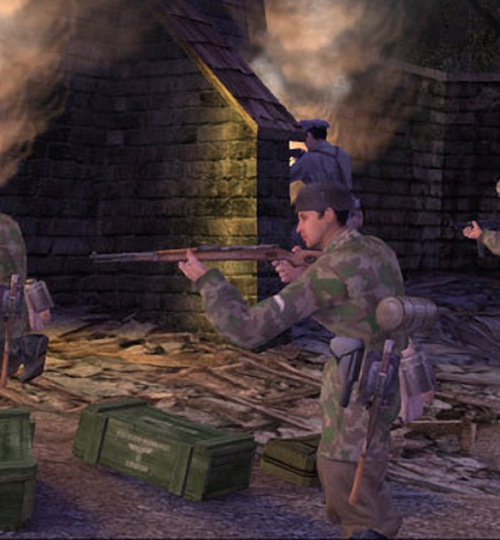
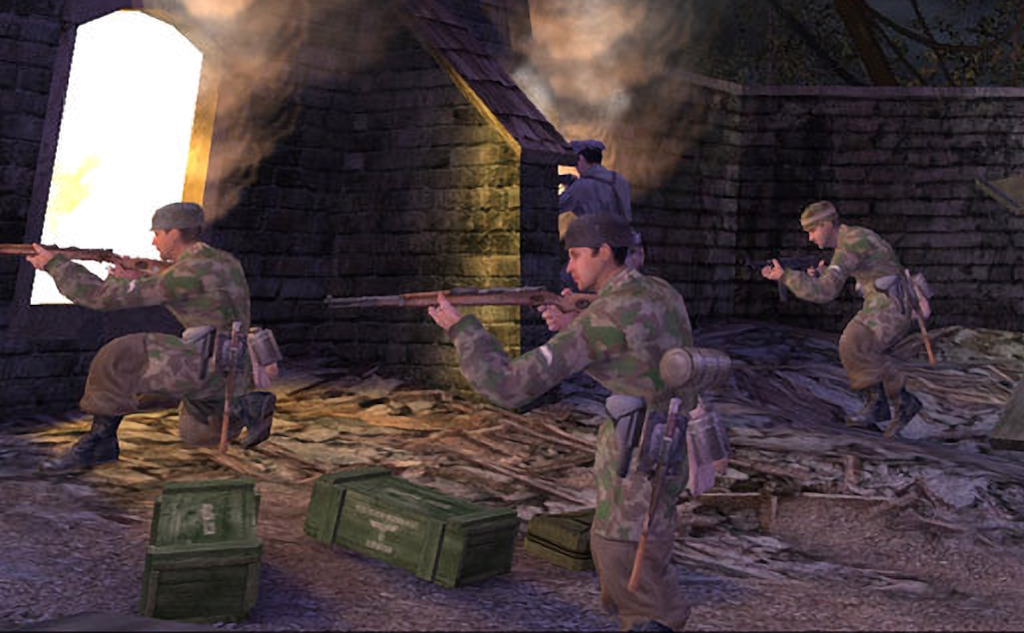
One of the biggest improvements Call of Duty brought to the genre was the sense of battlefield intensity. Previous shooters often placed players in situations where they felt like a lone hero fighting against waves of enemies. Call of Duty changed that dynamic by surrounding the player with allied soldiers who were actively participating in the fight.
During many missions, teammates advanced alongside you, took cover behind walls, fired machine guns, and shouted commands across the battlefield. The result was a combat environment that felt alive.
Gunfire echoed from multiple directions. Mortar shells landed nearby. Friendly soldiers called out enemy positions or warned about incoming grenades. These small details created an atmosphere that made players feel like part of a larger unit rather than a single unstoppable warrior.
Sound design played a major role in creating that immersion. Weapons had a distinct and powerful presence, and explosions carried weight. Even today, the soundscape of Call of Duty holds up well because it was designed to communicate chaos without becoming confusing.
Mission Variety That Kept Players Engaged
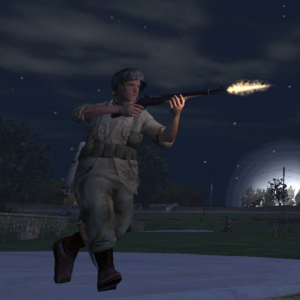 Another strength of the original Call of Duty was the wide variety of missions throughout its campaign. Rather than repeating the same type of combat scenario over and over, the game constantly shifted its pacing and objectives.
Players might begin one mission defending a position while waves of enemies advanced through smoke and artillery. The next mission might involve sneaking through enemy territory to sabotage equipment or rescue captured allies. Later missions escalated into massive assaults across open battlefields filled with tanks and heavy weaponry.
This variety kept the campaign feeling fresh from beginning to end. Each mission introduced new challenges and environments, which encouraged players to adapt their strategies.
It also helped reinforce the sense that the war was complex and constantly changing. Soldiers were not simply advancing forward in a straight line. They were responding to new threats, shifting fronts, and evolving objectives.
Weapons That Felt Grounded and Authentic
The weapons in Call of Duty were another highlight. Players had access to a variety of historically inspired firearms that represented the different Allied forces.
American soldiers carried weapons such as the M1 Garand and Thompson submachine gun. British forces relied on the Lee Enfield rifle and Sten submachine gun. Soviet missions featured iconic weapons like the Mosin Nagant rifle and the PPSh-41.
Each weapon had a distinct feel in combat. Rifles delivered powerful and accurate shots but required careful aim. Submachine guns offered rapid fire capability but were more effective at close range. Light machine guns provided heavy suppression but came with slower movement and reload times.
This balance encouraged players to think about positioning and weapon choice rather than simply running forward and firing nonstop.
The Influence of Squad-Based Combat
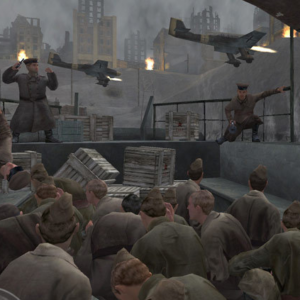 One of the defining features of Call of Duty was its focus on teamwork. Although the player did not directly command squad members, friendly soldiers played an important role in the flow of combat.
They suppressed enemy positions, advanced through cover, and occasionally saved the player from overwhelming situations. Their presence reinforced the idea that success on the battlefield depended on cooperation rather than individual heroics.
This concept would later become a defining feature of many military shooters. Games across the genre began emphasizing squad mechanics, coordinated assaults, and AI teammates who helped create a more believable war environment.
Call of Duty helped push that shift forward.
Multiplayer and the Competitive Spirit
While the campaign often receives the most attention when people remember the original Call of Duty, its multiplayer component also played an important role in the game’s legacy.
The multiplayer mode introduced a variety of game types that encouraged both tactical teamwork and fast paced firefights. Modes such as team deathmatch, search and destroy, and headquarters quickly became popular among competitive players.
Maps were designed with multiple routes, sniper positions, and strategic chokepoints. This encouraged teams to coordinate movement and control key areas of the map.
Weapons and equipment were balanced in ways that rewarded both aggressive playstyles and careful positioning. Skilled players could dominate with rifles or sniper weapons, but teamwork often made the difference in organized matches.
For many players in the early 2000s PC gaming scene, Call of Duty multiplayer became a staple of online competition.
Technology and Design That Aged Well
From a technical standpoint, Call of Duty used a heavily modified version of the Quake III engine. This technology allowed the developers to deliver smooth performance while still presenting detailed environments and impressive visual effects for the time.
Explosions kicked up dirt and debris. Buildings showed damage during intense firefights. Smoke and dust filled the air during large scale battles.
While modern graphics have obviously advanced far beyond what was possible in 2003, the art direction and environmental design of Call of Duty helped the game maintain its atmosphere even years later.
Good design tends to age better than raw graphical power, and the original Call of Duty demonstrates that principle well.
Memorable Moments That Defined the Experience
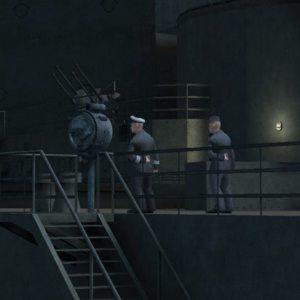 Several moments from the campaign stand out as defining examples of the game’s design philosophy.
One Soviet mission places players among a group of soldiers crossing a river under heavy fire before advancing through a devastated city. The sense of desperation and determination in that mission captures the emotional weight of the eastern front.
Another mission has players storming fortified enemy positions while artillery and machine gun fire fill the air. The battlefield feels chaotic, but allied soldiers continue pushing forward.
These moments succeed because they are not built around exaggerated spectacle. Instead, they emphasize the human experience of war through teamwork, tension, and survival.
A Legacy That Shaped the Shooter Genre
The influence of Call of Duty extends far beyond its original release. The franchise would eventually grow into one of the most recognizable names in gaming, with numerous sequels exploring different conflicts and settings.
However, the foundations of that success were built in the first game.
It demonstrated how cinematic storytelling, squad based combat, and immersive sound design could come together to create a compelling war experience. It also helped set expectations for pacing and mission variety in military shooters.
Many elements that players now take for granted in modern shooters can trace their roots back to ideas that Call of Duty helped popularize.
Why the Original Still Matters
Returning to Call of Duty today offers an interesting perspective on how the genre has evolved. Modern shooters often emphasize customization systems, persistent progression, and live service updates.
The original Call of Duty came from a time when games focused more heavily on tightly designed campaigns and straightforward multiplayer competition.
That simplicity is part of what makes the game still enjoyable. Players can jump into a mission and immediately experience the tension and excitement of battlefield combat without navigating complex systems or menus.
It reminds us that strong level design, immersive sound, and thoughtful pacing can carry a game a long way.
Final Thoughts
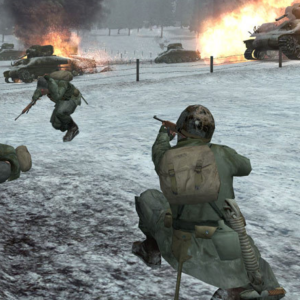 Call of Duty (2003) remains one of the most important military shooters ever released. It expanded the possibilities of the genre by presenting war through multiple perspectives, surrounding the player with active allies, and emphasizing the chaotic atmosphere of real battlefield engagements.
The campaign delivered memorable missions that balanced action with storytelling, while the multiplayer mode created a foundation for competitive communities that would grow in the years that followed.
Even after decades of technological advancement, the core design of the original Call of Duty still holds up. Its influence can be seen across countless shooters that came after it.
For players interested in the history of competitive shooters and the evolution of military themed games, revisiting this classic offers a reminder of how powerful thoughtful design and immersive storytelling can be.