
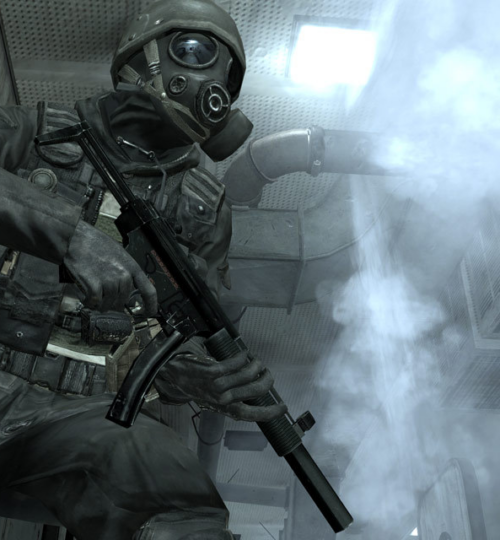
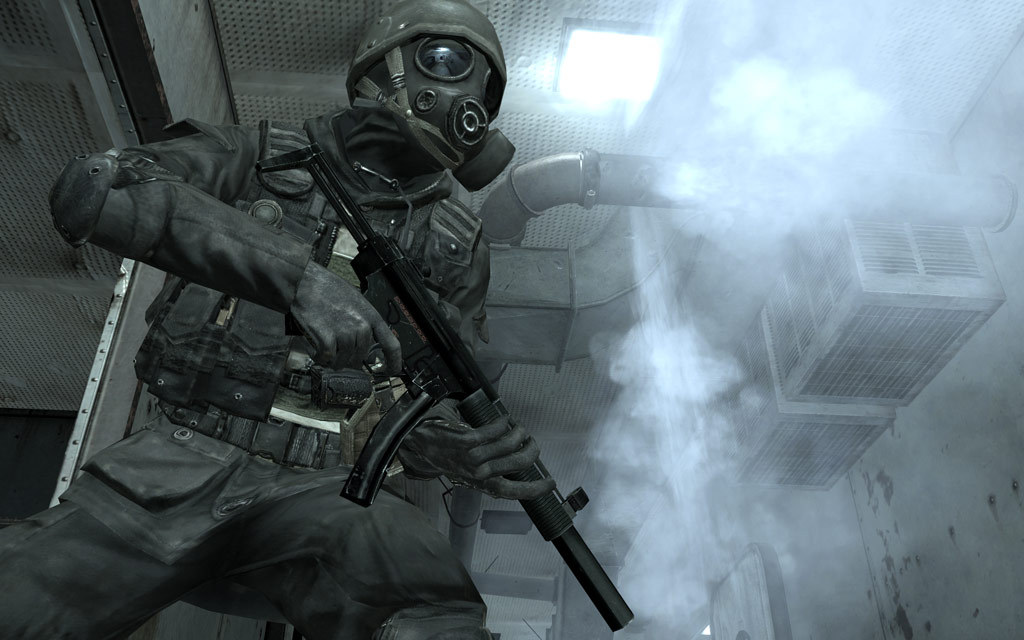
Some games do not just “age well.” They change what people expect from a whole genre, then spend the next decade getting copied, remixed, and argued about. Call of Duty 4: Modern Warfare is one of those games.
 When it launched in 2007, shooters were already huge. But the mainstream template was still split: military shooters leaned tactical and slower, while arcade shooters went big on spectacle but often felt disconnected from anything resembling a real modern battlefield. Modern Warfare landed in the middle and somehow made that space feel obvious in hindsight. It delivered a blockbuster campaign that moved like a movie without losing the tension of being in the fight, and it paired that campaign with multiplayer systems that quietly rewired how progression, loadouts, and reward loops would work for years.
Nearly two decades later, it is easy to take its ideas for granted. That is actually the point. Modern Warfare became so influential that the genre absorbed its language. If you have ever chased a level for a perk, built a class around an attachment, or heard the clean “ping” of a kill confirmation followed by a quick streak reward, you have lived in its shadow.
Setting the Stage Without Overexplaining It
 Modern Warfare was a clean break from the series’ World War II identity, and it was not a timid one. It jumped into contemporary conflict with a confident tone: special operations raids, intelligence briefings, geopolitical chaos, and a sense that events were bigger than any one soldier. The game also handled perspective in a way that kept you unsettled. You are not a single invincible hero. You are a participant moving through a machine that is always in motion, and sometimes that machine rolls over you.
Infinity Ward’s approach was not “realism” in the simulation sense. The weapons, the pacing, and the mission scripting are still designed for playability and drama. But the presentation leans grounded enough that the violence feels weightier than the more cartoonish shooters of the era. It wanted the player to feel like they were in a modern conflict, not just watching one.
The Campaign: Spectacle With Teeth
The campaign is the part people still quote, but what makes it work is not just the headline moments. It is the rhythm. Missions move between stealth, sudden chaos, and controlled set pieces, and the transitions keep you from settling into autopilot.
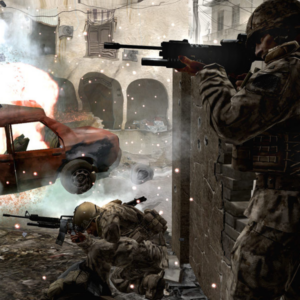 Take the early SAS missions that lean into methodical movement through buildings and back alleys. They establish tone: night vision, tight corridors, a few shots that matter. Then the game flips perspective to the U.S. Marines and throws you into wide open combat spaces where air support, armor, and firefights create a different kind of stress. That constant repositioning is deliberate. You are never allowed to feel like you have solved the game.
The most famous sequences get attention for a reason. The AC-130 mission is often discussed as a standout because it changes your relationship with the battlefield. You are powerful, distant, and terrifying, watching human targets through sensors and thermal imaging. It is thrilling, but it is also uncomfortable in a way the game clearly understands. That discomfort is not a sermon, but it is present.
And then there is the mission that became a defining moment in shooter storytelling, the one that reminds you, bluntly, that you are not protected by narrative armor. It is shocking, yes, but it is also effective because the game earns it. It has been building tension around escalation, and when the escalation hits, it lands with the force it is supposed to have.
What stands out now is how economically the campaign tells its story. It is not a sprawling RPG with endless dialogue trees. It is a tight, directed experience that uses level design, radio chatter, and visual language to communicate urgency. You can finish it in a handful of hours, but it sticks because it knows exactly what kind of ride it is offering.
Audio and Atmosphere: A Big Part of the Memory
A lot of people remember Modern Warfare through sound. The sharp crack of rifles, the distant thud of explosions, the echo inside buildings, and the way the mix shifts depending on what is happening around you. The game made firefights feel dense. Even when you were not looking at something, you could often hear it, and that mattered for immersion.
The music does not constantly demand attention, but when it swells, it sells the stakes. The UI sounds are equally iconic, from menu clicks to match-start cues. These details are part of why the game is still instantly recognizable to anyone who spent time with it.
Graphically, Modern Warfare was impressive in 2007, but what holds up better than raw fidelity is the art direction and lighting. Smoke, sparks, nighttime operations, and interior spaces all contribute to a mood that still reads clearly today. It does not need photorealism to feel intense. It needs clarity, contrast, and momentum, and it has those.
Multiplayer: The Blueprint That Everyone Borrowed
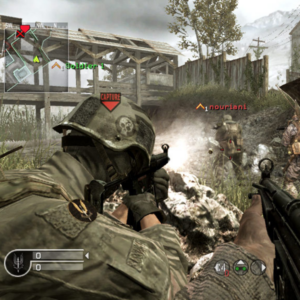 If the campaign was the fireworks, the multiplayer was the engine that kept the game alive. Modern Warfare’s multiplayer did not just add perks and loadouts. It made them the center of the experience. You were not simply playing matches. You were building an identity, a kit, and a progression path that felt personal.
The Create-a-Class system gave players agency without drowning them in complexity. Pick a primary weapon, pick a secondary, choose perks that reinforced a playstyle, and tweak with attachments as you leveled. It sounds standard now. In 2007, it felt like a new language.
Progression mattered because it was paced well. You unlocked tools frequently enough to keep you curious, but not so quickly that it felt meaningless. The prestige system, for the players who wanted a reset badge of honor, added a long-term chase without requiring external ranking ladders to create commitment. It was a social flex and a personal goal rolled into one.
Killstreaks were another turning point. They rewarded momentum and turned individual performance into mid-match power spikes. This created a distinct tempo: early match skirmishing, mid-match streak swings, and end-match scramble. It also introduced a psychological layer. Players began to think not just about winning the current gunfight, but about protecting a streak, denying an enemy’s streak, and controlling the map to feed future streaks.
Modern Warfare’s maps also deserve credit. The best ones were not symmetrical arena boxes. They felt like places, with lanes, flank routes, chokepoints, and vantage points that created both predictable patterns and surprising plays. Some maps encouraged cautious movement, others rewarded aggressive pushes. Spawn logic was not perfect, but the overall design gave matches a readable flow. You learned where fights would happen, then learned how to break those expectations.
Balance, Meta, and the Early Days of “The Loadout Argument”
No honest review can pretend Modern Warfare was perfectly balanced. It was not. Certain weapons and setups became dominant, and some perks created frustrations that still come up in conversations today. But those frustrations were also part of the multiplayer culture. People argued about “cheap” strategies because the game gave players enough freedom to build strategies in the first place.
That is one of the weird compliments you can give a competitive game: the meta was strong enough that people cared. Modern Warfare created early versions of discussions that would define online shooters later. What is fair? What is skillful? What counts as outplaying someone versus exploiting a system?
The game also hit at a moment when voice chat and party play were becoming a bigger deal for console and PC communities alike. Modern Warfare’s matches were social, for better and worse. Rivalries formed quickly. Friend groups developed rituals. A good lobby could feel like a recurring cast. If you were building community around competitive gaming in that era, Modern Warfare was the kind of title that naturally generated stories.
How It Feels to Play Now
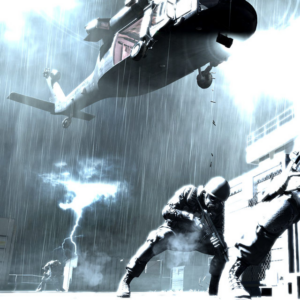 Playing Modern Warfare today can be a fascinating time capsule. Movement is snappy but not hyperactive. Gunplay is direct. Time-to-kill feels fast compared to some modern entries, which makes positioning and first shots matter a lot. The pace sits in a sweet spot: quicker than tactical shooters, more grounded than the full-on slide-and-bounce chaos that later became common in the genre.
The campaign remains highly playable because it is tightly designed. It does not rely on modern open-world padding. Missions are curated experiences with clear intent. Even if you know what is coming, the execution still works.
Multiplayer, depending on how you access it today, is where nostalgia collides with reality. The design is still strong, but modern players are used to different quality-of-life features, matchmaking expectations, and anti-cheat standards. If you are revisiting it, the best mindset is to treat it like a classic: appreciate the structure and the feel, and remember that it helped shape what “modern multiplayer” even means.
Legacy: Why This Game Still Matters
Modern Warfare’s legacy is everywhere, and not just in Call of Duty. It helped cement the concept that a shooter could be both a cinematic campaign and a long-term progression-driven multiplayer hobby. It normalized persistent unlocks, perks as identity, and match-to-match reward loops. It also proved that modern military settings could become a mainstream blockbuster without sacrificing intensity.
It also marked a cultural turning point. The late 2000s were a period where online gaming was becoming a default social space. Modern Warfare was a title people did not just play. They lived in it for a while. If you ask a group of longtime shooter fans about their early online memories, odds are Modern Warfare is in the conversation.
Final Verdict
Call of Duty 4: Modern Warfare is still worth calling a classic, not because it is flawless, but because it is foundational. The campaign delivers a focused, high-impact experience that still punches above its weight. The multiplayer introduced systems that became industry standards, and it did so with a confidence that made the whole package feel inevitable in hindsight.
If you care about competitive shooters, multiplayer history, or the moment when online progression became the norm, Modern Warfare is required reading. It is the kind of game that makes you realize how much of modern gaming language was written in 2007, one match at a time.
Available: Call of Duty 4: Modern Warfare on Steam
Available: Call of Duty: Modern Warfare (Remastered) on Steam