
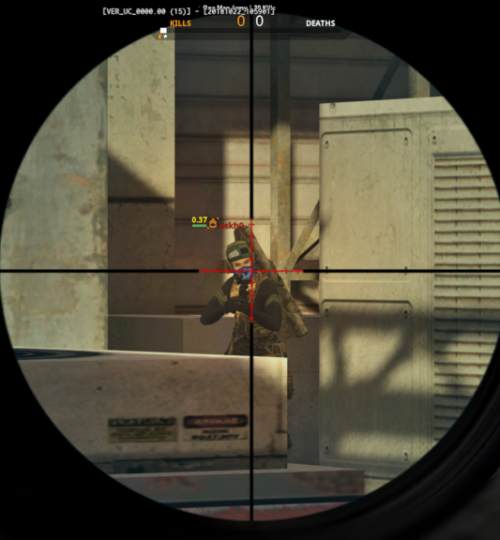
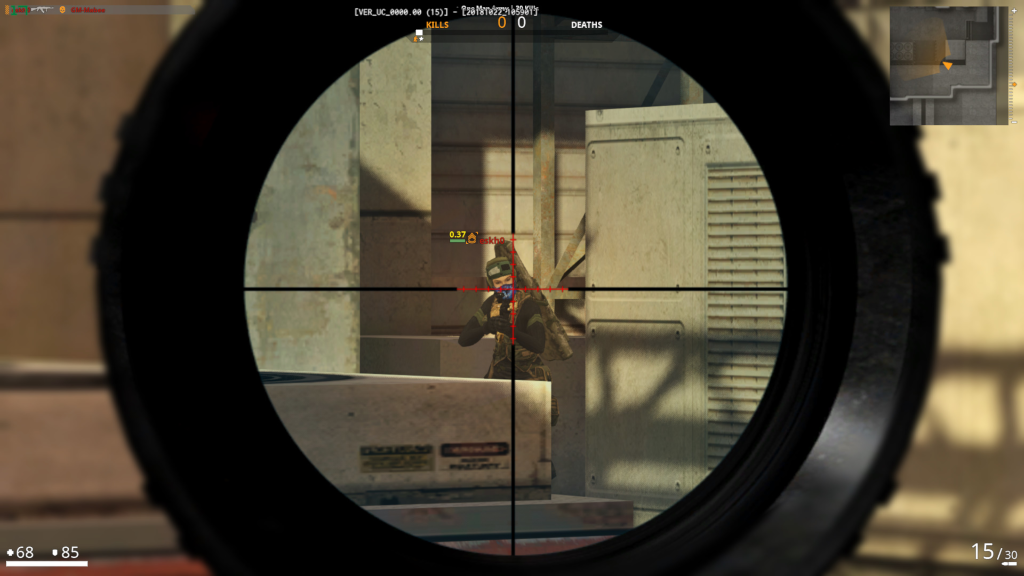
Combat Arms arrived at a very specific moment in PC shooter history. In 2008, most competitive FPS games still expected you to buy in. Combat Arms did the opposite. It went free-to-play, leaned into fast public matches, and built a progression treadmill that rewarded the kind of repeat play that keeps a community alive for years.
 That combination made it easy to understand why so many players fell into it. It was accessible, chaotic, and surprisingly flexible for its era. You could chase ranks, experiment with weapon categories, and jump between classic modes like Elimination, Capture the Flag, and One Man Army without needing to convince your friends to spend money first.
And yet, Combat Arms also became a textbook example of how a competitive shooter can be undermined by issues that have nothing to do with map design or gunfeel. If you have ever heard the phrase “great game, rough ecosystem,” Combat Arms is often what people mean.
This is a mixed review on purpose. There is a genuinely fun shooter here, and there always has been. But the community’s long-running complaints are not nitpicks. They are structural problems that shaped the game’s reputation, and they still echo in the Steam era.
What Combat Arms Gets Right: Pace, Variety, and Instant Action
Combat Arms is built around quick engagements. It is not trying to be a simulator. Movement is snappy, time-to-kill is often short, and most matches are designed to keep you in the action loop: spawn, fight, upgrade, repeat. That pace is a big reason it stayed sticky for so long. Even if you only have 20 minutes, you can get meaningful play in.
The “arcade tactical” sweet spot
The game sits in an interesting lane. It borrows the modern military look and the familiar weapon categories, but it plays closer to an arcade shooter than a realism-first title. The result is a competitive vibe that is more about angles, reaction time, and confidence than slow discipline. If you like the feeling of winning fights through raw mechanics, Combat Arms can still scratch that itch.
Modes that naturally create rivalries
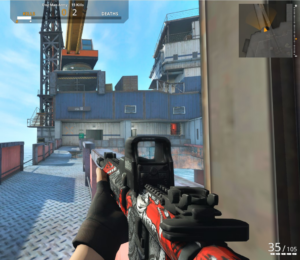 Combat Arms supports a wide set of multiplayer modes, including One Man Army, Elimination, and Capture the Flag. That matters because mode variety is not just “more stuff,” it is more ways for players to specialize.
One Man Army in particular is a big deal for the game’s identity. A shooter that can support real 1v1 ego battles tends to build storylines. You remember the names that beat you. You remember the map where you clutched. That is a huge part of why Combat Arms could feel personal in a way that many lobby shooters do not.
The Progression Hook: Ranks, Loadouts, and the Grind
Combat Arms was designed to keep you chasing “one more match.” Progression is central to the experience, and the modern Steam listings still highlight a ladder-style ranking track.
Loadout culture and “try everything” energy
One of Combat Arms’ most enduring strengths is how easy it is to bounce between playstyles. Rifles, SMGs, shotguns, snipers, explosives, and sidearms all have a place, and the game’s culture has always been about experimenting. That experimentation is part of what made it fun even when it was unbalanced. Sometimes the point was not purity. Sometimes the point was chaos you could control.
Free-to-play economics, the good and the bad
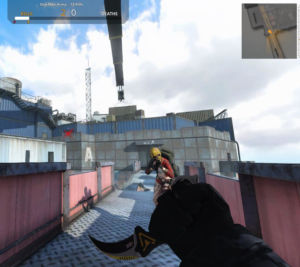 Free-to-play gave Combat Arms reach. It also introduced the classic F2P tension: the difference between “I can grind for this” and “someone else paid for this.” The modern Steam entries still list in-app purchases.
To be fair, Combat Arms is not alone here. Nearly every long-running F2P shooter struggles with the same questions:
- Is the game fair at the top end?
- Are certain items effectively pay advantages?
- Does monetization pressure distort balance decisions?
Combat Arms’ community has argued about those questions for years, and those debates never fully went away.
The Steam Era: What “Combat Arms” Means in 2026
If you search on Steam today, “Combat Arms” is not a single product in practice. The main branches you will see are:
- Combat Arms: Reloaded (Steam release date Oct 31, 2018), listed with VALOFE as publisher and VALOFE, NEXON as developers, and using nProtect GameGuard as its anti-cheat.
- Combat Arms: the Classic (Steam release date Jul 14, 2020), also under VALOFE publishing, and also listing kernel-level anti-cheat with nProtect GameGuard.
This matters because players are often talking about different “eras” of the game when they leave reviews.
Review reality check
 On Steam, both versions land in mixed territory overall, with recent sentiment often dipping lower depending on the month.
- Reloaded shows Mixed reviews in English (around 50% positive in the snapshot captured from the store page) and lists kernel-level anti-cheat usage.
- The Classic shows Mixed overall in English (55% positive in the snapshot captured), while Recent Reviews in that snapshot show Mostly Negative (36% positive).
So yes, the “mostly negative” vibe people mention is not coming out of nowhere. Even when the overall score is mixed, the recent trend can swing harshly, which usually signals a live-service frustration pattern: cheaters, stability, population, updates, or monetization decisions.
The Biggest Complaint: Competitive Integrity and Cheating
Here’s the hard part. Combat Arms has always lived or died on whether people believe their matches are legitimate.
The game’s history is full of community talk about hacking and weak enforcement. You can find that theme everywhere, from old forum posts to aggregated user reviews. Metacritic user reviews, for example, repeatedly cite hackers and lag as major issues. And long-running community discussions going back many years have hammered the same point: when players assume foul play, the entire social fabric breaks down.
Why it hits Combat Arms harder than some shooters
In a slower tactical shooter, a suspicious moment might be rare enough that you shrug it off. In a fast arcade FPS, you die a lot. That means you see a lot of questionable situations. Even if only a small fraction are actual cheaters, the perception problem scales up quickly. Once a community starts defaulting to “that felt like hacks,” retention drops.
Anti-cheat is necessary, but trust is the real currency
Both Steam versions explicitly note kernel-level anti-cheat and identify nProtect GameGuard.
That is a double-edged sword:
- Pro: it signals the developers are taking enforcement seriously.
- Con: kernel-level tools raise privacy and stability concerns for some players, and they can still fail to stop determined cheat ecosystems.
The community frustration tends to come from the gap between “we have anti-cheat” and “the match still felt compromised.”
What the Community Still Likes: The Core Loop and the “Old Shooter” Feel
Despite the criticism, Combat Arms continues to attract a certain type of player, and it is not hard to understand why.
1) It is immediate and familiar
If you grew up in the era of server browsers, clan tags, and simple objective modes, Combat Arms feels like home. It is a shooter that does not demand that you learn a meta economy system or a hero roster. You pick a loadout and go.
2) It supports both sweat and nonsense
Combat Arms is one of those games where you can play seriously one match and then do something ridiculous the next. That flexibility is underrated. A community survives longer when it can accommodate both competitive grinders and casual chaos enjoyers.
3) It has identity
Even people who roast Combat Arms tend to remember it vividly. That is not nothing. Many shooters are “fine” and then forgotten. Combat Arms is messy, but distinct.
The Honest Verdict: A Fun Shooter Worth Remembering, With Warnings Attached
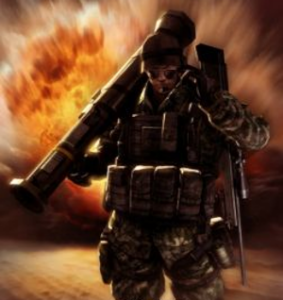 If you are evaluating Combat Arms today, here is the cleanest way to frame it:
Combat Arms is a fast, approachable, mode-rich FPS with a strong competitive soul. It earned its following because the gunplay loop is satisfying, the pacing is addictive, and the modes naturally produce rivalries.
But Combat Arms also carries long-standing trust issues that can poison the experience, especially for competitive-minded players. Community complaints about hackers and match integrity have been persistent for years, and modern review sentiment on Steam reflects ongoing frustration cycles.
Who should try it in 2026
- Players who miss older-style lobby shooters and want something immediately playable.
- People who enjoy 1v1 and small-team intensity, where personal skill and pressure are the point.
- Nostalgia-driven FPS fans who can tolerate rough edges and treat it as a “comfort game.”
Who should be cautious
- Players who tilt hard when matches feel unfair.
- Anyone who only enjoys shooters when ranked integrity is airtight.
- Players uncomfortable with kernel-level anti-cheat as a requirement.
Combat Arms is not a clean recommendation. It is a lived-in one.
At its best, it is the kind of shooter that makes you slam “ready” again because you know you can play better. At its worst, it is the kind of shooter that makes you question why you are trying so hard in a lobby you do not trust.
That contradiction is the Combat Arms legacy. It deserved the love it got, and it also earned the criticism.
Available: Combat Arms: The Classic on Steam
Available: Combat Arms: Reloaded on Steam