
There are certain games that define a moment, and then there are games that continue to define entire generations long after their release. Half-Life 2 belongs firmly in the second category. Originally released in 2004, it arrived during a time when PC gaming was evolving rapidly but had not yet reached the level of cinematic immersion that many developers were aiming for.
What Valve delivered was not just a sequel, but a statement about what games could be when storytelling, physics, and player agency were treated as equally important pillars. Years later, returning to Half-Life 2 feels less like revisiting an old game and more like stepping into a foundation that modern gaming is still building on.
A World That Feels Alive Without Trying to Impress
 From the moment you step off the train into City 17, Half-Life 2 establishes something that many modern titles still struggle to achieve. It does not rely on spectacle alone to grab attention. Instead, it builds atmosphere through subtlety.
The architecture feels oppressive. The muted color palette reinforces a sense of control and decay. The Combine presence is not just told through dialogue but shown through patrols, surveillance, and the behavior of citizens. People move out of the way. Conversations stop when you approach. There is tension in the air before a single shot is fired.
What stands out most is how natural this all feels. There are no intrusive tutorials or forced exposition dumps. The world introduces itself through observation. You learn by existing within it.
Even today, this design philosophy feels refreshing. Many games aim to overwhelm the player early. Half-Life 2 does the opposite. It earns your attention.
Physics That Changed the Game
 It is impossible to talk about Half-Life 2 without discussing its physics system. At the time, the introduction of the Source engine brought a level of interactivity that felt revolutionary. Objects were not just static decorations. They had weight, movement, and purpose.
The gravity gun became the centerpiece of this system. It was not just a weapon. It was a tool that encouraged creativity. Players could pick up saw blades, barrels, and debris, turning the environment itself into a combat system.
What makes this still impressive is how seamlessly it integrates into gameplay. Physics puzzles never feel like separate segments. They are part of the world. Whether you are building makeshift bridges, clearing obstacles, or solving environmental challenges, the game trusts you to figure things out.
Modern games have more advanced engines and higher fidelity, but the design behind Half-Life 2’s physics remains a benchmark. It is not about realism alone. It is about meaningful interaction.
Combat That Rewards Awareness
Combat in Half-Life 2 is not about overwhelming the player with constant action. Instead, it emphasizes positioning, timing, and awareness.
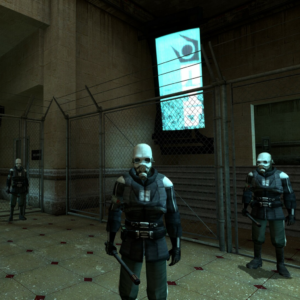
Enemies behave with purpose. Combine soldiers use cover, coordinate attacks, and flush you out with grenades. Headcrabs and zombies introduce a different kind of tension, forcing players to adapt their approach. Each encounter feels like a small tactical problem rather than a repetitive firefight.
Weapons are varied and satisfying without being excessive. The shotgun delivers impact. The SMG provides control in chaotic situations. The crossbow rewards precision. And of course, the gravity gun changes how you think about every encounter.
What stands out is pacing. The game knows when to slow things down and when to escalate. It avoids fatigue by constantly shifting the rhythm. One moment you are navigating tight corridors under pressure. The next you are exploring open environments or solving puzzles.
This balance keeps the experience engaging from start to finish.
Storytelling Without Breaking Immersion
 Half-Life 2 tells a complex story without ever taking control away from the player. There are no traditional cutscenes. You are always in Gordon Freeman’s perspective. Events unfold around you rather than being presented to you.
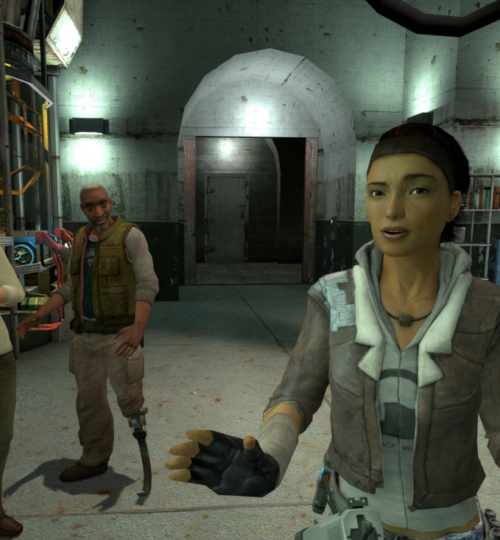
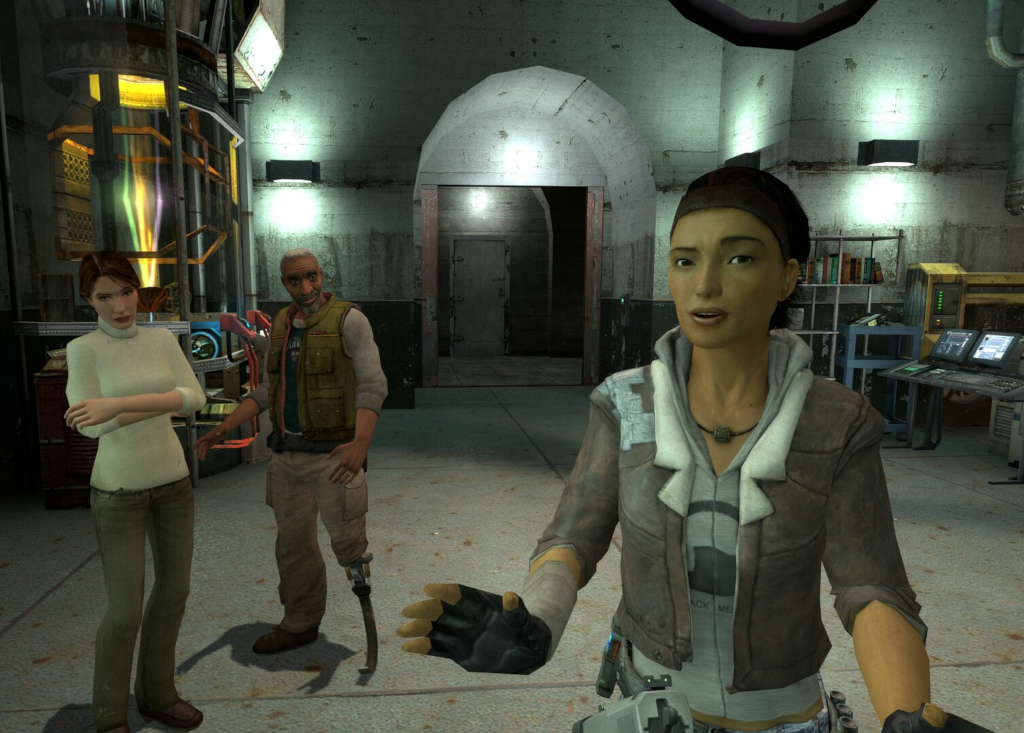
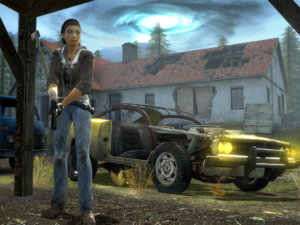
Characters like Alyx Vance, Dr. Kleiner, and Eli Vance feel grounded because they exist within the world rather than outside of it. They talk to you, move around you, and react to situations in real time.
Alyx, in particular, stands out as one of the most natural companions in gaming. She is helpful without overshadowing the player. Her presence adds emotional weight without disrupting the flow.
The narrative itself blends science fiction with themes of control, resistance, and survival. It does not rely on excessive exposition. Instead, it allows players to piece together the story through environment, dialogue, and experience.
Even today, this approach feels ahead of its time. Many games still struggle to maintain immersion when delivering story. Half-Life 2 solves this by never taking the player out of the world.
Level Design That Guides Without Restricting
One of the most impressive aspects of Half-Life 2 is how it guides players without making them feel guided.
Levels are designed to subtly direct attention. Lighting, architecture, and movement all work together to point you in the right direction. You rarely feel lost, yet the game never relies on obvious markers or intrusive UI elements.
Each chapter introduces new mechanics or variations on existing ones. Ravenholm shifts the tone into survival horror. The vehicle sections expand the scale and pacing. The prison sequence introduces coordinated combat scenarios.
Despite these changes, the game maintains a consistent identity. It never feels disjointed. Each section builds on what came before, creating a sense of progression that feels natural. This kind of design is often overlooked, but it is a major reason why the game remains so playable years later.
Sound Design and Atmosphere
Sound plays a critical role in Half-Life 2’s identity. The ambient noise of City 17, the distant hum of machinery, and the unsettling audio cues in areas like Ravenholm all contribute to the overall experience.
Weapons sound distinct and impactful. Environmental audio reinforces the sense of space and danger. Silence is used just as effectively as sound, creating tension in quieter moments.
The soundtrack is used sparingly but effectively. When music does appear, it enhances key moments without overwhelming them. This restraint allows the atmosphere to breathe. Together, these elements create a world that feels cohesive and immersive.
A Legacy That Still Matters
 Half-Life 2 is often discussed in terms of its historical impact, but what matters more is how it holds up today.
Many of its ideas have been adopted, refined, and expanded by other games. Physics based interaction, environmental storytelling, and seamless narrative delivery are now common expectations. But seeing where these ideas were executed so effectively for the first time provides a different kind of appreciation.
Returning to Half-Life 2 highlights how strong design can outlast technological limitations. The visuals may not match modern standards, but the experience remains engaging because it is built on solid principles. It also serves as a reminder that innovation does not always come from adding more. Sometimes it comes from focusing on how systems work together.
Why It Still Deserves Your Time
For players who experienced Half-Life 2 at launch, revisiting it offers a chance to see how much of modern gaming traces back to its design. For those who have never played it, the game remains approachable and rewarding. It does not require nostalgia to appreciate. Its strengths are still visible, still relevant, and still impactful.
In a time where games often compete for attention through scale, realism, and constant updates, Half-Life 2 stands as an example of something different. A focused, deliberate experience that respects the player’s intelligence and time. It is not just a classic because of when it was released. It is a classic because of how it was built.
Final Thoughts
 Half-Life 2 remains one of the most important games ever made, not just for its innovations but for how those innovations were integrated into a cohesive experience.
It delivers a world that feels real, mechanics that feel meaningful, and a story that unfolds naturally. It avoids unnecessary complexity while still offering depth.
Most importantly, it proves that great design does not age in the same way technology does. It evolves, influences, and continues to inspire.
For a game that helped shape the direction of modern PC gaming, Half-Life 2 still feels remarkably current. And that may be its greatest achievement.