
There is something uniquely satisfying about revisiting a game that sits right on the edge of two eras. Not quite retro, not quite modern, but firmly planted in a time when developers were experimenting with cinematic storytelling while still honoring the raw gameplay that defined earlier shooters. Quake 4 is one of those games. Released in 2005, it arrived during a transitional moment for first-person shooters, and it carried the weight of a legendary name while trying to push the series in a new direction.
Looking back today, Quake 4 stands as more than just a sequel. It is a snapshot of a design philosophy that valued intensity, immersion, and mechanical depth in equal measure. It may not always get the same spotlight as other entries in the franchise, but there is a strong case to be made that it deserves a second look.
A Direct Continuation With a Strong Identity
 One of the most important things Quake 4 does right is its commitment to continuity. This is not a loose reinterpretation or a soft reboot. It is a direct sequel to Quake II, picking up the war against the Strogg and placing players right in the middle of a full-scale invasion.
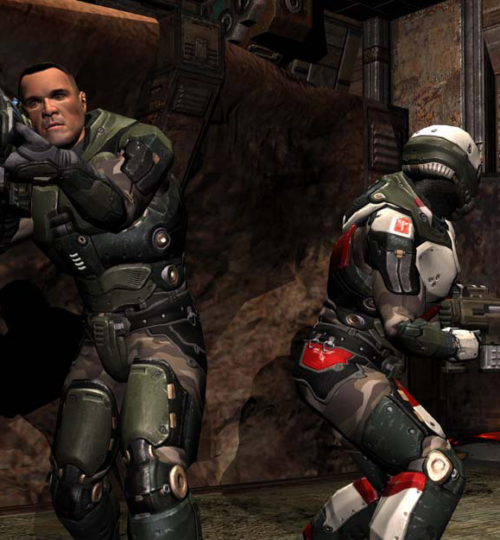
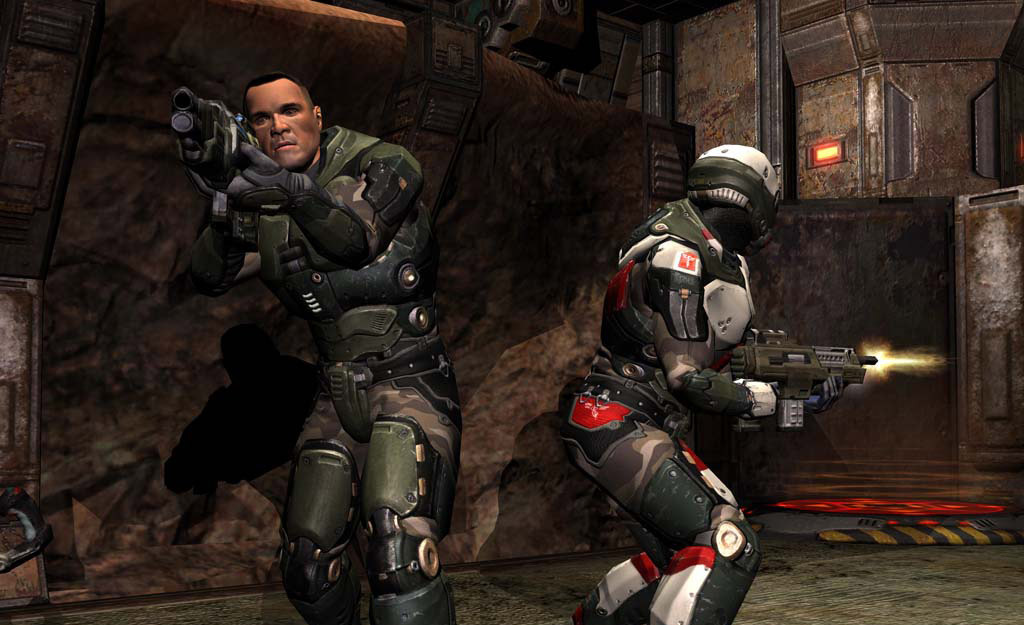
You step into the boots of Marine Corporal Matthew Kane, part of Rhino Squad, as humanity launches a counterattack on Stroggos. The stakes are immediate and clear. This is not a lone wolf story. You are part of a larger military operation, and that framing adds a layer of structure that many shooters of the time either avoided or struggled to execute well.
The narrative unfolds through in-game events rather than heavy reliance on cutscenes. Squad members move with you, communicate over comms, and react to the environment. It creates a sense of presence that feels grounded, even within a sci-fi setting filled with grotesque alien machinery and biomechanical horrors.
Atmosphere That Leans Into Its Strengths
 If there is one word that consistently comes up when describing Quake 4, it is intensity. The game does not shy away from its tone. Stroggos is hostile, industrial, and deeply unsettling. The environments are filled with metallic corridors, pulsating machinery, and disturbing visual details that reinforce the idea that this is not just a battlefield but a living war machine.
Lighting and sound design play a major role in building that atmosphere. Shadows are used to create tension rather than just visual flair. Audio cues such as distant mechanical sounds, enemy chatter, and sudden bursts of combat keep you on edge.
What stands out is how consistent the tone remains throughout the campaign. There is no sudden shift into something lighter or more comedic. The game commits to its identity and follows through from start to finish. That kind of cohesion is something that many modern games still struggle to maintain.
Combat That Balances Weight and Speed
At its core, Quake 4 is about combat, and this is where it shines. The game takes the DNA of classic arena shooters and blends it with a more grounded, weighty feel that was becoming popular at the time.
Weapons feel impactful. Each firearm has a distinct role, and switching between them becomes a natural part of surviving encounters. The familiar arsenal includes shotguns, machine guns, rocket launchers, and more experimental Strogg technology, each contributing to a varied combat loop.
Enemy design reinforces this variety. Strogg units come in different forms, from basic infantry to more specialized threats that require different approaches. Some push aggressively, others take cover, and some rely on heavier firepower that forces you to stay mobile.
The pacing strikes a balance between methodical and fast. You are not sprinting through levels at breakneck speed like in earlier arena shooters, but you are also not locked into slow, tactical movement. Instead, Quake 4 finds a middle ground that keeps engagements engaging without overwhelming the player.
A Memorable Turning Point
 Without diving too far into spoilers, there is a moment in Quake 4 that fundamentally changes how you experience the game. It is one of the most talked-about sequences in the campaign, and for good reason.
This turning point is not just a narrative twist. It has direct gameplay implications that alter how you move, how you fight, and how you interact with the world. It reinforces the central theme of the story and ties the narrative and mechanics together in a way that feels intentional rather than gimmicky.
Moments like this are rare, especially in shooters from that era. It is a reminder that even within a genre known for action, there is room for meaningful progression and transformation.
Vehicles and Set Pieces That Add Variety
Another area where Quake 4 stands out is its use of vehicles and large-scale set pieces. These sequences break up the traditional on-foot gameplay and introduce new dynamics without overstaying their welcome.
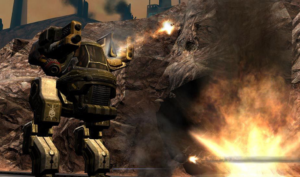
You will find yourself piloting mechanized walkers and hover tanks, engaging in battles that feel larger in scope. These sections are not just visual spectacles. They are integrated into the flow of the campaign and provide a different kind of challenge.
The key here is restraint. The game uses these moments sparingly, which keeps them feeling fresh. They enhance the experience rather than distract from it.
Multiplayer That Honors Its Roots
 While the campaign often takes center stage in discussions about Quake 4, the multiplayer component deserves recognition as well. Built with the legacy of arena shooters in mind, it offers modes like Deathmatch, Team Deathmatch, and Capture the Flag.
Movement and map design are clearly influenced by earlier entries in the series. Players who enjoy fast-paced, skill-based competition will find familiar ground here. The inclusion of both Marine and Strogg factions adds a layer of identity to matches, even if the core gameplay remains symmetrical.
It is worth noting that multiplayer in Quake 4 existed during a time when online gaming was evolving rapidly. Dedicated communities, custom servers, and player-driven competition were central to the experience. Revisiting it today offers a glimpse into that era, where the community often shaped the longevity of a game.
Technical Foundation and Presentation
Powered by id Tech 4, the same engine used in Doom 3, Quake 4 delivers a visual style that emphasizes dynamic lighting and detailed environments. While it may not compete with modern graphics on a technical level, the artistic direction holds up surprisingly well.
Character models, weapon animations, and environmental effects all contribute to a cohesive presentation. The game runs smoothly on modern hardware, making it accessible for players who want to revisit it without dealing with significant technical hurdles.
Sound design complements the visuals effectively. Weapons have a satisfying punch, and environmental audio enhances immersion without becoming overwhelming.
Where It Shows Its Age
 No retrospective would be complete without acknowledging where Quake 4 shows its age. Level design can feel linear at times, with clear paths and limited exploration. Checkpoint systems and AI behavior reflect the standards of its time rather than modern expectations.
Some players may also find the pacing uneven in certain sections, particularly when transitioning between combat-heavy sequences and more scripted moments. These are not deal-breakers, but they are noticeable when viewed through a modern lens.
However, these aspects can also be seen as part of the game’s identity. They reflect a period when developers were experimenting with blending cinematic storytelling and traditional gameplay.
Why It Still Matters
So why revisit Quake 4 today?
Part of the answer lies in its position within the broader history of first-person shooters. It bridges the gap between classic arena-style gameplay and the more narrative-driven experiences that would dominate the years that followed.
It also represents a time when multiplayer communities were deeply connected to the games they played. Leaderboards, clans, and competitive matches were not just features. They were the backbone of the experience. For anyone interested in rebuilding or reconnecting with that kind of community-driven gaming, Quake 4 serves as both inspiration and reminder.
Beyond that, it is simply a solid shooter. The combat is satisfying, the atmosphere is consistent, and the campaign offers enough memorable moments to stand on its own.
Final Thoughts
 Quake 4 may not always be the first title that comes up when discussing the evolution of first-person shooters, but it earns its place through consistency and intent. It takes a well-established formula and pushes it just far enough to create something distinct without losing sight of what made the series compelling in the first place.
For players who appreciate grounded sci-fi settings, impactful combat, and a campaign that commits to its tone, Quake 4 is well worth revisiting. It is a reminder that sometimes, the games that quietly hold the line are the ones that leave the most lasting impression.
In an era where gaming continues to evolve at a rapid pace, going back to a title like this is not just about nostalgia. It is about understanding the foundations that many modern experiences are built on. And in that sense, Quake 4 still has plenty to offer.