
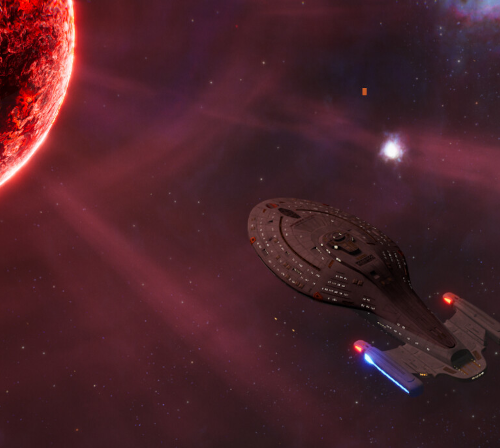
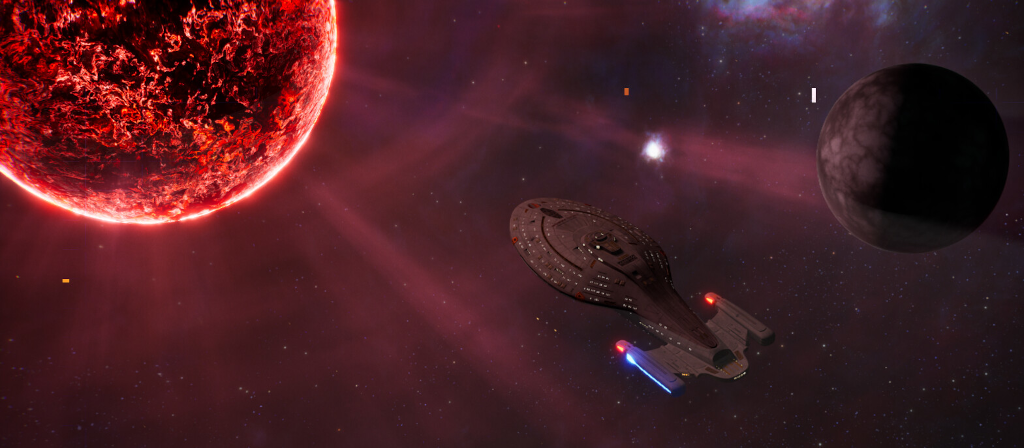
There is something timeless about being stranded far from home.
For decades, Star Trek: Voyager told a story about survival on the edge of explored space. A single starship, cut off from Federation support, forced to adapt, ration, improvise, and negotiate its way across hostile territory. It was never just about phasers and warp speed. It was about logistics, leadership, morale, and the quiet tension of limited supplies.
Star Trek: Voyager – Across the Unknown takes that premise and leans into it in a way that feels both modern and surprisingly familiar. Instead of building a conventional action focused space game, the developers have built a layered resource management system that feels closer in spirit to Fallout Shelter than to a traditional space shooter. You are not simply piloting a starship. You are running it.
The result is a gameplay loop built around survival economics, crew specialization, energy prioritization, and strategic exploration across deep space.
Let’s break down how it works.
The Core Concept
You Are the Captain and the Quartermaster
Across the Unknown is structured around the long journey home. The USS Voyager functions as both your base and your most fragile asset. Every system aboard the ship draws from a shared pool of limited resources. Those resources are not infinite, and replenishing them is rarely straightforward.
Instead of managing a vault underground, you are managing a starship traveling through unpredictable space. The comparison to Fallout Shelter is obvious in structure but the tone and mechanics are uniquely Voyager.
You oversee:
- Crew assignments
- Energy distribution
- Food and replicator rations
- Hull integrity and system repairs
- Shuttlecraft missions
- Diplomacy and trade
- Scientific research
Everything feeds into everything else.
If you increase energy output to weapons, something else receives less. If you overuse replicators, your energy reserves drop. If you push crew members too hard, morale suffers and performance declines. The entire experience revolves around making uncomfortable but necessary tradeoffs.
The Resource Triangle: Energy, Matter, and Morale
The game’s economy revolves around three primary resource pillars.
1. Energy
Energy functions as the lifeblood of the ship. It powers life support, shields, replicators, weapons, and research labs. Warp travel also consumes it in large quantities.
Energy generation depends on your warp core efficiency and auxiliary systems. Damage to those systems reduces output, which can create cascading problems. During hostile encounters or spatial anomalies, energy demand spikes.
You constantly decide what stays online.
Do you reduce shield strength to preserve power for medical bays?
Do you suspend nonessential research to maintain warp speed?
Do you risk running at lower reserves to finish a long range scan?
Energy scarcity creates tension even in calm moments.
2. Matter
Matter is the raw material for replication. In this game, replicators are not free vending machines. They require both energy and stored matter. Food, medical supplies, spare parts, and even certain tools draw from your matter reserves. Matter is replenished through asteroid mining, planetary surveys, trade with alien species, and salvage operations.
This introduces an important gameplay distinction. Energy can fluctuate rapidly. Matter is more strategic and long term. Overuse replicators and you may find yourself short on replacement components when something critical breaks.
3. Morale
Morale is where the Voyager theme truly shines. Long term isolation, injuries, food rationing, and leadership decisions all influence crew morale. High morale improves task efficiency and research output. Low morale can lead to slower repairs, reduced success rates in away missions, and even interpersonal conflicts.
The system models stress without turning it into a punishment mechanic. Instead, morale acts as a multiplier. A motivated crew gets more done with fewer resources. A demoralized crew consumes more and produces less.
Managing morale involves:
- Rotating duty shifts
- Hosting shipwide events
- Granting shore leave during safe planetary stops
- Making diplomatic decisions that align with crew values
It adds a human dimension to what might otherwise be a cold numbers game.
Crew Assignment: Specialists Matter
Like Fallout Shelter, crew members have skill categories. However, these feel more thematic and less abstract.
Primary attributes include:
- Engineering
- Science
- Tactical
- Medical
- Command
Crew members are assigned to ship departments or mission teams. Their performance scales with skill level and morale. Engineers repair hull damage and maintain warp efficiency. Scientists improve scan results and unlock technological upgrades. Tactical officers enhance shield response and weapons performance.
The system becomes interesting when you start facing shortages.
If you lose experienced engineers during a dangerous anomaly event, repairs take longer. If medical officers are overworked during a biohazard outbreak, recovery times increase. Skill depth is not cosmetic. It directly influences survivability.
There is also a light progression system. Crew gain experience from successful assignments and away missions. Over time, you develop veterans whose presence meaningfully shifts your operational capacity. Losing one hurts.
Away Missions: Risk Versus Reward
Exploration is not passive. It is where the game opens up. Players dispatch shuttlecraft teams to investigate anomalies, negotiate with alien factions, gather resources, or respond to distress calls. Each mission presents potential rewards and hazards.
Risk assessment becomes crucial. A high risk mission may yield rare matter deposits or advanced technology schematics. It might also result in injuries or the loss of key personnel.
Mission outcomes depend on:
- Team composition
- Morale
- Environmental conditions
- Randomized narrative events
The writing leans into classic Star Trek storytelling. Moral dilemmas appear frequently. Do you divert resources to aid a struggling civilization when your own ship is rationing supplies? Do you interfere in local conflicts to secure trade advantages?
Choices often affect future encounters. Alien species remember previous interactions. Reputation can open trade routes or close diplomatic doors.
Ship Layout and Compartment Management
Across the Unknown uses a sectional ship layout that players can zoom into and manage. Departments function like rooms in a vault management game, but they are designed around Voyager’s structure.
Examples include:
- Engineering core
- Sickbay
- Astrometrics
- Tactical operations
- Hydroponics
- Cargo bays
Each section can be upgraded. Upgrades improve efficiency, increase output, or unlock special abilities. However, upgrades require matter and energy to construct and maintain. Hydroponics is a good example of system interdependence. Improving it reduces reliance on replicators for food, which conserves matter and energy. However, hydroponics requires energy to sustain growth cycles.
There are no isolated systems. Everything links. Damage from external events can disable compartments. If astrometrics goes offline, long range scanning becomes less effective. If engineering suffers a breach, energy output drops. Players constantly monitor internal stability while facing external uncertainty.
Event System: Deep Space Is Not Predictable
The galaxy in Across the Unknown is procedurally influenced but narratively grounded. Players encounter:
- Spatial anomalies
- Hostile factions
- Derelict vessels
- Temporal distortions
- Trade convoys
Events range from combat scenarios to scientific puzzles. Combat is tactical rather than twitch based. You allocate energy between shields, weapons, and evasive maneuvers. Crew skill and morale influence outcomes. Victory may provide salvage. Defeat may result in hull damage and crew injuries.
Scientific anomalies require resource investment to investigate. Sometimes the reward is technological advancement. Other times the cost outweighs the benefit. The unpredictability reinforces the theme of isolation. There is no reliable supply chain. You are dependent on your decisions.
Research and Adaptation
Research plays a major role in long term survival.
Players unlock new technologies that improve efficiency or create alternative solutions to scarcity. Examples include:
- Improved warp efficiency modules
- Advanced replicator calibration
- Shield optimization protocols
- Medical nanotherapy upgrades
Research consumes energy and requires skilled science personnel. During crises, players may suspend research to conserve power. In stable periods, heavy research investment can future proof the ship. Adaptation is rewarded. The game encourages proactive preparation rather than reactive scrambling.
Diplomacy and Trade
Not every encounter ends in phaser fire. Trade systems allow players to exchange surplus materials for what they lack. Alien factions have preferences. Some value technology. Others value medical supplies. Reputation modifies trade rates.
Diplomatic choices can affect morale. Supporting ethical decisions may boost crew cohesion. Exploiting vulnerable species for resources might provide short term gains but damage morale. The system captures the moral balancing act that defined Voyager’s narrative identity.
Long Term Progression: The Journey Matters
Across the Unknown tracks progress not by levels but by distance traveled and ship condition. The further you progress toward Federation space, the more complex challenges become. Resource demands increase. Factions grow stronger. Anomalies become more unpredictable.
However, so does your ship. Upgraded systems, veteran crew, and refined strategies create a sense of earned resilience. The game does not hand out safety. It rewards smart management over reckless expansion.
Why This Design Works
Resource management games often succeed when constraints drive creativity. By placing players aboard a stranded starship, Across the Unknown creates a natural framework for scarcity and moral choice. The Fallout Shelter comparison highlights the structural inspiration. Room management, crew assignment, and resource balancing feel familiar. But the thematic execution transforms the experience.
You are not growing a vault empire. You are protecting a fragile community traveling through uncharted space. The tension is not about maximizing output. It is about sustaining hope.
Final Thoughts
Star Trek: Voyager – Across the Unknown is not a traditional action game. It is a layered management simulation built around survival, ethics, and long term planning.
Energy, matter, and morale form a dynamic triangle that demands constant attention. Crew specialization makes every assignment meaningful. Away missions balance narrative risk and strategic gain. Ship compartments interlock in ways that prevent easy optimization.
Most importantly, the game understands the spirit of Voyager. Survival in deep space is not about firepower alone. It is about leadership, discipline, empathy, and the willingness to adapt.
For players who enjoy strategic decision making and systems that feel alive rather than mechanical, this could be one of the more interesting space management titles in recent memory.
And for anyone who ever wondered what it would truly feel like to guide a lone starship across the unknown, this might be the closest we have come yet.