
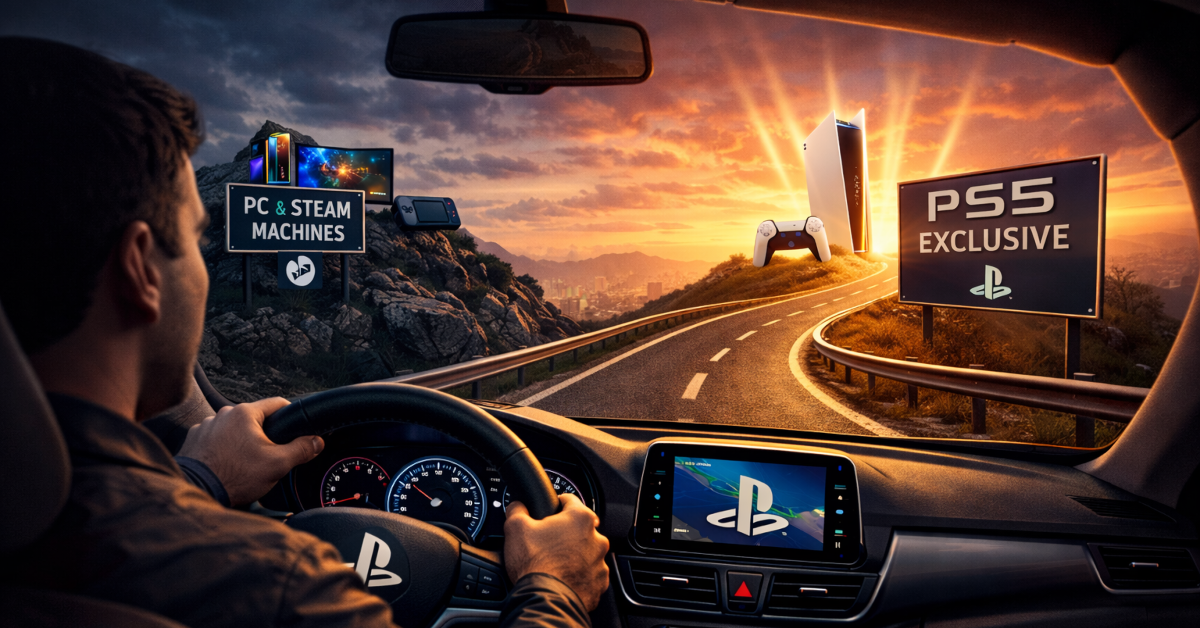
In recent years, the relationship between console manufacturers and the PC gaming ecosystem has been changing. For a long time, the idea of strict platform exclusivity defined the console business. If you wanted to play certain flagship titles, you had to buy the console that hosted them. That model slowly softened as major publishers began releasing some of their once exclusive titles on PC. Yet recent reports suggest that the pendulum may be swinging back, particularly for Sony and its flagship platform, the PlayStation 5.
A new report circulating through gaming media indicates that two upcoming titles, Ghost of Yotei and Saros, are currently planned as PlayStation 5 exclusives without confirmed PC release windows. While Sony has not issued a broad policy announcement reversing its PC strategy, the absence of PC plans for these titles has triggered speculation that the company may be slowing its push toward PC ports and refocusing on console-first releases.
For PC players who had begun to see Sony titles arrive on their platform in increasing numbers, the news has been met with mixed reactions. Some see it as a predictable course correction. Others interpret it as a strategic shift driven by new pressures in the gaming hardware market.
The Gradual Opening of Sony’s PC Strategy
To understand why the current reports are generating discussion, it helps to look back at how Sony approached PC gaming over the past several years.
Historically, Sony treated its PlayStation ecosystem as a closed environment. First party titles were designed to sell hardware. If players wanted to experience flagship franchises, the PlayStation console was the gateway.
That philosophy began to change late in the PlayStation 4 era and accelerated during the PlayStation 5 generation. Sony began bringing some of its most recognizable titles to PC. Among the releases that made the jump were:
- Horizon Zero Dawn
- Days Gone
- Marvel’s Spider-Man Remastered
- God of War (2018)
- The Last of Us Part I
These ports appeared on the PC storefront operated by Valve through its widely used platform Steam, as well as other digital marketplaces.
For Sony, the strategy appeared to have several advantages. PC releases allowed the company to reach players who might never buy a console. They extended the lifespan of games that had already completed their primary console sales cycle. They also introduced new audiences to PlayStation franchises, potentially encouraging them to buy a console for future sequels.
Sony executives publicly acknowledged that PC ports were becoming part of their broader business strategy. However, these ports almost always arrived years after the original console launch. That delay preserved the incentive to buy a PlayStation console if someone wanted immediate access to new releases.
What the New Reports Suggest
The latest discussion stems from reports indicating that both Ghost of Yotei and Saros will launch exclusively on PlayStation 5, with no PC version currently confirmed.
Details remain limited. In most cases, the information has appeared through industry reporting and developer commentary rather than a formal Sony announcement outlining a policy change.
Because of that, it is important to separate confirmed information from speculation.
What appears to be confirmed:
- Both Ghost of Yotei and Saros are planned for PlayStation 5.
- Neither game currently has an announced PC release window.
What remains uncertain:
- Whether Sony plans to release PC versions later.
- Whether this represents a broader change in Sony’s strategy.
- Whether future PlayStation titles will follow a similar pattern.
In other words, the situation may simply reflect the traditional Sony model of console first, PC later rather than a permanent shift away from PC altogether.
Why Some PC Players Are Frustrated
The PC gaming community has grown accustomed to seeing major console titles migrate to PC. Over time, many players began to view Sony’s PC releases as an expected step rather than an occasional bonus.
When reports appear suggesting certain titles may not arrive on PC, the reaction is often immediate.
Several factors contribute to this frustration.
Hardware Investment – PC players often invest heavily in their systems. Many build custom machines with powerful graphics cards, large memory pools, and high refresh rate displays. When a highly anticipated title becomes console exclusive, those players feel locked out despite owning hardware capable of running the game.
Platform Freedom – Another reason PC players resist exclusivity is philosophical. The PC ecosystem is built around openness. Players can modify games, customize controls, adjust performance settings, and choose from multiple storefronts.
Console exclusivity conflicts with that culture. It requires purchasing a specific piece of hardware to access a specific piece of software.
The Expectation Shift – Perhaps the most important factor is expectation. Once Sony demonstrated that PC releases were possible, many players assumed the pipeline would continue expanding.
When a game does not appear on PC, it now feels like something has been taken away rather than something that never existed.
Not All PC Players Want Console Ports
Interestingly, the PC community is not unified on this topic.
Some players argue that console ports are not always ideal experiences on PC. They point to several recurring issues.
Performance and Optimization – Many console games are designed around fixed hardware specifications. When they are ported to PC, developers must adapt them to a wide variety of system configurations.
That process can introduce performance issues. Some Sony ports launched with technical problems that required multiple patches to stabilize frame rates and fix graphical glitches.
Interface Design – Console games are often built around controller input and large screen televisions. When these games arrive on PC, the interface sometimes feels less natural with keyboard and mouse setups.
Menus designed for a controller may require additional redesign for PC players who expect faster navigation and more granular control options.
Community Mods and Expectations – PC gamers also expect a level of customization that console titles do not always support. Field of view sliders, ultra wide monitor support, advanced graphical settings, and mod compatibility are common expectations.
When a port arrives without these features, the community can be highly critical.
For this reason, some PC players argue that console games should remain on their original platform unless developers commit the time required to create a truly native PC experience.
The Steam Machine Factor
Another theory circulating within gaming communities involves the renewed interest in PC gaming devices that resemble consoles. In recent years, portable and living room focused PC gaming systems have gained momentum. Valve’s handheld gaming platform, the Steam Deck, demonstrated that PC gaming could succeed in a more console like form factor.
Reports and speculation about future Steam based devices have fueled discussion about a potential resurgence of so called Steam Machines. These systems aim to deliver PC gaming through simplified hardware designed for the living room.
While no direct evidence links Sony’s decisions to these developments, some observers believe Sony may view these devices as indirect competition.
If PC gaming becomes more accessible in console like environments, the argument goes, then console exclusives become even more important for differentiating PlayStation hardware. This theory remains speculative. Sony has not publicly connected its software strategy to the growth of handheld or console style PC devices.
Still, the broader trend toward hybrid gaming platforms has clearly changed the landscape.
The Economics of Exclusivity
From a business perspective, exclusivity remains one of the most powerful tools console manufacturers possess. Hardware itself is often sold with relatively thin profit margins. The real revenue often comes from software sales, platform licensing fees, and subscription services.
When a game is exclusive to a specific console, it encourages players to enter that ecosystem. Sony’s first party studios play a major role in this strategy. High profile titles are designed not only to sell copies but to reinforce the value of owning a PlayStation console.
Even if a game eventually arrives on PC, launching it first on console ensures that early adopters still have a strong incentive to buy the hardware.
Sony’s Mixed Signals on PC
Another reason this issue continues to generate debate is that Sony’s messaging on PC has been somewhat inconsistent. At times, the company has emphasized that PC releases are an important part of its future growth. At other times, Sony executives have reiterated that PlayStation hardware remains the core of their strategy.
Both statements can be true at the same time. Sony may simply be balancing two priorities:
- Protecting the value of PlayStation hardware
- Expanding the audience for its games through PC releases
The exact timing of PC ports is likely to remain flexible depending on the project.
What This Means for Players
For now, the reports about Ghost of Yotei and Saros should be interpreted cautiously. The lack of PC announcements does not necessarily mean those games will never reach PC. Many Sony titles arrived on PC years after their console debut.
However, the situation does highlight the continuing tension between platform exclusivity and the increasingly interconnected gaming ecosystem. Players today move fluidly between platforms. Some own consoles and PCs. Others rely entirely on one platform and hope that software eventually follows them there.
Sony’s strategy will continue to influence how those players experience upcoming releases.
A Familiar Pattern in the Industry
If Sony is indeed leaning more heavily into console exclusives again, it would not be unprecedented. The gaming industry has always moved through cycles. Companies experiment with broader accessibility and then tighten control when competition intensifies.
Whether this current moment represents a permanent shift or simply a temporary recalibration remains to be seen. For PC players watching from the sidelines, the hope remains that Sony’s most ambitious titles will eventually find their way onto their platform of choice.
History suggests that possibility is still very much on the table.