
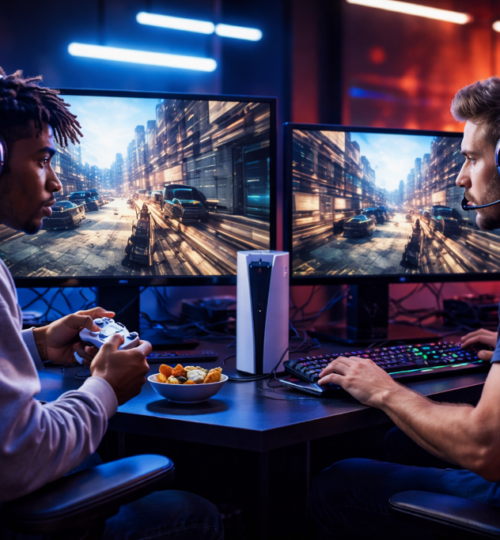
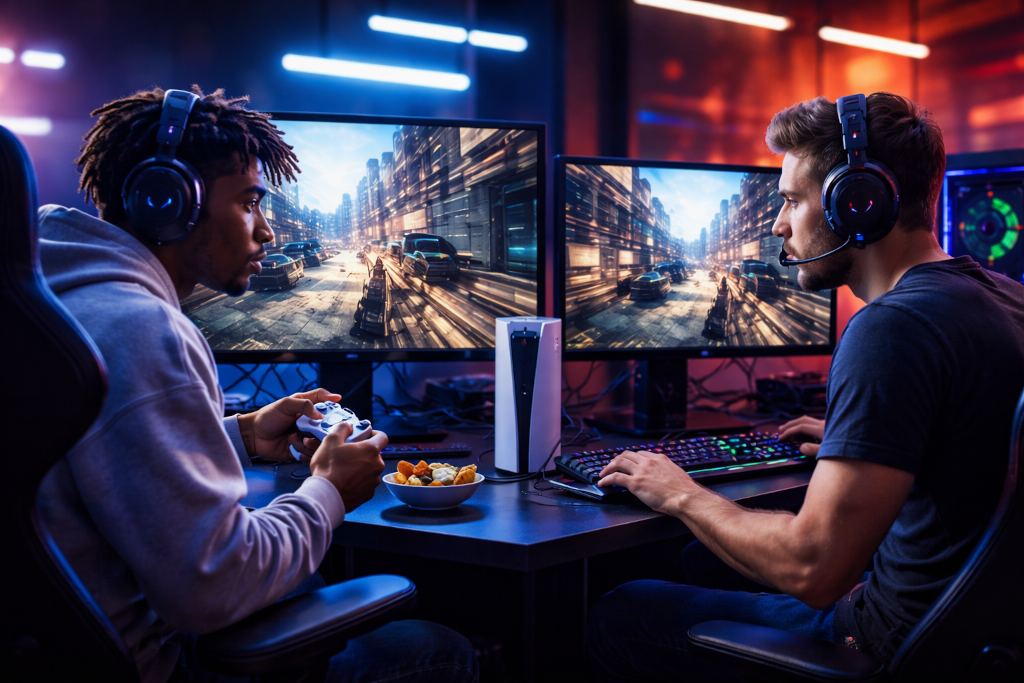
For decades, competitive gaming lived inside carefully guarded walls. PC players competed with PC players. Console players stayed in their own ecosystems. Even when the same game existed across platforms, the communities, skill pools, and competitive scenes were fragmented. That separation shaped how esports formed, how leaderboards worked, and how players defined their identity. Cross-play has been steadily tearing down those walls, and the long-term impact on competitive gaming is far deeper than most people realize.
Cross-play is not just a quality of life feature. It is a structural shift that changes who competes, how skill is measured, and what “competitive” even means in a modern gaming environment. The ripple effects reach from casual matchmaking all the way to organized competition and community-driven rankings.
The End of Platform Silos
One of the most immediate effects of cross-play is the removal of artificial population barriers. In the past, a competitive ladder on a console version of a game might feel active for a year or two before slowly shrinking. Meanwhile, the PC version might have a completely different lifespan and meta. Players did not leave the game. They simply migrated to different platforms or communities.
Cross-play consolidates those populations into a single competitive ecosystem. That matters because competition thrives on density. A larger pool of players creates tighter matchmaking, more accurate rankings, and a healthier skill curve from beginner to elite. When the player base is split, rankings can become inflated or misleading. When everyone competes together, skill has fewer places to hide.
This consolidation also extends the lifespan of competitive modes. Games no longer rely on one platform staying healthy to support ladders or ranked play. As long as the overall community remains engaged, competitive systems can remain viable for much longer.
Skill Becomes the Common Language
Cross-play forces a reexamination of what skill actually means. For years, platform differences were used as shorthand explanations for performance gaps. Mouse and keyboard versus controller became a cultural argument as much as a mechanical one. Cross-play does not eliminate those differences, but it reframes them.
In a shared competitive space, outcomes matter more than excuses. Developers have responded by improving input balancing, adding aim assist tuning, and offering more granular matchmaking filters. The result is not perfect parity, but it is a clearer picture of player ability across environments.
This shift also exposes how much competitive success depends on decision-making, positioning, teamwork, and consistency rather than raw mechanical input. Cross-play environments highlight players who adapt, communicate, and learn. Those traits scale across platforms far better than pure reflex advantage.
Ranked Systems Become More Meaningful
Competitive gaming lives and dies by trust in its ranking systems. Players need to believe that climbing a ladder reflects real improvement and that high ranks represent genuine skill. Fragmented platforms undermine that trust by limiting comparison.
Cross-play strengthens ranking credibility by widening the field. A high rank earned against a massive, mixed-platform population carries more weight than one earned in a narrow pool. It also reduces the problem of rank stagnation, where small populations cause players to repeatedly face the same opponents.
For community-driven competitive spaces, this is especially important. Leaderboards feel more authentic when they represent a broad spectrum of players rather than a single platform slice. Cross-play turns rankings into shared milestones instead of platform-specific trophies.
Competitive Communities Grow More Resilient
Communities form around competition. Forums, Discord servers, stat trackers, and discussion spaces all depend on a steady flow of players who care about performance and improvement. When platforms are divided, those communities fracture.
Cross-play unifies discussion and shared experience. Players watch the same matches, debate the same balance changes, and chase the same competitive goals regardless of hardware. This creates stronger social glue and more durable communities.
It also lowers the barrier to entry for new competitive players. Friends no longer need to own the same hardware to compete together. Teams can form organically across platforms, which is crucial for sustaining grassroots competition and amateur leagues.
Developers Lose Control Over the Narrative
This shift has an unexpected side effect. Cross-play reduces the ability for developers to tightly control competitive narratives through platform-specific tuning or events. When everyone plays together, inconsistencies become obvious very quickly.
Balance issues surface faster. Exploits spread more rapidly. Skill gaps become harder to disguise. While this can create short-term turbulence, it ultimately leads to healthier competitive ecosystems. Developers are pushed toward transparency and consistency because the community can see everything.
For competitive players, this is a win. It creates a feedback loop where performance data reflects the full population, not a curated subset. Adjustments become more meaningful, and competitive integrity improves over time.
Hardware Becomes Less of a Gatekeeper
Historically, competitive gaming often demanded specific hardware to be taken seriously. That created economic barriers that limited who could participate at higher levels. Cross-play does not eliminate hardware differences, but it reduces their importance.
When competition spans platforms, skill recognition becomes more inclusive. Players can develop competitively without immediately investing in expensive setups. That matters for the long-term health of competitive scenes, especially outside of professional esports.
A broader competitive base produces more talent, more stories, and more organic growth. It also aligns competitive gaming more closely with traditional sports, where access and participation matter as much as elite performance.
Esports Structures Are Forced to Adapt
Professional competition has historically been slow to embrace cross-play. Tournaments often lock competitors to a single platform for consistency. However, as cross-play becomes the default expectation for players, esports structures face pressure to evolve.
Talent now emerges from mixed-platform environments. Skill scouting can no longer ignore entire segments of the player base. Training, analytics, and competition formats must adapt to reflect how the game is actually played by its community.
This does not mean esports will abandon standardized setups. It means the pipeline feeding those setups is broader and more representative. That change reshapes how competitive ecosystems renew themselves over time.
Legacy Competition Finds New Life
Cross-play also changes how older competitive systems can be revisited. Games that once relied on isolated ladders can be recontextualized within modern expectations. Even when full cross-play is not available, the mindset it creates influences how players engage with legacy competition.
Players are more willing to compare results across eras and platforms. Community-driven rankings, historical leaderboards, and archived competitive data gain renewed relevance when players view competition as a shared experience rather than a platform-specific one.
This perspective helps preserve competitive history instead of letting it disappear as hardware generations change.
The Psychological Shift in Competitive Identity
Perhaps the most profound change is psychological. Cross-play challenges how players define themselves. Identity shifts from “console player” or “PC player” to simply “competitive player.” That may sound subtle, but it fundamentally alters how people approach improvement.
When platform identity fades, performance takes center stage. Players become more open to learning from each other. Strategies cross boundaries. Playstyles evolve faster. Competition becomes less about defending a platform and more about mastering a game.
This mindset fuels long-term engagement. Players who identify with competition itself are more likely to stick around, adapt to changes, and invest in community spaces that support growth.
What Comes Next for Competitive Gaming
Cross-play is not a finished story. It is an ongoing transformation. As infrastructure improves and developers gain confidence, competitive systems will become more interconnected. Rankings will feel more global. Communities will become less fragmented. Skill measurement will become more honest.
The future of competitive gaming is not defined by hardware or platform exclusivity. It is defined by shared spaces where performance, learning, and competition coexist. Cross-play accelerates that future by aligning how games are played with how communities naturally want to form.
For players, it means more meaningful competition. For communities, it means greater resilience. For competitive gaming as a whole, it means a shift toward longevity instead of fragmentation.
Cross-play is not just changing competitive gaming. It is redefining it.