
The DLSS Line: Why Ray Reconstruction Makes Sense, While DLSS 5 Has Competitive Gamers Hitting the Brakes
NVIDIA’s DLSS story has reached an unusual point for competitive PC gaming.
NVIDIA’s DLSS story has reached an unusual point for competitive PC gaming.
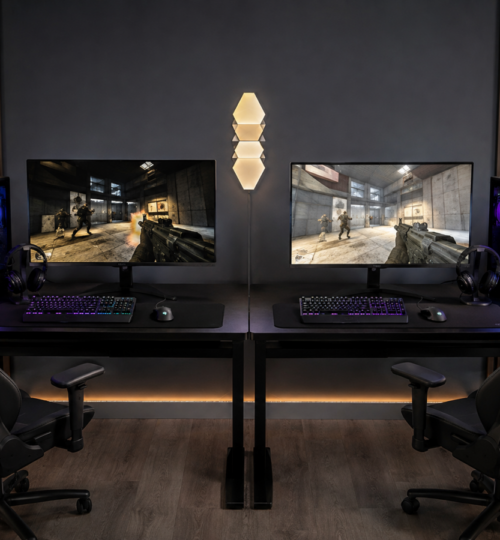
Competitive monitor buying used to be relatively straightforward.
For years, PC ownership in gaming could be divided by a familiar argument: build it yourself or buy it ready-made. That debate always flattened several very different buyers into the same two camps.
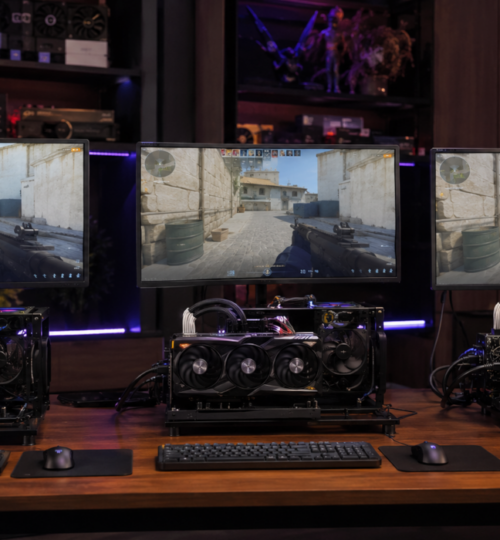
High-end graphics cards are easy to rank if the only question is which one produces the most frames. The RTX 5090 wins that contest, the RTX 5080 follows, and the RTX 5070 finishes third.
There was a time when a multiplayer game’s release date represented a fairly clear dividing line.
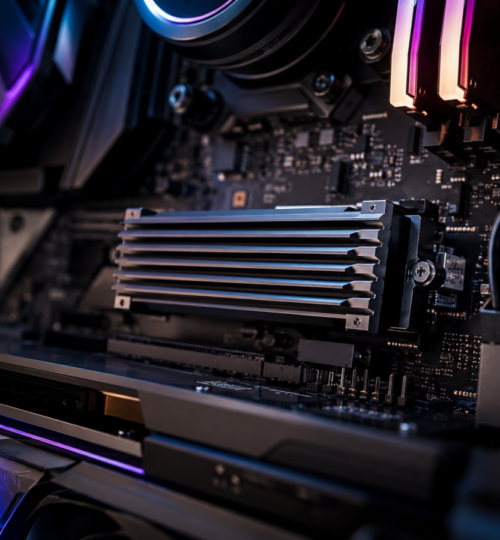
PCIe 5.0 SSDs look absurdly fast on a product page. Sequential read figures now reach roughly 14,800 MB/s on high-end consumer drives, nearly double the headline speed of many premium PCIe 4.0 models.
Competitive players rarely complain about average frame rate. A system can report 400 FPS in Counter-Strike 2 and still feel wrong during a smoke push, a fast rotation, or a crowded firefight.
For years, optimizing Windows for competitive gaming meant disabling startup programs, selecting a performance power plan, updating the graphics driver, and hoping the operating system stayed out of the way.
OLED gaming monitors have moved from luxury showpieces to serious competitive hardware.
Skill-based matchmaking was supposed to solve one of online gaming’s oldest problems.
For most of PC gaming history, buying a prebuilt desktop came with an understood penalty.
Competitive players have spent years being sold the idea that more audio channels automatically produce better positional information.
Multiplayer games fail in ways that single-player software rarely does. A weapon can behave correctly on one machine and still produce a different result on the server.
PC gaming has always sold itself as the platform that remembers. Old boxes in closets. Discs with scratched jewel cases. Fan patches. Mods hosted on forgotten forums.
Game releases used to feel cleaner. A title launched, players judged it, patches followed, and the community either stayed or moved on.