 GWL Legacy Competitive Classics from our Steam Curator List
Legacy Competitive Classics isn’t just a nostalgia shelf for Global Warfighter League. It’s a snapshot of the games that forced communities to become organized. Before built-in ranked ecosystems and always-on seasonal ladders, competitive players had to build their own structure: team rosters, match rules, schedules, disputes, rivalries, and reputations. These titles were the foundation. They weren’t perfect, but they created the kind of repeatable multiplayer friction that made people come back night after night.
This list collects many of the games that shaped our earliest era of play. The ones that anchored ladders and tournaments, scrims, and “we’re running it back” rematches. Some still hold up shockingly well. Others feel like time capsules, important not because they’re modern, but because they reveal how competitive gaming became a culture long before the game companies standardized it. If you were there, you’ll recognize the energy instantly. If you weren’t, you’ll understand why communities like ours existed in the first place.
Star Wars Battlefront 2 Classic (2005): The Classic That Still Feels Like A War
 A true multiplayer classic, Star Wars Battlefront II (2005) balanced accessible Star Wars action with match-ready modes like Conquest, CTF, and Heroes vs Villains. Its stability and replay value made it a natural fit for long-term our competitive community.
The game offered the structure and variety that leagues like ours needed to thrive. It was easy to jump into, tough to master, and built for organized matches that still feel fun today. Star Wars Battlefront II (Classic 2005) is the definition of controlled chaos. Infantry, vehicles, starfighters, and heroes collide in modes that work just as well for casual nights as they do for serious team play.
Call of Duty 4 Modern Warfare: The Moment the CoD Stopped Being ‘Just’ a WW2 Shooter
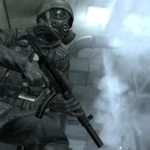 Call of Duty 4: Modern Warfare (2007) is one of those rare shooters that did not just deliver a great experience, it reshaped what players expected from the genre. Where the game truly changed everything, was multiplayer. Modern Warfare helped define the progression-driven online shooter with Create-a-Class, perks, attachments, prestige, and killstreaks that turned momentum into strategy.
Its maps and match flow encouraged experimentation, rivalry, and that classic lobby energy that shaped so many competitive communities. Even today, it stands as a foundational classic, not because it was perfect, but because so much of modern FPS design still speaks its language.
Combat Arms: A Free-to-Play Shooter With Real Bite, and Real Baggage
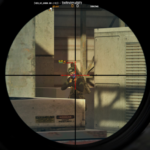 Combat Arms is a fast, accessible free-to-play FPS that still delivers that old-school “jump in and fight” energy, with quick modes, flexible loadouts, and a progression grind that kept players hooked for years. At its best, it’s chaotic in a fun way and surprisingly competitive, especially in smaller formats where pure aim, timing, and confidence shine.
At the same time, the game’s reputation has always been tied to community frustration around fairness and match integrity. If you love classic lobby shooters and can roll with some rough edges, Combat Arms can still be a good time. If you need airtight competitive trust to enjoy a shooter, it’s worth going in with caution.
Call of Duty 2: The WWII Shooter That Still Nails the “Just One More Mission” Feeling
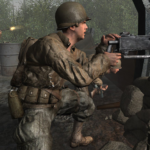 Call of Duty 2 still holds up because it nails the fundamentals that made the series explode in the first place: tight pacing, readable gunplay, and firefights that feel loud, smoky, and stressful in the best way. Its regenerating-health loop keeps you pushing forward in bursts, and the campaign’s mission flow drops you into focused, high-pressure objectives that rarely drag. Even today, the weapon handling feels “honest” and satisfying, with enough recoil and urgency to reward smart movement and cover play.
Where it shows its age is mostly in a few battles that can feel slightly scripted, with enemy pressure sometimes tied to invisible progression triggers. But that doesn’t break the experience. Multiplayer, for those who remember it, is a stripped-down competitive classic that puts the spotlight on positioning, map knowledge, and timing rather than modern progression systems.
Team Fortress 2: The Class Shooter That Refused to Age
 Team Fortress 2 launched in 2007 and quickly stood out from other shooters with its stylized visuals, memorable characters, and class-based gameplay. The game centers on nine unique classes, each designed to fulfill a specific role within a team. Success depends not just on aim but on coordination, class synergy, and timing, which gives TF2 a surprising level of strategic depth beneath its fast-paced action.
Over time, the game also developed a dedicated competitive scene, particularly around the 6v6 format that emphasized mobility and teamwork. Combined with its movement mechanics, ongoing updates, and a strong community that built custom servers and maps, Team Fortress 2 remained influential long after release and continues to be one of the most recognizable class-based shooters in gaming history.
Call of Duty (2003): The World War II Shooter That Redefined Battlefield Storytelling
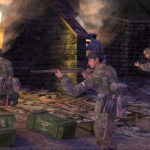 The original Call of Duty (2003) reshaped World War II shooters by showing the war through American, British, and Soviet soldiers instead of focusing on a single hero. AI teammates, immersive sound, and large scale battles created a more authentic battlefield experience.
The game also introduced strong mission variety and balanced weapon gameplay, encouraging players to think tactically rather than simply rushing through combat. Its multiplayer mode quickly became popular among competitive PC players, helping build communities around team based gameplay. Even years later, the original Call of Duty remains an important milestone in the evolution of military shooters and competitive online play.
Call of Duty: World at War, A Gritty Return to the Roots of Battlefield Storytelling
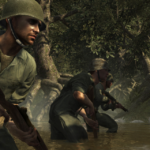 Call of Duty: World at War returns the series to World War II with a darker and more intense campaign. Players experience battles in the Pacific and on the Eastern Front, with atmospheric environments and fast paced combat that highlight the brutality of the war.
The game also expands multiplayer with customizable loadouts and tanks on select maps. It introduced the cooperative Nazi Zombies mode, which quickly became one of the franchise’s most popular features.
Star Wars Battlefront (2004): The Galactic Battlefield That Defined a Generation
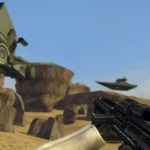 Star Wars Battlefront (2004) placed players directly into massive Star Wars battles across iconic worlds like Hoth and Endor. Instead of focusing on heroes, the game let players fight as soldiers capturing command posts and piloting vehicles in large scale conflicts.
The game combined accessible shooter mechanics with strategic objectives, allowing infantry, vehicles, and AI allies for realism on screen that felt alive. Its simple but strategic gameplay, combined with immersive sound and atmosphere, created dynamic battlefields that helped make it one of the most memorable multiplayer Star Wars games of its era.
Quake 4 Revisited: A Gritty Sci-Fi Shooter That Still Holds the Line
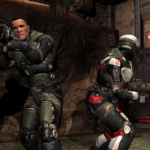
Quake 4 delivers a gritty, narrative-driven sci-fi shooter experience that builds directly on Quake II, placing players in a full-scale war against the Strogg. Its strength lies in its immersive atmosphere, weighty combat, and a memorable campaign that blends classic arena shooter mechanics with more grounded, cinematic storytelling.
While some elements show their age, including linear level design and older AI behavior, the game still holds up as a solid and engaging FPS. Its mix of satisfying weapons, varied enemies, and traditional multiplayer modes makes it a worthwhile revisit, especially for players who appreciate the roots of modern competitive shooters.
Half-Life 2 Revisited: A Benchmark That Still Holds Its Ground
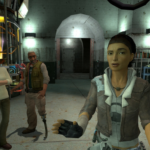 Half-Life 2 remains a standout example of how strong design can outlast technological age. Its immersive world, driven by subtle environmental storytelling and seamless player perspective, still feels natural and engaging. The game avoids heavy exposition and instead builds tension and narrative through atmosphere, character interaction, and thoughtful pacing.
Its physics system, combat design, and level structure continue to influence modern games. The gravity gun, dynamic encounters, and intuitive level guidance create a gameplay experience that feels both creative and refined. Even today, Half-Life 2 stands as a reminder that meaningful interaction and cohesive design are what truly define a lasting game.