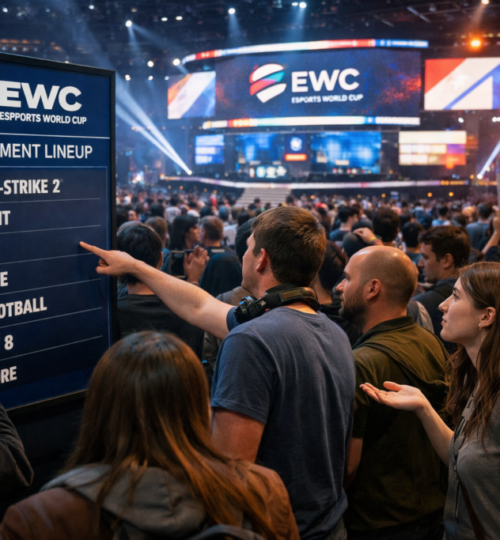
StarCraft II’s Absence from EWC 2026: The Future of RTS in Premier Tournaments
Real-time strategy games helped build the foundation of competitive gaming long before the modern esports industry took shape.
Esports
Real-time strategy games helped build the foundation of competitive gaming long before the modern esports industry took shape.
Few things in gaming stir emotion as reliably as a ranked match.
You queue up believing the next game will reflect your true skill.
For the past two decades, competitive gaming has followed fairly predictable arcs. Arena shooters evolved into tactical shooters. Real time strategy gave way to MOBAs.
In competitive gaming, few debates last longer than the argument between mechanical skill and game sense. It shows up in every era, across every genre.
The year 2026 marks a definitive turning point for the competitive gaming industry. For over a decade, the esports sector was defined by a gold rush mentality.
Competitive gaming has reached a point where preparation matters just as much as raw talent. Professional players do not simply launch a game and queue into a ranked match or scrim cold.
For many players, getting better at games feels inseparable from endless hours of repetition. The assumption is simple: more time played equals more skill.