
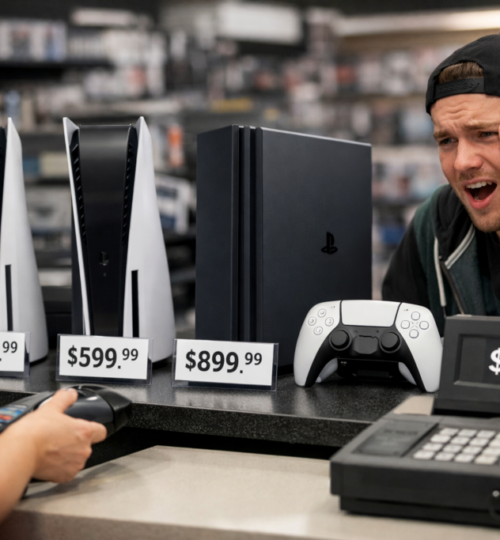
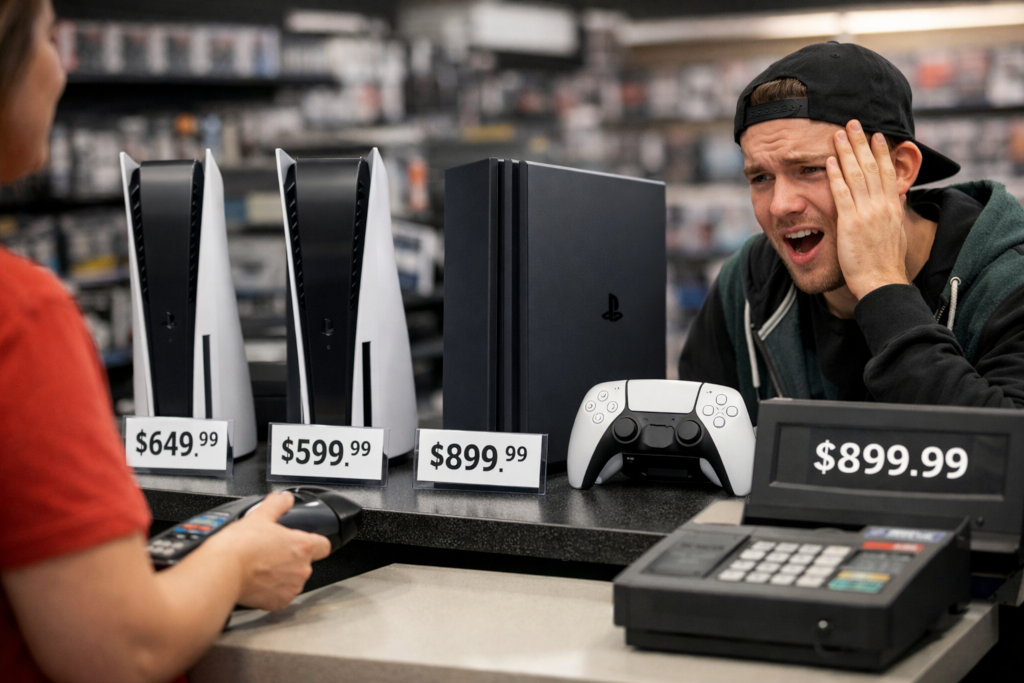
Sony has announced another round of price increases for its PlayStation 5 lineup, and the timing has caught the attention of the gaming world. Beginning April 2, the standard PS5 will rise from $549.99 to $649.99. The digital edition will increase to $599.99, and the PS5 Pro will jump to $899.99, marking a $150 increase for that model alone.
This is not the first time Sony has adjusted pricing during the current console generation, but the scale and timing of this change have sparked widespread discussion. Traditionally, console pricing trends move in the opposite direction over time. Hardware becomes cheaper to manufacture, and companies lower prices to extend the lifecycle of the platform. What is happening now breaks that expectation and signals a shift in how platform holders may approach pricing in a volatile global economy.
Sony has framed the decision as a necessary response to economic pressures. The company stated that after careful evaluation, the increase was required to continue delivering high quality gaming experiences worldwide. While that message aligns with broader industry challenges, the response from the community has been far from uniform.
Community Sentiment: Frustration Meets Skepticism
The immediate reaction across gaming communities has been mixed, but a clear tone of skepticism runs through much of the conversation. Players understand that costs are rising across many sectors, including electronics. Memory prices have fluctuated, graphics card costs have remained elevated compared to previous generations, and supply chains have not fully stabilized since the disruptions earlier in the decade.
However, many gamers are questioning whether this move is purely about necessity or partly about opportunity.
A recurring sentiment among players is that Sony may be testing the limits of what consumers are willing to tolerate. With demand for gaming hardware still relatively strong and the PlayStation brand maintaining a dominant position in the console market, some believe Sony is leveraging its market strength to push pricing higher while consumer expectations are already conditioned for increases elsewhere.
In online discussions, a few key themes appear repeatedly:
- Players feel that the value proposition of the PS5 is being stretched thinner, especially for late adopters who are now paying significantly more than early buyers.
- There is concern that this sets a precedent where consoles no longer become more affordable over time.
- Some longtime fans express loyalty to the platform but admit that the pricing makes them hesitate to upgrade or recommend the system to others.
At the same time, not all reactions are negative. A segment of the community acknowledges the broader economic landscape and sees the move as inevitable. Rising component costs, increased development budgets for modern games, and ongoing investment in services and infrastructure all contribute to a more expensive ecosystem.
Still, even among those who understand the reasoning, there is a sense that the increase feels unusually aggressive.
The Shift Away from Traditional Console Economics
To understand why this move feels so significant, it helps to look at how console economics have traditionally worked. For decades, companies like Sony, Microsoft, and Nintendo often sold hardware at a loss or near break even, making up the difference through software sales, subscriptions, and licensing fees.
Over time, as manufacturing costs decreased, companies would reduce the retail price of the console, making it more accessible and expanding the user base.
The current situation appears to be diverging from that model. Instead of lowering prices as the generation matures, Sony is raising them. This suggests that the underlying cost structure may not be improving in the same way it did in previous cycles.
Several factors may be contributing to this shift:
- Semiconductor manufacturing costs remain high, particularly for advanced nodes used in modern consoles.
- Inflation has impacted everything from logistics to labor.
- Currency fluctuations in global markets can affect pricing strategies across regions.
- The expectation for ongoing system updates, firmware support, and ecosystem integration has increased operational costs.
All of this creates a scenario where maintaining previous pricing models may no longer be sustainable.
The Role of Consumer Behavior
Another important piece of the puzzle is consumer behavior. The gaming industry has shown repeatedly that players are willing to spend significant amounts of money on hardware, software, and in game content.
High end graphics cards have sold out at prices far above their suggested retail value. Collector’s editions of games and premium subscriptions continue to perform well. Even in a challenging economic environment, gaming remains a priority for many consumers.
This reality may be influencing Sony’s decision. If the company believes that demand will remain strong despite higher prices, the risk of backlash becomes more manageable.
There is also a psychological component at play. When consumers are already seeing rising costs in other areas, such as PC components or everyday goods, a console price increase may feel less shocking than it would have in a more stable economic period.
Some community members have pointed this out directly, suggesting that Sony is making a calculated move while expectations are already adjusted upward.
Competitive Pressure and Industry Response
One of the biggest questions now is how other companies will respond.
Microsoft, with its Xbox platform, is in a position where it could either follow Sony’s lead or attempt to differentiate itself through pricing. If Microsoft maintains its current price points, it could gain a competitive advantage among cost conscious gamers. However, if similar economic pressures apply, Microsoft may eventually implement its own increases.
Nintendo presents a different case. The company has traditionally operated with different hardware strategies, often focusing on cost efficient designs and unique gameplay experiences rather than raw performance. While Nintendo may be less directly impacted by the same component costs, it is not immune to global economic trends.
The broader concern among gamers is that Sony’s decision could normalize price increases across the industry. If one major platform holder successfully raises prices without significant loss in sales, others may feel more comfortable doing the same.
This creates a potential domino effect:
- Hardware prices could remain elevated or continue to rise.
- Game prices may increase further to match higher development costs.
- Subscription services could see adjustments in pricing or structure.
For players, this means the total cost of gaming could climb steadily over time.
The PS5 Pro and Premium Tier Strategy
The pricing of the PS5 Pro deserves special attention. With its new price set at $899.99, the console enters a territory that was once considered extreme for mainstream gaming hardware.
This reflects a broader trend toward premium tiers within the gaming ecosystem. Instead of a single console option, companies are offering multiple versions at different price points, similar to the smartphone market.
The advantage of this approach is flexibility. Players can choose a model that fits their budget and performance expectations. The downside is that the upper end of the market can become increasingly expensive, pushing high performance gaming further out of reach for some users.
Community reactions to the PS5 Pro price increase have been particularly sharp. Many players question whether the performance gains justify the cost, especially when compared to building or upgrading a gaming PC.
Others see it as a niche product aimed at enthusiasts who are willing to pay a premium for the best possible experience.
Long Term Impact on the Gaming Community
For a community driven platform like yours, this moment presents both challenges and opportunities.
On one hand, higher hardware costs can slow the growth of player bases. New players may delay entering the ecosystem, and existing players may hold onto older hardware longer. This can fragment communities and reduce participation in competitive environments.
On the other hand, moments like this generate conversation, debate, and engagement. Players want to discuss these changes, share their perspectives, and understand what it means for the future of gaming.
This creates an opportunity to position your platform as a hub for thoughtful discussion and analysis. By covering topics like pricing trends, hardware value, and industry strategy, you can attract both returning members and new visitors who are looking for deeper insights.
Is This the New Normal
The key question that remains is whether this is a temporary adjustment or the beginning of a new normal.
If economic conditions stabilize and manufacturing costs decrease, it is possible that prices could level off or even decline in the future. However, if companies find that consumers are willing to accept higher prices, there may be little incentive to reverse course.
The gaming industry has evolved significantly over the past two decades. It is no longer just about selling consoles and games. It is an ecosystem that includes digital storefronts, subscription services, cloud gaming, and ongoing content updates.
In this environment, hardware pricing becomes just one piece of a much larger strategy.
Sony’s decision may be a reflection of that shift. Instead of relying on lower hardware prices to drive adoption, the company may be focusing on maximizing value across the entire ecosystem.
Final Thoughts
Sony’s latest price increases have sparked a meaningful conversation within the gaming community. While some players understand the economic factors at play, others remain skeptical about the motivations behind the decision.
What is clear is that this moment represents a turning point in how consoles are priced and perceived. The traditional expectation of decreasing costs over time is being challenged, and the industry may be entering a phase where higher prices are the standard rather than the exception.
For gamers, this means making more deliberate choices about how and where to invest in their hobby. For companies, it means balancing profitability with community trust and long term engagement.
And for community platforms like yours, it means having a front row seat to one of the most important conversations shaping the future of gaming.