

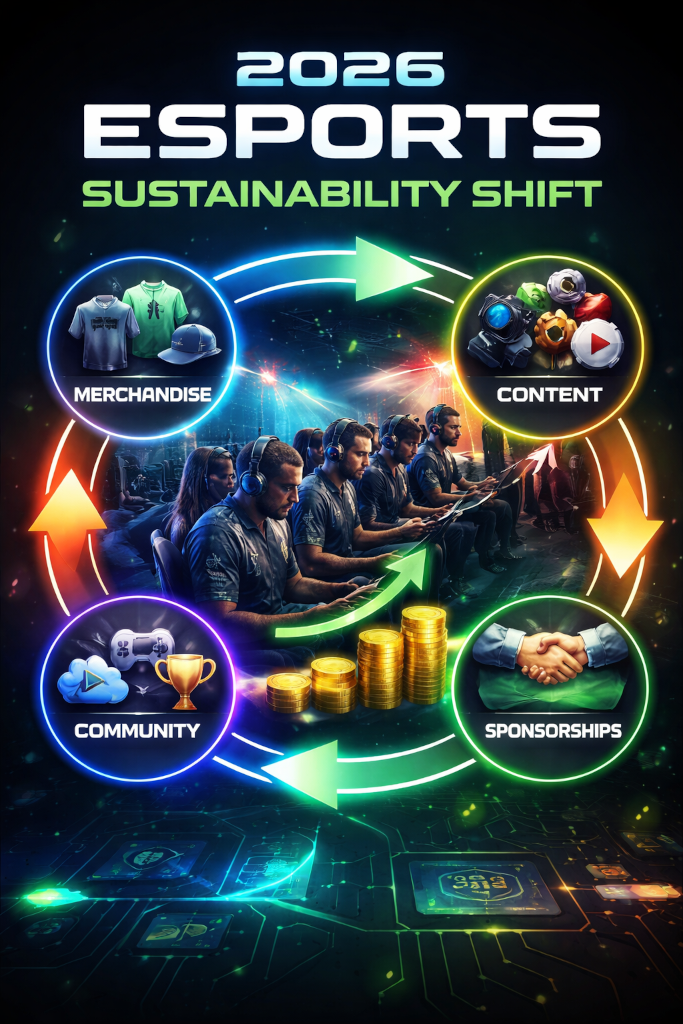
An industry deep-dive: Why teams are moving away from “speculative capital” and into diversified revenue
The year 2026 marks a definitive turning point for the competitive gaming industry. For over a decade, the esports sector was defined by a gold rush mentality. Venture capital poured into the space based on the promise of explosive growth and the dream of owning the next digital NFL or NBA. Organizations were valued not by their profit margins, but by their projected scale and social media reach. However, the bubble of speculative capital has finally met the reality of the balance sheet. Today, we are witnessing a fundamental shift in how professional gaming organizations operate, as the industry matures from a hype-driven startup phase into a disciplined, sustainable business model.
The End of the Venture Capital Era
Between 2018 and 2022, the esports industry was awash in cash. High profile celebrities and massive investment firms entered the fray, betting on the idea that young audiences would soon abandon traditional sports entirely for digital counterparts. This led to a period of hyper-inflation where player salaries reached unsustainable levels and franchise fees for major leagues climbed into the tens of millions of dollars.
By 2025, the music began to stop. Investors who had spent years waiting for a return on their capital started demanding profitability rather than just “fan engagement” metrics. Many organizations that failed to find a path to being cash-flow positive found themselves in a difficult position. The result was a series of consolidations, layoffs, and in some cases, the total dissolution of legendary brands.
In 2026, the speculative capital that once propped up the ecosystem has largely retreated. The organizations that remain are those that have successfully pivoted away from a reliance on external funding. They are no longer asking for money to grow. They are generating money to survive and thrive. This “Esports Winter” has paved the way for a much healthier spring, characterized by fiscal responsibility and revenue diversification.
Moving Beyond the “Sponsorship Only” Model
Historically, nearly 90 percent of an esports team’s revenue came from sponsorships. If a team didn’t have a high-end peripheral brand or an energy drink logo on their jersey, they were likely operating at a loss. While sponsorships remain a vital part of the ecosystem, the 2026 shift has forced teams to realize that relying on a single, volatile revenue stream is a recipe for disaster.
Advertisers in 2026 are more sophisticated. They are no longer satisfied with “impressions” or “reach.” They want to see conversion and deep integration. This has led teams to look inward and develop their own intellectual properties and products. We are seeing a move toward direct to consumer models where the team brand is used to sell everything from high-quality apparel to specialized software tools for amateur gamers.
The Rise of the Creator-Led Organization
One of the most successful strategies for diversification in 2026 has been the merging of professional competitive play with lifestyle content creation. Teams are no longer just groups of five players competing in a tournament. They are media houses that manage a stable of influencers, streamers, and YouTubers.
These content creators provide a steady, predictable revenue stream through platform ad-revenue and smaller, more focused brand deals that supplement the large-scale sponsorships of the competitive roster. By diversifying their talent pool, organizations can maintain their relevance even during the “off-season” or when a specific competitive team is underperforming. This model creates a buffer against the inherent volatility of professional sports, where a single lost match can otherwise end a revenue cycle.
In-Game Monetization and Digital Goods
The relationship between game publishers and esports teams has undergone a massive transformation. For years, teams complained that publishers were the only ones making money from the professional scene through game sales and in-game skins. In 2026, revenue-sharing models have become the industry standard.
Major titles now feature “Team Bundles” where fans can purchase digital items like weapon skins, character outfits, or team banners, directly within the game client. A significant portion of these sales goes directly to the participating teams. For many top tier organizations, these digital goods now represent a larger portion of their annual income than tournament prize pools. This creates a symbiotic relationship where the publisher benefits from a vibrant competitive scene that keeps players engaged, and the teams benefit from the massive scale of the game’s player base.
The Shift Toward Niche and Grassroots Communities
While the “Tier 1” esports scene has become more corporate and consolidated, a fascinating counter-trend is emerging at the grassroots level. As the massive, venture-backed leagues focused on mainstream appeal, they often left behind the hardcore, niche communities that built the industry in the first place.
In 2026, we are seeing a resurgence of interest in community-driven leaderboards, local tournaments, and specialized gaming hubs. Fans are looking for a sense of belonging that is often lost in multi-million dollar stadium events. This shift highlights a critical lesson for the industry: while massive scale is great for advertisers, deep community engagement is what ensures long-term survival. Small to mid-sized platforms that focus on specific games or regions are finding success by offering something the “mega-leagues” cannot: a personalized, high-touch experience for the average gamer.
Data and Infrastructure as a Service
Another pillar of the 2026 sustainability shift is the monetization of data and technical infrastructure. Professional teams collect a staggering amount of data on player performance, strategy, and game mechanics. Forward-thinking organizations are now packaging this data and selling it to betting companies, scouting agencies, or even the game developers themselves to help with balance and design.
Furthermore, some organizations are leveraging their expertise in event production and broadcast technology to act as white-label tournament operators for third parties. By diversifying into the service sector, these teams can generate revenue even if their own players aren’t on the stage.
The Importance of Education and Career Pathways
As the industry professionalizes, the need for a structured talent pipeline has become evident. Organizations are now investing in “Academy” programs that do more than just train the next generation of players. They are offering educational courses in esports management, broadcast production, and digital marketing.
By positioning themselves as educational hubs, teams are tapping into a new revenue stream while simultaneously solving the problem of “brain drain” in the industry. This focus on the long-term career viability of its participants is a hallmark of a mature industry that is no longer just playing games, but building a sustainable workforce.
Looking Ahead: The Path to Profitability
The esports industry in 2026 is leaner, smarter, and more resilient than it was five years ago. The era of speculative capital provided the fuel for a massive expansion, but the current era of diversified revenue is what will provide the foundation for a permanent fixture in the global entertainment landscape.
The shift toward sustainability means that we might see fewer “overnight” success stories and more slow, steady growth. It means that teams will be more selective about which games they enter and how they spend their marketing budgets. Most importantly, it means that the focus has returned to the fans and the players.
For websites and communities trying to find their footing in this new landscape, the message is clear: focus on the core. The flashy, speculative era of esports may be over, but the passion for competition and the desire for community are stronger than ever. By providing value through news, historical data, and a place for gamers to connect, independent hubs can thrive in the shadow of the giants.
The sustainability shift isn’t just about surviving a financial downturn; it is about proving that esports is a viable, professional, and profitable industry. As the speculative dust settles, the organizations standing are the ones that realized a jersey is a billboard, but a community is a business.