
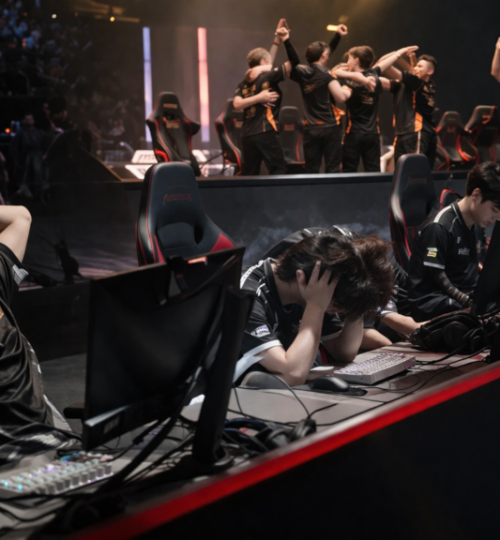
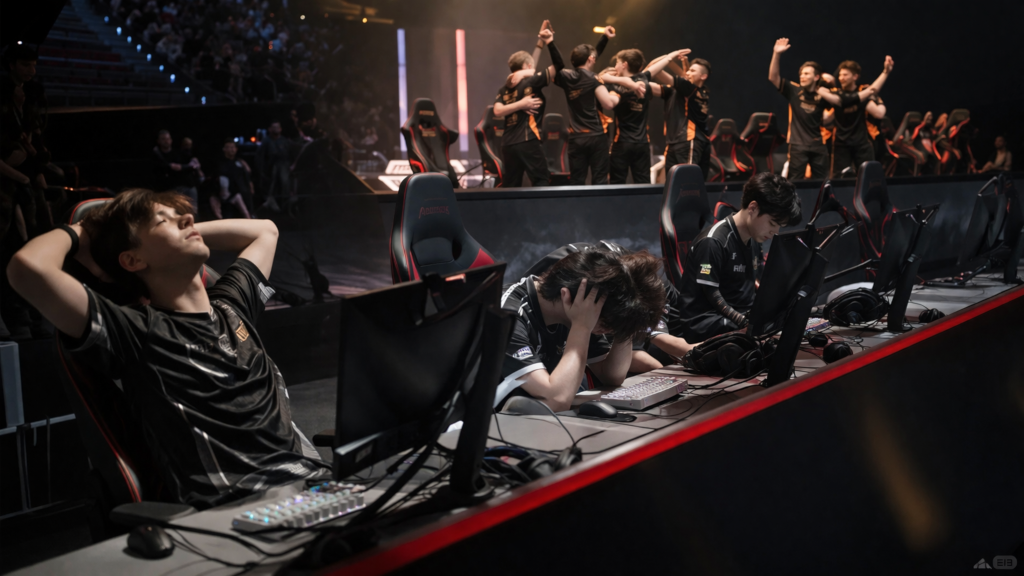
There are few moments in competitive gaming more emotionally charged than staring at a scoreboard that reads 0-5. Whether it is a tactical shooter, a MOBA, or a fast-paced arena title, that deficit carries weight. It is not just numbers. It is momentum, morale, and the creeping doubt that the match is already decided.
And yet, some of the most memorable moments in esports history are built on those exact scenarios. The comeback from 0-5 is not just about mechanical skill or strategy adjustments. It is a psychological battle that unfolds in real time. Teams that pull it off are not simply playing better. They are thinking differently, communicating differently, and emotionally regulating at a level that separates contenders from champions.
For a community rooted in competitive play and legacy ladders, understanding the psychology behind these comebacks is more than interesting. It is essential. Because every player, whether grinding ranked or competing in organized leagues, will face that moment where the match feels out of reach.
This is where the real game begins.
The Weight of Being Down 0-5
At 0-5, most teams are not just losing. They are unraveling. The early rounds of a match often set expectations. When those expectations are shattered quickly, players experience a mix of frustration, embarrassment, and urgency. Cognitive load increases. Decision-making becomes rushed. Communication often shifts from structured callouts to reactive chatter or silence.
Psychologically, this state is driven by what is known as “loss aversion.” Players begin to fear further mistakes more than they focus on making smart plays. This leads to hesitation or overcorrection. Both are dangerous.
You will often see three common reactions at this stage:
- Over-aggression, where players try to force plays to swing momentum instantly
- Passive collapse, where players become afraid to take initiative
- Internal blame, where team cohesion begins to fracture
None of these states are conducive to a comeback. In fact, they accelerate defeat. Teams that recover from 0-5 do something different. They interrupt this psychological spiral.
The Reset Moment
Every comeback has a turning point, and it rarely starts with a flashy play. It starts with a reset. This reset can be triggered in several ways. Sometimes it is a timeout. Sometimes it is a strong in-game leader stepping in. Sometimes it is as simple as one player saying, “Forget the score. Play this round.”
What matters is the shift in mental framing. Instead of viewing the game as 0-5, successful teams begin to treat it as a series of isolated rounds. The goal becomes smaller, more manageable. Win the next round. Then the next.
This is a classic cognitive reframing technique. By reducing the perceived scale of the problem, players regain a sense of control. That control is critical for restoring confidence and focus.
In high-level play, this reset is often accompanied by a deliberate slowdown. Teams will pause, breathe, and re-establish structure. Communication becomes intentional again. Roles are clarified. The chaos is replaced with purpose. Without this reset, comebacks rarely happen.
The Role of Leadership Under Pressure
When a team is down 0-5, leadership becomes the most important variable in the match. The in-game leader, or the most vocal player, acts as the emotional anchor. Their tone sets the atmosphere. If they panic, the team panics. If they stay composed, the team stabilizes.
Effective leaders in these moments do three things:
- They simplify the plan
- They control the emotional temperature
- They reinforce belief without overhyping
Simplicity is key. Complex strategies are harder to execute under stress. A clear, direct plan allows players to focus on execution rather than interpretation. Emotional control is equally important. A calm voice cuts through the noise. It prevents tilt from spreading across the team.
Belief is the final piece. Not blind optimism, but grounded confidence. Statements like “We fix our spacing and we win fights” are more effective than generic hype. In many comeback scenarios, leadership is the difference between a team that stabilizes and one that collapses completely.
Momentum Is Psychological Before It Is Mechanical
Momentum is often talked about as if it is a mystical force, but in competitive gaming, it is largely psychological. When a team wins a round after being down 0-5, something shifts. Confidence increases. Communication sharpens. Players begin to trust their instincts again.
At the same time, the leading team experiences a subtle form of pressure. They start thinking about closing out the game. Mistakes that were not present early on begin to appear.
This creates a feedback loop:
- The trailing team gains confidence with each success
- The leading team becomes more cautious or tense
- The gap in performance narrows, even if the score still favors the leader
This is why the first round in a comeback attempt is so critical. It is not just one point. It is the spark that ignites momentum.
Once momentum takes hold, mechanical skill often follows. Players aim better, react faster, and make cleaner decisions. Not because their ability suddenly improved, but because their mental state allows their true skill to surface.
Communication as the Backbone of Recovery
In a 0-5 scenario, communication often determines whether a team has any chance of recovering. Poor communication amplifies chaos. Good communication restores structure. Teams that successfully rally tend to exhibit a few consistent communication patterns:
- Clear, concise callouts with minimal clutter
- Active information sharing, even after death
- Positive reinforcement instead of criticism
One of the most underrated aspects of communication is tone. The same callout can be delivered in a calm, controlled manner or in a frustrated, urgent tone. The latter increases stress across the team.
Another key factor is listening. In losing situations, players often talk over each other, trying to assert control. Effective teams do the opposite. They create space for information to flow and be processed.
This level of communication discipline is not easy. It requires practice and trust. But it is one of the defining traits of teams that can recover from early deficits.
The Danger of Overcorrection
When teams fall behind early, there is a strong temptation to change everything. New strategies, different roles, aggressive plays, unexpected rotations. While adaptation is important, overcorrection can be just as damaging as stagnation. The best teams understand the difference between adjustment and panic.
Adjustment is targeted. It focuses on specific issues. Maybe the team is losing map control in a certain area. Maybe their timing is off. These are fixable problems. Panic-driven changes are broad and unfocused. They disrupt team synergy and create confusion.
In many comeback scenarios, the winning formula is not a complete overhaul. It is a series of small, precise corrections layered on top of an existing structure. This approach allows teams to maintain familiarity while addressing weaknesses. It keeps players grounded rather than overwhelmed.
Individual Mentality Within a Team Environment
Even in a team-based game, individual mindset plays a massive role in comeback scenarios. Each player is managing their own internal dialogue. Thoughts like “I am underperforming” or “I need to carry” can either motivate or destabilize.
Players who thrive in comeback situations tend to exhibit a few key traits:
- Short memory, meaning they quickly move past mistakes
- Focus on process over outcome
- Confidence in their role, even when the team is struggling
The concept of a short memory is particularly important. Dwelling on missed shots or bad decisions compounds stress. Letting go allows players to stay present.
Process-focused thinking shifts attention to controllable actions. Positioning, timing, communication. These are things players can influence directly.
Role confidence ensures that players do not abandon their responsibilities in an attempt to do too much. When everyone tries to be the hero, the team loses cohesion.
Balancing individual mentality with team coordination is one of the most challenging aspects of competitive play. It is also one of the most rewarding when it clicks.
Reading the Opponent’s Mental State
A comeback is not just about improving your own performance. It is also about recognizing changes in your opponent. Teams that start strong can become vulnerable when their lead is challenged. Complacency can turn into hesitation. Confidence can turn into pressure.
Experienced players learn to identify these shifts.
- Are opponents playing more defensively than before?
- Are they hesitating in engagements they previously took confidently?
- Are their rotations slower or more predictable?
These are signs that the psychological balance is shifting. Capitalizing on this requires awareness and discipline. Overcommitting can reset the momentum in favor of the opponent. Controlled aggression, on the other hand, can amplify their uncertainty.
In many cases, the comeback is completed not because the trailing team becomes unstoppable, but because the leading team becomes unstable.
The Snowball Effect of Belief
At some point in every successful comeback, belief takes over. It is no longer about surviving or stabilizing. It becomes about winning. This shift is powerful. Players begin to expect success rather than hope for it. Decisions become more decisive. Communication becomes more confident.
Belief is contagious within a team environment. One player making a bold, successful play can elevate the entire squad. Energy levels rise. Focus sharpens. This is also the point where the leading team feels the most pressure. What once felt like a secure lead now feels fragile.
The psychological advantage flips. Maintaining this belief requires consistency. A single mistake can break the rhythm if the team is not mentally prepared to handle setbacks.
The best teams treat each round with the same intensity, regardless of the score. This prevents emotional swings and keeps performance stable.
Lessons for Competitive Players and Teams
The psychology of the comeback is not reserved for professional play. It applies at every level of competition. For players grinding ranked ladders or participating in organized tournaments, there are clear takeaways:
- Do not let early deficits define the outcome of a match
- Focus on resetting mentally before trying to fix gameplay issues
- Prioritize communication and emotional control
- Make targeted adjustments rather than drastic changes
- Trust your role and your teammates
These principles are simple in theory but difficult in practice. They require discipline, awareness, and repetition.
The more a team experiences these situations, the better they become at navigating them. Over time, what once felt like an impossible deficit becomes a manageable challenge.
Why Comebacks Define Competitive Gaming
Comebacks are more than just exciting moments. They are the essence of competition. They test resilience, adaptability, and mental strength. They reveal the true character of a team.
In a community built on legacy competition, ladders, and player-driven matchups, these moments are part of the DNA. They are the stories that players remember. The matches that get talked about years later.
A 0-5 deficit is not the end of a game. It is an inflection point. What happens next depends on mindset, communication, and the ability to stay composed under pressure. Because in competitive gaming, the scoreboard tells you where you are.
Psychology determines where you are going.