
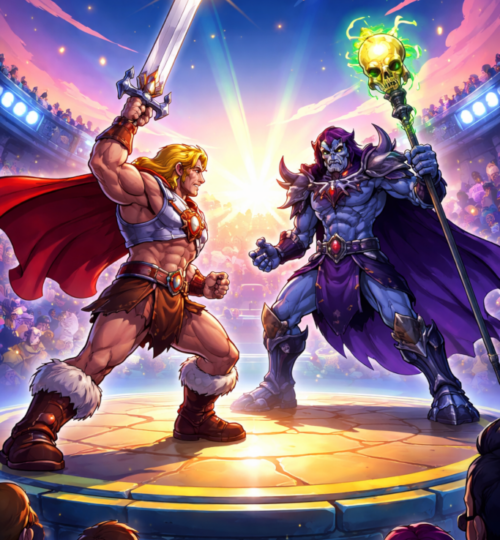

For a certain generation of gamers, Saturday mornings were sacred. Before esports arenas, before ranked ladders, before patch notes dictated the rhythm of play, there was a simpler ritual. Wake up early, grab a bowl of cereal, and dive into animated worlds where heroes like He-Man battled evil in episodic bursts of action, morality, and imagination.
Fast forward to today, and that same episodic, stylized format is quietly making its way back into gaming. Developers are experimenting with designs that mimic the pacing, tone, and structure of those classic cartoons. Bright visuals, clearly defined heroes and villains, self-contained episodes, and a focus on accessible storytelling are showing up across both indie and mainstream titles.
But the real question for modern gamers is simple. Does this format actually work in today’s ecosystem, or is it just another nostalgia play that fades after the novelty wears off?
What Defines the “Saturday-Morning” Game Format?
To understand whether it works, we first need to define what this format actually means in a gaming context. At its core, the Saturday-morning cartoon style translates into several key design elements:
- Episodic structure rather than long, continuous narratives
- Clear moral alignment between heroes and villains
- Stylized visuals that prioritize bold colors and exaggerated forms
- Self-contained missions or levels that reset stakes each session
- A tone that balances action with humor and simplicity
In many ways, this format runs counter to the modern AAA formula. Today’s biggest games often lean toward sprawling open worlds, layered progression systems, and narrative complexity that unfolds over dozens or even hundreds of hours. The cartoon-inspired format strips much of that away and replaces it with immediacy and clarity.
Why Developers Are Revisiting This Style
The resurgence of this format is not accidental. It is happening at the intersection of several industry trends.
First, there is the growing fatigue with overly complex systems. Many players enjoy deep progression and customization, but there is also a rising demand for experiences that are easy to pick up and play without a heavy time commitment.
Second, nostalgia remains a powerful force. Players who grew up with 80s and 90s media now have both purchasing power and emotional attachment to those styles. Developers are tapping into that connection, not just visually, but structurally.
Third, streaming and content creation have changed how games are consumed. Episodic gameplay lends itself naturally to short-form content, where each session feels like a complete experience rather than a fragment of a larger grind.
The Gameplay Advantage: Accessibility and Flow
One of the biggest strengths of the Saturday-morning format is how accessible it is. Players can jump into a session, complete an objective, and feel satisfied without needing to commit hours. This aligns perfectly with modern lifestyles where time is often fragmented.
From a design perspective, this creates a clean gameplay loop:
- Enter a mission
- Face a clear objective
- Encounter escalating challenges
- Resolve the conflict
- Exit with a sense of closure
This loop mirrors the structure of classic cartoon episodes, where each story has a beginning, middle, and end within a short runtime. For multiplayer communities, this has real implications. It lowers the barrier to entry for new players while keeping sessions consistent and predictable. That predictability can be a powerful tool for building regular engagement.
The Competitive Angle: Can It Fit Esports?
For a platform rooted in competitive gaming, this is where things get interesting. At first glance, the cartoon format might seem too simplistic for serious competition. After all, esports thrives on depth, mastery, and long-term skill expression.
However, simplicity does not necessarily mean lack of depth. Games that embrace this format can still incorporate layered mechanics beneath the surface. The key is how those mechanics are presented. Instead of overwhelming players upfront, they are introduced gradually within a familiar, repeatable structure.
Think of it like early competitive titles that built depth through repetition rather than complexity at first glance. In fact, the episodic format can enhance competitive play in several ways:
- Matches become easier to structure and schedule
- Each session has a clear start and end point
- Spectators can follow along without needing extensive context
- Content is easier to package into highlights and recaps
For community-driven platforms, this aligns well with ladders, tournaments, and league formats. Each match can feel like its own episode, complete with its own narrative arc.
The Risk of Oversimplification
Of course, there are downsides. The biggest risk is that the format can feel shallow if not executed properly. Players today are used to systems that reward long-term investment. If a game leans too heavily on simplicity without offering meaningful progression or skill depth, it risks losing engagement quickly.
There is also the issue of repetition. While episodic design is meant to create consistency, it can easily become predictable in a negative way if missions start to feel identical.
Developers need to strike a balance between familiarity and variation. Each “episode” must feel distinct enough to justify continued play while still fitting within the overall structure.
Visual Identity: More Than Just Nostalgia
One of the most noticeable aspects of this format is its visual style. Bold colors, exaggerated character designs, and clean silhouettes are all hallmarks of classic cartoons. These elements translate well into modern gaming for several reasons.
First, they create strong visual readability. In competitive environments, being able to quickly identify characters and actions is critical. Second, they stand out in a crowded market. Hyper-realistic graphics are common, but stylized visuals can create a unique identity that is instantly recognizable.
Third, they age better. Realistic graphics can quickly become outdated, while stylized art tends to remain appealing over time. However, relying solely on nostalgia-driven visuals without supporting gameplay depth can backfire. Players may be drawn in initially, but they will not stay unless the experience holds up.
Narrative Design: Simple Does Not Mean Weak
Another misconception is that the Saturday-morning format limits storytelling. While it is true that these games often avoid complex, branching narratives, they can still deliver meaningful stories through consistency and character development.
Classic cartoons often relied on recurring themes and character dynamics rather than intricate plots. Over time, these elements created a sense of familiarity and attachment.
In gaming, this can translate into:
- Recurring rivalries between players or teams
- Ongoing character arcs that evolve across sessions
- Community-driven narratives that emerge from competition
For a revived esports platform, this is particularly valuable. The story is not just what the game presents, but what the community creates within it.
Modern Examples and Industry Movement
While not always labeled as such, several modern games and projects are already experimenting with elements of this format.
Live-service games often use seasonal content structured like episodes. Hero-based shooters and arena games rely on clear character identities and repeatable match structures. Even some indie titles are embracing short, self-contained experiences that prioritize replayability over length.
The difference is that these games are blending the cartoon-inspired structure with modern systems such as progression tracks, unlockables, and competitive ranking. This hybrid approach may be the key to making the format viable in today’s market.
Community Impact: A Natural Fit for Revival Projects
For communities that are rebuilding, especially those with a legacy foundation, this format offers unique advantages. It creates a sense of approachability. New players do not feel overwhelmed by years of accumulated systems or knowledge gaps. It encourages participation. Short, self-contained sessions make it easier for players to jump in and contribute.
It fosters identity. Episodic play allows for recurring events, themed competitions, and consistent engagement cycles. Most importantly, it mirrors the feeling of how many older communities originally formed. Not around endless progression, but around shared moments of play.
The Psychological Pull of Nostalgia
Nostalgia is often dismissed as a marketing tactic, but it has deeper psychological roots. Familiar structures reduce cognitive load. Players do not need to learn entirely new systems from scratch. They can rely on patterns they already understand.
This creates a sense of comfort, which can be powerful in a gaming landscape that is often competitive and high-pressure.
At the same time, nostalgia can set high expectations. If a game promises to recapture a certain feeling but fails to deliver, the disappointment can be amplified. The challenge for developers is to use nostalgia as a foundation, not a crutch.
Where It Works Best
The Saturday-morning format is not a universal solution. It thrives in specific types of games and communities.
It works well in:
- Multiplayer arena games with clear objectives
- Competitive environments with structured matches
- Community-driven platforms that benefit from repeatable events
- Indie titles that prioritize creativity over scale
It is less effective in:
- Large open-world experiences that rely on immersion and exploration
- Deep simulation games that require complex systems
- Narrative-heavy titles where continuity is essential
Understanding where the format fits is crucial to its success.
The Future of Episodic Game Design
Looking ahead, it is likely that this format will continue to evolve rather than remain static. Developers are already experimenting with ways to combine episodic structure with modern expectations. This includes:
- Persistent progression layered on top of self-contained sessions
- Dynamic content that changes each “episode”
- Integration with live events and community feedback
- Cross-platform accessibility to reach wider audiences
As technology and player expectations continue to shift, the format may become less about replicating the past and more about adapting its principles to the present.
Final Verdict: Does It Actually Work?
So, does the He-Man Saturday-morning cartoon game format actually work? The answer is yes, but with conditions.
It works when it is used as a framework rather than a limitation. When developers combine its accessibility, clarity, and structure with modern depth and engagement systems, it can create experiences that feel both fresh and familiar.
It fails when it relies solely on nostalgia without offering substance. Players may show up for the aesthetic, but they will not stay without meaningful gameplay.
For a revived esports community, this format presents an opportunity. It aligns with the idea of bringing players back to the core of what made competitive gaming exciting in the first place. Clear objectives, memorable moments, and shared experiences.
In many ways, it echoes the origins of communities that built their own ladders and tournaments long before built-in systems existed. The difference now is that the tools, the audience, and the expectations have all evolved.
If developers and communities can strike the right balance, the Saturday-morning spirit might not just return. It could become one of the defining formats of modern multiplayer gaming.