
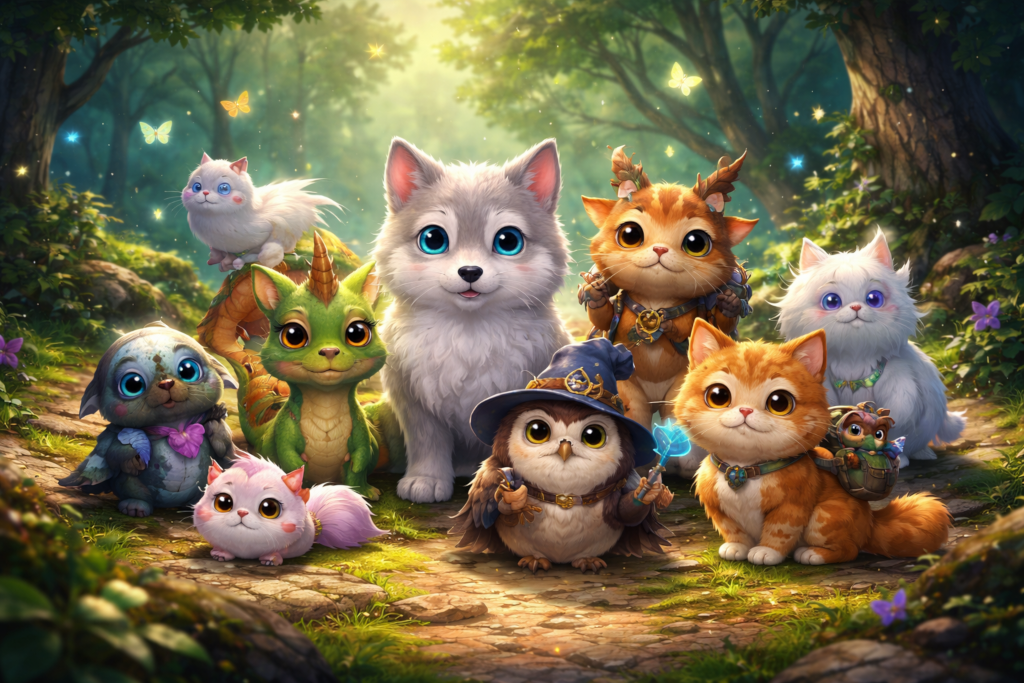
Virtual animals are a quiet feature that became a core experience. Massively multiplayer online games have evolved far beyond simple character progression and combat systems. What once began as stat-driven adventures has gradually transformed into living digital worlds filled with social systems, customization, and emotional investment. One feature that has quietly grown into a major pillar of player engagement is the inclusion of pet companions.
At first glance, pets may seem like cosmetic additions or minor gameplay bonuses. However, their role in modern MMOs has expanded significantly. From combat assistants to emotional anchors, virtual pets have become one of the most compelling and enduring features in online gaming. Players do not just collect them. They bond with them, show them off, and in many cases, define part of their identity through them.
Understanding why gamers obsess over virtual animals reveals a deeper truth about MMO design. These companions are not just extras. They enhance quality of life, strengthen engagement, and create meaningful connections in a space that is otherwise driven by competition and progression.
The Psychology Behind Virtual Companions
The human tendency to bond with animals is deeply ingrained. Pets in the real world provide companionship, reduce stress, and offer a sense of responsibility. MMOs tap into this instinct by creating systems that mimic these emotional triggers.
Even though players know these companions are digital, the interaction loop creates attachment. Naming a pet, leveling it, customizing its appearance, and relying on it during gameplay all contribute to a sense of ownership. Over time, that ownership becomes emotional investment.
This is especially powerful in persistent worlds. Unlike single player games, MMOs are ongoing experiences. A pet that travels with a player for hundreds of hours becomes part of their story. It is present during victories, defeats, and social interactions. That consistency reinforces the bond.
There is also a social validation aspect. Rare pets or well-trained companions signal dedication and status. Much like rare gear or achievements, pets become a way to express identity within the community.
Gameplay Benefits That Go Beyond Cosmetics
While emotional attachment plays a major role, pets are not just about aesthetics. Many MMOs integrate companions directly into gameplay systems, making them valuable tools rather than passive features.
Combat pets are one of the most common implementations. These companions can deal damage, tank enemies, or provide healing support. For solo players, this can significantly improve survivability and efficiency. In some cases, entire classes are built around pet management, creating a unique playstyle that differs from traditional combat roles.
Utility pets add another layer of quality of life. Some companions can gather resources, increase inventory space, or provide buffs that reduce downtime. These small improvements accumulate over time, making the overall experience smoother and more enjoyable.
Even non combat pets often serve a purpose. They may provide passive bonuses, unlock achievements, or participate in mini games. These systems give players additional goals outside of traditional progression paths, which helps reduce burnout.
Quality of Life Enhancements Through Companions
One of the most underrated aspects of pet systems is how they improve quality of life in subtle but meaningful ways.
MMOs can be repetitive by design. Grinding for experience, farming materials, and completing daily tasks are core parts of the experience. Pets help break that monotony. A companion adds visual and interactive variety to otherwise routine gameplay.
They also provide a sense of continuity. Logging into a game after a long day and seeing a familiar companion waiting can create a comforting experience. This is especially important in games that aim to retain players over long periods.
For newer players, pets can reduce frustration. A combat companion can make early content more accessible, while utility pets can simplify resource management. This lowers the barrier to entry and helps players stay engaged during the critical early stages of the game.
Veteran players benefit as well. High level pets often introduce complex mechanics that add depth to gameplay. Training, breeding, or optimizing companions can become its own form of endgame content.
Collection and Completionism
Another major driver of pet obsession is the collection aspect. MMOs often feature dozens or even hundreds of unique companions, each with its own appearance, abilities, and rarity.
This taps into completionist behavior. Players enjoy the challenge of finding and acquiring every available pet. Rare drops, limited time events, and hidden locations all contribute to the hunt.
Collection systems are particularly effective because they offer long term goals. Unlike gear, which may become obsolete with updates, pets often retain their value. This gives players a reason to keep playing even when they have reached the current level cap or completed major content.
Some games take this further by introducing pet battles, breeding systems, or evolution mechanics. These features transform pets into a fully realized gameplay system rather than a side activity.
Social Interaction and Community Building
Pets are also powerful tools for social interaction. In crowded MMO hubs, unique or rare companions often draw attention. Players ask questions, trade tips, and share stories about how they acquired their pets.
This creates organic conversation starters. Unlike competitive topics, which can sometimes lead to conflict, pets are generally a positive and inclusive subject. They give players a way to connect without the pressure of skill or performance.
Guilds and communities often incorporate pets into their culture. Some groups organize events focused on collecting or showcasing companions. Others use pets as a way to onboard new members, offering guidance and support.
Streaming and content creation have amplified this effect. Watching someone discover a rare pet or complete a collection can be just as engaging as watching high level gameplay. This expands the reach of pet systems beyond the game itself.
Emotional Anchors in Competitive Environments
MMOs are often competitive environments. Whether through player versus player combat, leaderboards, or progression races, there is always pressure to perform.
Pets provide a counterbalance to this intensity. They introduce elements of personalization and comfort that soften the competitive edge. A player might be frustrated after a tough match, but their companion remains a constant, familiar presence.
This emotional stability is important for long term retention. Games that focus solely on competition can become exhausting. By incorporating systems that promote attachment and relaxation, developers create a more balanced experience.
In many ways, pets act as a bridge between gameplay and personal experience. They make the world feel less like a system and more like a place.
Monetization and Ethical Considerations
It would be incomplete to discuss pet companions without addressing their role in monetization. Many MMOs sell cosmetic pets or offer them as part of premium packages.
When done responsibly, this can be a fair way to support the game. Cosmetic pets do not impact gameplay balance and allow players to express themselves.
However, problems arise when pets provide gameplay advantages and are locked behind paywalls. This can create a perception of pay to win mechanics, which can damage trust within the community.
Developers must strike a balance between monetization and fairness. Offering earnable pets alongside premium options helps maintain that balance and ensures that all players can participate in the system.
The Future of Virtual Companions
As technology advances, the role of pets in MMOs is likely to expand even further. Artificial intelligence and procedural behavior systems could make companions feel more lifelike. Instead of simple scripted actions, pets could respond dynamically to player behavior and environmental changes.
Cross platform play and persistent accounts also open new possibilities. A pet collected in one game could potentially carry over to another, creating a unified sense of progression across multiple titles.
There is also potential for deeper customization. Players may be able to design their own companions, blending visual elements and abilities to create truly unique pets.
These developments will further blur the line between gameplay mechanics and personal connection, making pets an even more integral part of the MMO experience.
Why It Matters for Community Driven Platforms
For a community focused on multiplayer competition and legacy systems, pet companions offer an opportunity to expand engagement beyond traditional features.
Leaderboards, tournaments, and competitive events are essential, but they appeal to a specific type of player. Pets, on the other hand, have universal appeal. They attract casual players, collectors, and social participants who may not be interested in competitive play.
Integrating pet related content into a community platform can diversify engagement. Articles, discussions, and showcases centered around companions can draw in a broader audience while still complementing the core competitive experience.
It also aligns with the idea of preserving history. Just as legacy leaderboards capture past achievements, pet systems capture personal journeys. They tell stories that go beyond wins and losses.
Closing Thoughts
Pet companions in MMOs are more than a trend. They represent a shift in how games engage players on both mechanical and emotional levels.
By improving quality of life, enhancing gameplay, and fostering social interaction, these virtual animals have become a cornerstone of modern online experiences. They give players something to care about beyond stats and rankings, adding depth to worlds that might otherwise feel purely transactional.
For a community built on competition and history, embracing the broader appeal of systems like pet companions can help bridge the gap between past and future. It creates space for new players to connect while giving veterans another reason to stay invested.
In the end, the obsession with virtual pets is not just about collecting or optimizing. It is about connection. In a digital world where everything can feel temporary, having a companion that stays with you through every session makes the experience feel a little more real.