
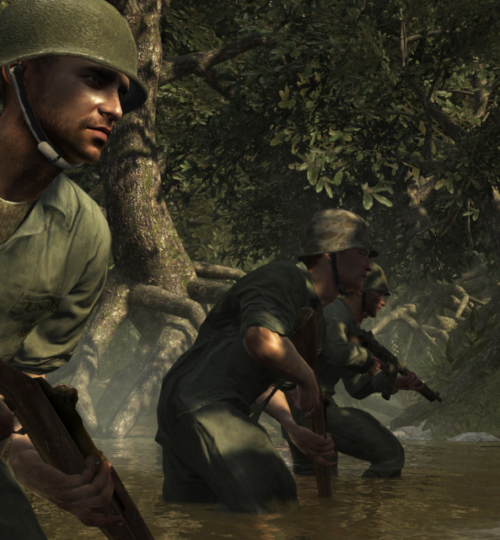
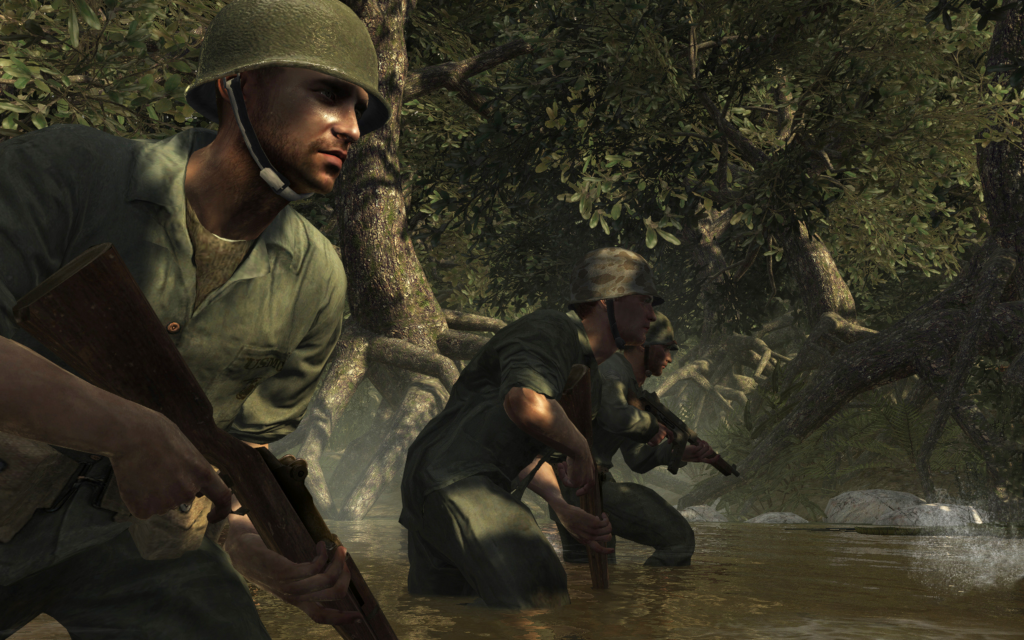
When Call of Duty: World at War launched in 2008, the series was riding a wave of momentum. The previous entry, Call of Duty 4: Modern Warfare, had redefined multiplayer shooters and introduced millions of players to a new style of cinematic military storytelling. Instead of continuing in the modern era, developer Treyarch chose to take the franchise back to its World War II origins.
The result was a game that felt familiar on the surface but far darker in tone and presentation than many of its predecessors. World at War did not attempt to romanticize the war. Instead it focused on the brutal reality of combat in two of the conflict’s most intense theaters: the Pacific and the Eastern Front.
For many players, it remains one of the most memorable entries in the franchise.
A War Told From Two Fronts
 Unlike many World War II shooters that focus primarily on the Western Front, Call of Duty: World at War splits its campaign between two major theaters of the war. Players experience the conflict through both American Marines fighting Japanese forces in the Pacific and Soviet soldiers pushing back against Nazi Germany on the Eastern Front.
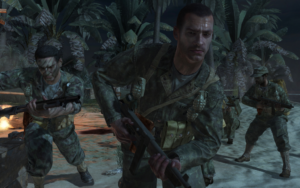
The Pacific campaign places players in the role of Private Miller, a Marine who survives capture by Japanese forces and quickly finds himself thrown into the chaos of island warfare. Dense jungles, fortified bunkers, and nighttime infiltration missions create an atmosphere that feels tense and unpredictable. Japanese soldiers frequently attack from hidden positions or attempt surprise ambushes, making every step forward feel dangerous.
The Soviet storyline offers a completely different tone. Players follow Private Dmitri Petrenko as the Red Army fights its way west toward Berlin. These missions emphasize revenge, desperation, and the relentless push to end the war in Europe. The famous sniper duel set among the ruins of Stalingrad stands out as one of the campaign’s most memorable sequences.
Together, these perspectives show how vast and brutal the war truly was. The contrast between tropical Pacific islands and the devastated cities of Eastern Europe keeps the campaign visually varied and emotionally intense.
A Darker Tone Than Previous Entries
 Earlier World War II shooters often focused on heroism and cinematic spectacle. World at War instead embraces the harsh realities of the conflict.
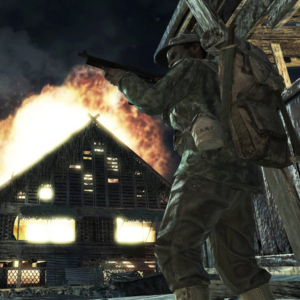
The game does not shy away from depicting the brutality faced by soldiers on both sides. Environments are filled with destroyed villages, burning forests, and bombed-out cities. Soldiers scream for help, artillery shakes the ground, and combat feels chaotic rather than choreographed.
Voice acting also plays a major role in shaping the game’s tone. The Soviet campaign features narration from the commanding officer Sergeant Reznov, whose speeches highlight the rage and determination of soldiers who have suffered through years of war. His perspective frames the Eastern Front as a struggle for survival rather than a simple battle between armies.
The Pacific campaign takes a different approach by emphasizing the fear and uncertainty of jungle combat. Japanese soldiers sometimes charge unexpectedly from hidden tunnels or trees. Flamethrowers become one of the most iconic weapons in the campaign, used to clear bunkers and entrenched positions.
This willingness to portray the war with intensity and weight gives the campaign a unique identity within the franchise.
Gunplay That Feels Heavy and Impactful
At its core, World at War delivers the familiar gameplay that helped define the Call of Duty series. Combat is fast, weapons are responsive, and firefights often involve a mix of rifles, machine guns, grenades, and mounted weapons.
Weapons feel powerful and grounded. Bolt action rifles require precise timing between shots, while submachine guns allow players to move quickly through tight environments. The flamethrower stands out as one of the most satisfying weapons in the game, capable of clearing entire defensive positions in seconds.
Enemy behavior also adds to the intensity. Japanese soldiers are known for aggressive tactics that sometimes include close-range attacks or sudden ambushes. German forces in the Eastern Front missions rely more heavily on defensive positions and coordinated firepower.
The game’s use of environmental destruction and dynamic explosions makes battles feel chaotic. Artillery strikes tear apart buildings, while air support can dramatically shift the tide of a firefight.
These moments combine to create combat encounters that feel both cinematic and unpredictable.
Multiplayer That Built on a Winning Formula
 Multiplayer in World at War builds directly on the foundation established by Call of Duty 4: Modern Warfare. The leveling system, customizable loadouts, and killstreak rewards return, giving players familiar progression goals.
However, World at War introduces several unique elements that set it apart from other entries in the series.
One of the most notable additions is the presence of tanks in certain multiplayer maps. These vehicles allow players to move across large areas while providing heavy firepower and armor. Tanks add a strategic layer to matches by forcing teams to coordinate anti-vehicle attacks.
The perk system also allows players to customize their play style. Some perks improve weapon handling while others enhance stealth or explosive power. Combined with the leveling system, these options encourage experimentation with different builds.
The maps themselves are varied and memorable. From war-torn European castles to Pacific island outposts, each environment offers unique chokepoints, sniper positions, and routes for flanking opponents.
For competitive players, the combination of skill-based gunplay and tactical map design helped multiplayer remain engaging long after release.
The Birth of Nazi Zombies
One of the most influential features of World at War began as a surprise unlockable mode. After completing the campaign, players gained access to a cooperative survival experience known as Nazi Zombies.
In this mode, players defend a small building while waves of undead soldiers attack from every direction. Windows must be barricaded, weapons purchased from wall stations, and teamwork becomes essential for survival.
What began as a hidden bonus quickly became one of the most popular features in the game. The mode allowed four players to work together while attempting to survive increasingly difficult waves of enemies.
The simple formula proved incredibly addictive. Each round became a test of coordination, resource management, and quick decision making.
This experimental mode would eventually evolve into a major pillar of the franchise, appearing in many later titles with expanded maps, storylines, and gameplay systems.
Atmosphere and Sound Design
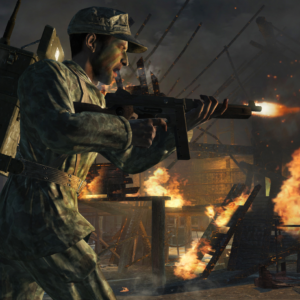 The atmosphere in World at War deserves special recognition. From the moment the campaign begins, the game immerses players in environments that feel alive with danger.
Sound design plays a major role in this immersion. Gunfire echoes across battlefields, artillery shells whistle overhead, and distant explosions create a constant sense of tension. Even quiet moments between firefights feel uneasy.
Music is used sparingly but effectively. Dramatic orchestral pieces appear during key moments of the campaign, helping reinforce the emotional weight of major battles.
Visual design also contributes to the experience. Flames spread across jungle environments, smoke fills ruined cities, and debris flies through the air during bombardments. These details create a battlefield that feels chaotic and unpredictable.
Even years after its release, the atmosphere remains one of the game’s greatest strengths.
A Memorable Entry in the Franchise
Call of Duty: World at War stands out because it blends traditional World War II storytelling with the modern gameplay systems introduced by later entries in the series.
The campaign offers intense combat and a darker perspective on the war. Multiplayer builds on a proven formula while adding new mechanics such as tanks. And the introduction of Nazi Zombies created an entirely new style of cooperative gameplay that would influence the franchise for years to come.
The game also demonstrates how a familiar historical setting can still feel fresh when presented with strong atmosphere and thoughtful design.
For players who appreciate World War II shooters or want to experience one of the more atmospheric entries in the series, World at War remains a compelling and memorable experience.
Its gritty storytelling, impactful gunplay, and innovative bonus modes helped ensure that the game would be remembered long after its original release.
Even today, many fans look back on it as one of the most distinctive chapters in the long history of the Call of Duty franchise.