
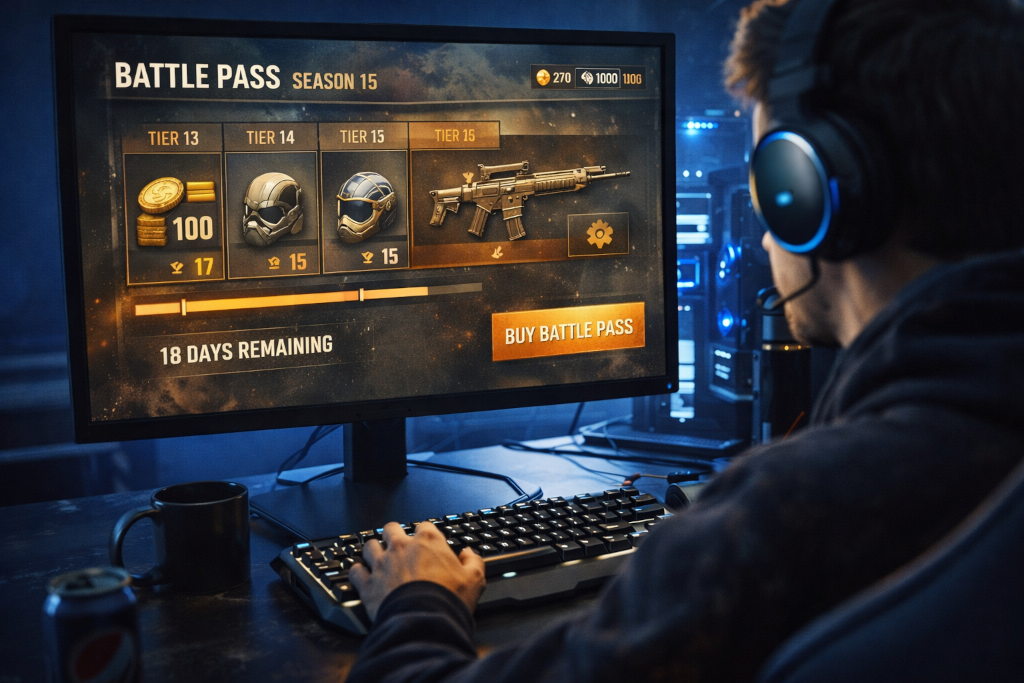
For nearly a decade, the battle pass has been one of the most dominant monetization systems in the video game industry. Introduced as a way to give players structured progression tied to cosmetic rewards, battle passes promised a fairer alternative to random loot boxes. Players could see exactly what they would unlock and progress toward rewards simply by playing the game.
The system quickly spread across the industry. Competitive shooters, battle royale titles, and even some single player experiences adopted seasonal progression tracks filled with skins, emotes, and cosmetic items. What began as an innovative idea gradually became an industry standard.
But in 2026, signs are emerging that the formula may be showing its age. Across forums, community discussions, and developer interviews, a growing number of players are questioning whether battle passes still feel rewarding or whether they have simply become another form of routine monetization that players feel obligated to complete.
The answer is complicated.
The Original Appeal of Battle Passes
When battle passes first appeared, they solved several problems that had frustrated players for years.
Before their arrival, many games relied on loot boxes as their primary source of post launch revenue. Loot boxes offered random rewards and often encouraged players to spend money repeatedly in hopes of unlocking something rare. This system drew heavy criticism from players and regulators around the world.
Battle passes changed that dynamic. Instead of randomness, they offered transparency. Players could see the full list of rewards and decide whether the progression track was worth purchasing. More importantly, players could earn many of the rewards through gameplay rather than pure spending.
The model also aligned well with live service development. Developers could release new seasons every few months, introduce fresh cosmetic items, and keep the community engaged with new challenges and progression goals.
At its best, the system created a positive feedback loop. Players stayed active because they wanted to complete their pass, and developers maintained steady revenue without relying on aggressive microtransactions. For several years, it worked remarkably well.
Saturation Across the Industry
The problem began when nearly every major multiplayer game adopted the same model. What started as a single seasonal pass in one game gradually turned into a stack of overlapping progression tracks across multiple titles. A player might be juggling a battle pass in a shooter, another in a survival game, and yet another in a sports title.
Each pass required dozens of hours to complete. Suddenly the system that once felt rewarding began to feel like a schedule.
Players began talking about battle pass fatigue. Instead of playing a game because they enjoyed it, many felt pressured to log in simply to avoid falling behind on seasonal progress. Missing a few weeks could mean losing access to rewards that might never return.
This psychological pressure became a major point of criticism. Many players began to describe battle passes less as optional bonuses and more as time limited commitments that competed with each other for attention.
The Rise of Player Burnout
The live service era has created an environment where games constantly compete for player engagement. Battle passes were designed to keep players returning week after week. However, as more games adopted the same strategy, the competition intensified.
Players now face a constant stream of seasonal resets, limited time rewards, and progression tracks that disappear when the season ends. The result is a growing sense of burnout.
Instead of feeling like exciting events, new seasons sometimes feel like another reset of a progress bar that players must climb again. When that pattern repeats across several games at once, even dedicated players begin to lose interest.
Many longtime players are now prioritizing fewer games and ignoring battle passes entirely unless the rewards truly stand out.
Developers Are Experimenting With Alternatives
Game developers are aware of the growing criticism, and several studios are already experimenting with changes to the traditional battle pass model. One of the most visible shifts is the move toward non expiring passes.
Some games now allow players to complete seasonal passes long after the season has ended. Instead of creating pressure to finish everything within a strict time window, these systems let players progress at their own pace. This change reduces the fear of missing out that many players dislike.
Other developers are experimenting with permanent progression systems that span multiple seasons. Instead of resetting progress every few months, players continue building toward long term goals. These approaches aim to preserve the sense of progression without forcing players into rigid schedules.
Cosmetic Monetization Is Evolving
Another trend shaping the future of battle passes is the increasing importance of direct cosmetic purchases. Many players have grown comfortable buying specific cosmetic items rather than grinding through a long progression track. Developers have responded by expanding in game stores that offer rotating selections of skins, weapon designs, and character customization options.
While these stores generate revenue, they also raise new questions about pricing and exclusivity. Some players appreciate being able to buy exactly what they want. Others worry that premium cosmetic pricing is becoming increasingly aggressive, with some items costing as much as entire game expansions from earlier eras.
The balance between optional cosmetics and perceived value will continue to shape how players view monetization systems in the years ahead.
The Influence of Community Feedback
Modern game development is heavily influenced by community feedback. Players now have multiple platforms where they can voice concerns, from official forums to social media communities and live streaming platforms. When monetization systems feel unfair or overly demanding, the response can be immediate and widespread.
Developers often adjust systems based on that feedback.
Recent updates in several live service games have reduced grind requirements, added more free rewards to battle passes, or introduced catch up mechanics that help players progress faster if they join a season late. These adjustments show that developers recognize the importance of maintaining trust with their communities.
Competitive Gaming and Seasonal Progression
For competitive gaming communities, battle passes often exist alongside ranked ladders and seasonal competitive modes. In many cases, these systems are loosely connected. Players progress through ranked tiers while also advancing through cosmetic progression tracks tied to the same season.
However, some players argue that competitive progression should remain separate from monetization systems. Competitive players often prefer rewards that reflect skill rather than time investment. Cosmetic battle pass items rarely provide that sense of achievement.
As competitive communities grow, developers may continue exploring ways to better distinguish between progression tied to performance and progression tied to seasonal participation.
The Future of Live Service Monetization
Despite growing criticism, battle passes are unlikely to disappear anytime soon. They remain a reliable revenue source for live service games and provide a predictable structure for seasonal content updates. Many players still enjoy unlocking rewards through gameplay progression, especially when the system feels fair and respectful of their time.
What is more likely is evolution rather than replacement. Future battle passes may offer more flexibility, longer completion windows, and better integration with broader progression systems. Developers may also experiment with hybrid models that combine optional cosmetic purchases with less demanding seasonal tracks.
Another possibility is the return of expansion style monetization in certain genres. Some studios are already exploring larger periodic content updates rather than constant seasonal resets. These approaches could coexist with battle passes rather than replacing them entirely.
A System at a Crossroads
The battle pass system helped reshape the economics of modern gaming. It provided an alternative to controversial loot box mechanics and gave developers a way to sustain live service games for years. However, widespread adoption has created new challenges.
When every game asks players to commit to seasonal progression, the system begins to lose the novelty that once made it appealing. Players now have more choices than ever, and many are becoming more selective about where they invest their time. The future of battle passes will likely depend on how well developers adapt to those changing expectations.
If seasonal systems become more flexible, less demanding, and more respectful of player time, they may continue to thrive. If not, the industry may gradually shift toward new forms of monetization that better match the evolving habits of modern players.
One thing is certain. As live service gaming continues to evolve, monetization systems will remain one of the most closely watched aspects of the industry.
And the next few years may determine whether the battle pass remains a cornerstone of modern gaming or becomes another trend that eventually fades into gaming history.