
Disclaimer: The views and opinions expressed in this article are solely those of the author. The mention of any products, services, or methods does not constitute an endorsement.
There was a time when your choice of platform defined your multiplayer experience. If your friends were on a different console, you either bought the same system or you played alone. That divide shaped entire communities. It influenced what games people bought, where competitive scenes developed, and even how online identities were formed. Today, that wall has largely come down. Cross-platform play is no longer a novelty. It is the expectation.
For a modern multiplayer community, this shift changes everything.
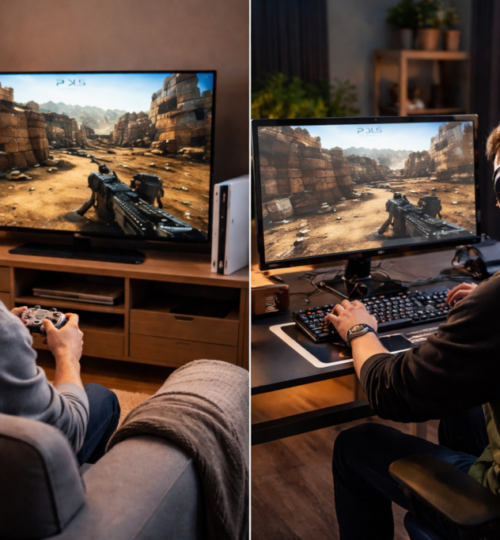
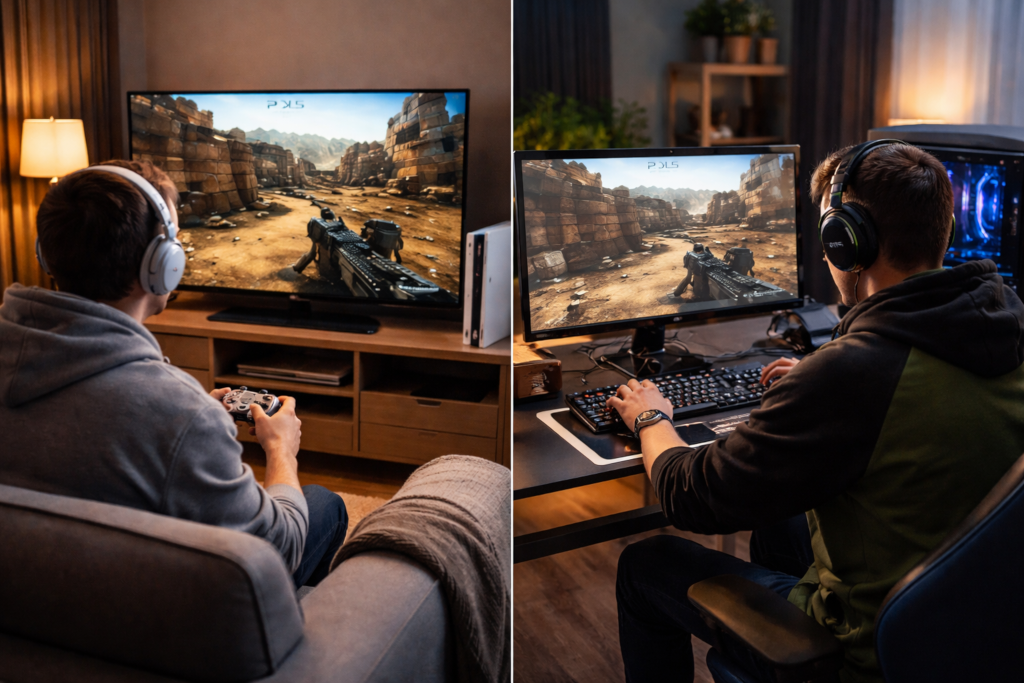
Cross-platform play, often called crossplay, allows players on different systems such as PC, PlayStation, Xbox, and Nintendo Switch to play together in the same online environment. What started as a controversial feature has now become a baseline requirement for many major releases. Players expect to squad up regardless of hardware, and developers increasingly design their games with that expectation in mind.
This transformation did not happen overnight. It was driven by a mix of player demand, market pressure, and the realization that unified player pools create healthier games.
The Pressure That Forced Change
For years, platform holders maintained strict ecosystems. Online networks were closed, and each company treated its player base as a separate audience. This made sense from a business perspective. Exclusive ecosystems encouraged hardware sales and kept players locked into specific services.
But the rise of global multiplayer titles changed the equation.
Games like battle royales, live service shooters, and competitive online titles rely on large, active player bases. Fragmenting those players across multiple platforms created problems. Matchmaking suffered, queue times increased, and smaller regions struggled to sustain competitive scenes.
Players noticed. Communities became more vocal. Social media amplified frustration. When a friend group could not play together because of hardware differences, it felt outdated.
Developers also began to push back. Maintaining separate ecosystems increased complexity and limited growth potential. A unified player base meant better matchmaking, longer game lifespans, and stronger engagement. Eventually, the pressure became too strong to ignore.
Sony’s Shift from Resistance to Participation
Sony was initially the most resistant to cross-platform play. During the PlayStation 4 era, it dominated the console market and had little incentive to open its ecosystem. From a business standpoint, keeping players within its network reinforced its market lead.
However, high-profile games began to challenge that stance. When major titles started enabling crossplay on other platforms but excluded PlayStation, the backlash was immediate and loud. Players did not see platform boundaries as a valid reason to restrict gameplay.
Sony eventually changed course. It introduced crossplay support, first cautiously, then more broadly. Today, most major multiplayer titles on PlayStation support cross-platform play. Sony has also adapted its policies to allow developers more flexibility in connecting players across systems.
While it still approaches crossplay with a focus on maintaining its ecosystem, the shift is clear. Sony is no longer an obstacle to cross-platform gaming. It is part of the standard.
Microsoft’s Early Bet on Openness
Microsoft took a different approach early on. With its Xbox ecosystem, it leaned into cross-platform connectivity as a feature rather than a risk. This aligned with its broader strategy of expanding beyond hardware into services and platforms.
Xbox Live became a foundation for cross-network play, and Microsoft actively promoted crossplay between Xbox and PC. This was especially important as Windows gaming remained a major part of its ecosystem.
Microsoft’s willingness to support cross-platform play positioned it as a more open platform during a critical period. It also reinforced its identity as a service-driven company rather than one focused solely on console exclusivity.
Today, Microsoft continues to push crossplay as a core feature. Its ecosystem now spans consoles, PC, and cloud gaming, making cross-platform compatibility essential to its strategy.
Nintendo’s Unique Position
Nintendo operates differently from both Sony and Microsoft. Its hardware and software ecosystems are often distinct, and its focus has traditionally been on first-party experiences. However, even Nintendo has adapted to the crossplay era.
While not every Nintendo title supports cross-platform play, many third-party games on the Switch do. This includes major multiplayer titles where crossplay is essential to maintaining active communities.
Nintendo’s approach is more selective, but it recognizes the importance of allowing its players to connect with broader gaming communities. For a portable system like the Switch, cross-platform play extends the reach of its player base and keeps its multiplayer offerings relevant.
The Impact on Competitive Communities
For a site built around competition, leaderboards, and community-driven events, cross-platform play is a game changer. In the past, competitive scenes were often tied to specific platforms. A ladder on PC was separate from one on console. Tournaments had to account for hardware limitations. Communities were fragmented.
Now, cross-platform play allows for unified competition. A single ladder can include players from multiple systems. Tournaments can draw from a larger pool of participants. Matchmaking becomes more consistent. Skill levels are easier to compare across a broader player base.
This creates opportunities to rebuild competitive ecosystems in a way that was not possible before. However, it also introduces new challenges.
Balancing gameplay across different input methods, such as controller versus mouse and keyboard, remains a point of debate. Competitive integrity must be carefully managed. Some games address this with input-based matchmaking or separate competitive queues.
For community-driven platforms, this means thinking carefully about how to structure competition. Do you separate players by input type, platform, or keep everything unified? Each approach has trade-offs.
Technical and Design Challenges
Cross-platform play is not just a switch that developers turn on. It requires significant technical work. Different platforms have different network infrastructures, certification requirements, and update processes. Synchronizing updates across systems is critical to avoid version mismatches. Security must also be maintained across multiple networks.
Account systems are another key factor. Many games now rely on centralized accounts that exist outside of any single platform. This allows player progression, stats, and identities to persist across devices.
For a community site, this trend is important. Players increasingly identify with their game-specific accounts rather than their platform. This opens the door for more consistent tracking of stats, rankings, and achievements across systems.
Crossplay as a Standard Expectation
What was once a headline feature is now expected. When a new multiplayer game launches without cross-platform support, it stands out for the wrong reasons.
Players assume they will be able to play with friends regardless of platform. Developers design with crossplay in mind from the start. Platform holders support it as part of their ecosystem.
This shift reflects a broader change in how gaming communities function. The focus is no longer on where you play, but who you play with. For a revived gaming community, this is a powerful foundation.
What This Means for Community Rebuilding
The return of cross-platform play aligns perfectly with the goal of rebuilding a player-driven competitive space.
Legacy leaderboards tell the story of a time when communities built their own systems because the games did not provide them. Today, games offer built-in matchmaking and ranking, but they do not replace the identity and structure of a dedicated community.
Crossplay allows a modern version of that community to exist without platform barriers. You can bring players together across systems. You can rebuild ladders that reflect a unified player base. You can host events that are not limited by hardware.
At the same time, your community can offer something that built-in systems often lack. Identity, history, and a sense of belonging.
Looking Ahead
Cross-platform play is not the end of the evolution. It is the baseline. The next phase will likely focus on deeper integration. Cross-progression, shared economies, and unified social systems are already becoming common. Cloud gaming may further blur the lines between platforms.
For competitive communities, the opportunity is clear. The tools now exist to build something that is larger, more connected, and more resilient than before.
The question is no longer whether players can connect. It is what kind of community they will choose to be part of when they do.