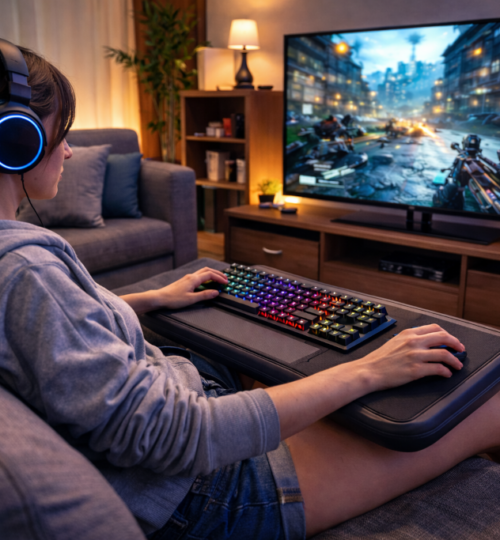
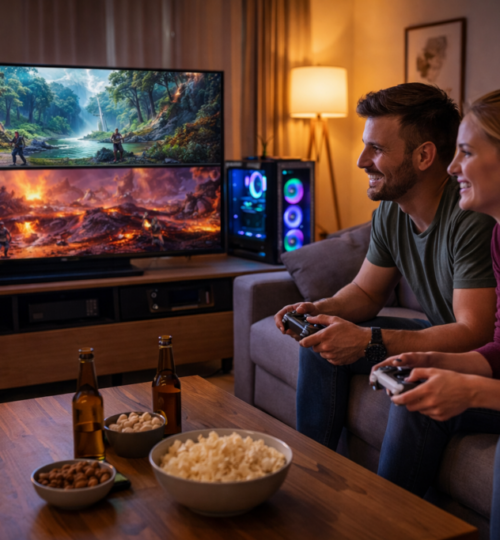
Setting Up the Ultimate Home Theater PC (HTPC) for Couch Co-Op Sessions
There is something timeless about couch co-op gaming. It is not just about playing a game.
Personal Computer
There is something timeless about couch co-op gaming. It is not just about playing a game.
For decades, the image of a serious PC gamer was almost always the same: a desk, a large monitor, a mechanical keyboard, and a powerful desktop tower humming away beneath the table.
For most of the history of PC gaming, Linux existed on the margins. Enthusiasts loved it for its openness, privacy, and control, but gamers rarely treated it as a serious platform for playing modern titles.
For decades, the gaming PC has lived in one place. A desk. A chair. A keyboard and mouse positioned with surgical precision. The glow of a monitor at arm’s length.
Every few years, the same conversation circles back through the gaming community. A new graphics card launches. Benchmarks flood YouTube.
For PC gamers, frames per second is not just a number. It is the difference between a game that feels smooth and responsive and one that feels sluggish or inconsistent.
For many PC gamers, performance discussions tend to orbit around graphics cards, CPUs, and memory.
PC gaming has always lived at the intersection of performance, preference, and possibility.
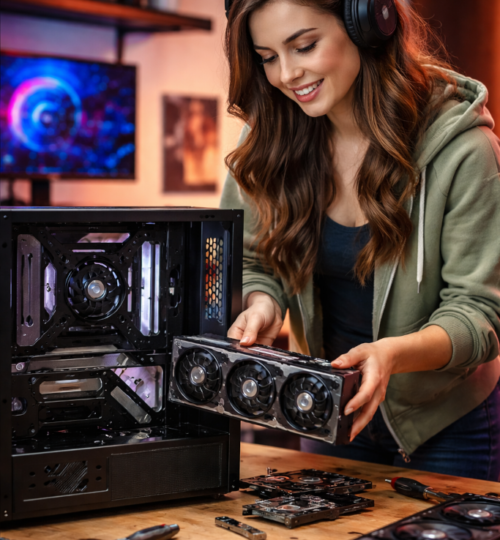
There was a time when building your own gaming PC was almost a rite of passage.
Modern PC gaming is in a strange place. Graphics look better than ever, but hardware demands have climbed faster than many players can reasonably upgrade.
PC gaming has always lived at the intersection of performance, customization, and choice. Unlike consoles, a gaming PC is never truly finished. It evolves.
For most of its history, PC gaming has thrived on a simple promise. If you were willing to learn, tinker, and upgrade over time, you could get better performance, more flexibility, and longer system lifespans than any closed console platform could offer.
PC gaming has always been a space where performance, customization, and personal preference collide. It is also a space where misinformation spreads fast.
Ray tracing has become one of the most talked about graphics features in modern gaming. It is showcased in trailers, highlighted on GPU boxes, and used heavily in promotional screenshots.