
Every competitive player has felt it. You grind ranked for weeks. You watch tutorials. You tweak your settings. You tell yourself you are improving because you are playing more games, learning more maps, memorizing more matchups, and keeping up with the meta. Then one day, you realize your rank has barely moved. Your stats look the same. The same types of players beat you. The same mistakes keep showing up. The same frustrating losses feel like they are following you from game to game.
That is the plateau. In competitive gaming, plateaus are not rare. They are the default. Most players improve quickly at first, then stall somewhere between casual competence and true mastery. They become good enough to understand the game, good enough to win against weaker opponents, and good enough to know when something went wrong. But they never fully break through because the habits that got them to that level are not the same habits needed to reach the next one.
For a legacy online multiplayer community like ours, this is familiar territory. We have seen it across ladders, leagues, tournaments, clans, teams, and player profiles going back years. Different games. Different generations. Different platforms. Same story. Some players rise fast and keep climbing. Others remain stuck, season after season, always close to the next tier but never quite crossing the line.
The difference usually is not talent alone. It is how players practice, think, adapt, and respond when the game stops rewarding autopilot.
The Early Climb Feels Like Progress Because Everything Is New
When a player first starts taking a game seriously, improvement often comes quickly. They learn the controls. They discover better weapons, characters, loadouts, routes, builds, or strategies. They stop making the most obvious mistakes. They begin watching stronger players and copying the basics.
That early improvement feels amazing because almost every hour played teaches something. A player who did not know map callouts yesterday knows them today. A player who used to panic in close fights now wins some of them. A player who never checked the minimap now glances at it every few seconds. The climb feels natural because the mistakes are obvious and the fixes are simple.
But eventually, the easy gains disappear. Once a player has learned the basic mechanics and understands the flow of the game, improvement becomes less visible. The next level is not about learning that cover exists. It is about using cover at the right angle, at the right time, against the right opponent, while tracking cooldowns, teammate positions, objective pressure, and the opponent’s likely next move.
That is where many players stall. They keep playing more, but they are no longer learning more. Their hours increase, but their skill does not scale with those hours.
Playing More Is Not the Same as Practicing Better
One of the biggest traps in competitive gaming is confusing volume with improvement. Grinding ranked can sharpen a player, but only if the player is actively studying what is happening. Many players queue for hours, lose focus, blame teammates, chase wins, rage after mistakes, and repeat the same habits without ever isolating what needs to change. They are technically “practicing,” but not in a way that forces growth.
Real practice has intention. It has a target. A fighting game player might spend a session working only on anti-air reactions. A shooter player might focus on crosshair placement instead of kills. A MOBA player might review every death and ask whether the mistake began thirty seconds earlier with poor wave control or bad vision. A racing player might work on one corner until their line becomes consistent instead of simply running full races over and over.
That kind of practice is less glamorous than grinding. It also works better. Ranked play often hides mistakes because every match is chaotic. You might win despite playing badly. You might lose despite playing well. You might get carried. You might get griefed. You might face opponents who punish nothing, then suddenly face someone who punishes everything. If your only measurement is win or loss, you will miss the deeper lesson.
Players break through when they stop asking only, “Did I win?” and start asking, “What skill did this match test, and did I pass?”
The Comfort Zone Becomes a Cage
Most players develop a style that works well enough. Maybe they are aggressive and rely on mechanics. Maybe they are passive and rely on patience. Maybe they play one character, one class, one role, one route, or one strategy until it becomes second nature.
There is nothing wrong with having a style. In fact, strong players usually do have clear identities. The problem begins when a player’s identity becomes an excuse to avoid growth.
The aggressive player says, “That is just how I play,” even when they repeatedly overextend. The passive player says, “I am just playing smart,” even when they give up too much space. The one-trick player says, “This is my main,” even when the matchup demands adaptation. The shot-caller says, “My team did not listen,” even when the call was late, unclear, or based on bad information. The plateau protects itself through comfort.
Breaking through usually requires discomfort. It means practicing situations where you are weak. It means playing against people who expose you. It means admitting that your favorite habit might be holding you back. It means losing some games on purpose in the short term because you are training a better long-term skill.
That is hard for competitive players because losing feels like proof that the experiment failed. Sometimes it is actually proof that the experiment is working. You are leaving autopilot and forcing your brain to build new patterns.
Mechanics Matter, But Decision-Making Separates Levels
In almost every competitive game, players overvalue mechanics and undervalue decision-making. Mechanics are visible. A clean headshot, perfect combo, fast edit, clutch flick, or frame-tight punish looks impressive. Decision-making is quieter. It is the rotation that avoids the bad fight. The retreat that preserves resources. The patient hold that forces the opponent to panic. The timing read that wins the objective before the scoreboard notices.
At lower and mid levels, better mechanics can overpower bad decisions. A player can aim their way out of poor positioning or win fights they should not have taken. But as opponents improve, bad decisions become expensive. Better players do not simply test your hands. They test your choices.
This is where many players plateau. Their mechanics are good enough to beat average competition, but their decisions are not good enough to beat disciplined competition.
They take fights because they are bored. They chase kills when the objective matters more. They reload in unsafe positions. They burn movement abilities too early. They commit to a push without teammate support. They use ultimate abilities to win already-won fights. They rotate late, peek wide, ignore economy, tunnel vision, or forget the clock. The fix is not always “get faster.” Often, the fix is “get clearer.”
A breakthrough player learns to recognize patterns before they become emergencies. They understand when not to fight. They know which risks are worth taking. They can explain why a play was good or bad beyond the result. They start seeing the game as a chain of decisions rather than a series of isolated moments.
Ego Is the Silent Rank Lock
No player likes to hear this, but ego is one of the strongest forces behind plateaus. Ego does not always look like arrogance. Sometimes it looks like defensiveness. Sometimes it looks like refusing to review losses. Sometimes it looks like blaming matchmaking every night. Sometimes it looks like saying, “I know,” whenever someone gives advice, even though nothing changes in-game. The dangerous part of ego is that it protects the player from pain while also protecting the mistake from correction.
If every loss is because of teammates, servers, balance, cheaters, smurfs, input delay, bad maps, bad patches, or unlucky timing, then the player never has to confront their own role in the result. Some of those factors can be real. Anyone who has competed online knows that bad matchmaking, unstable connections, and questionable balance can absolutely affect games. But if those explanations become the default, growth stops.
Strong players are not strong because they never get unlucky. They are strong because they search for controllable improvements even inside messy matches. A useful mindset is simple: “Even if this game was unfair, what could I have done better?” That question does not excuse bad teammates or broken systems. It just keeps your improvement in your own hands.
Most Players Do Not Review Their Own Gameplay Honestly
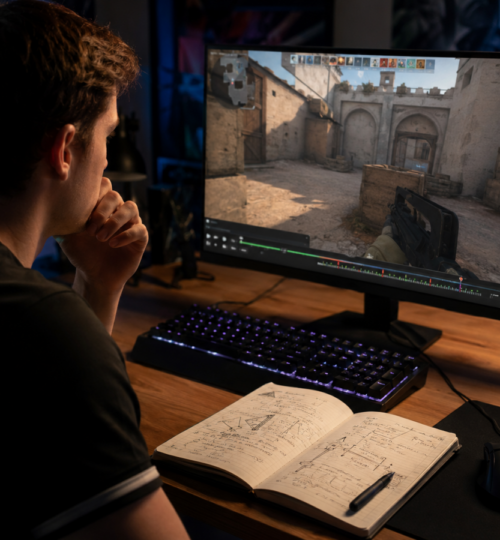
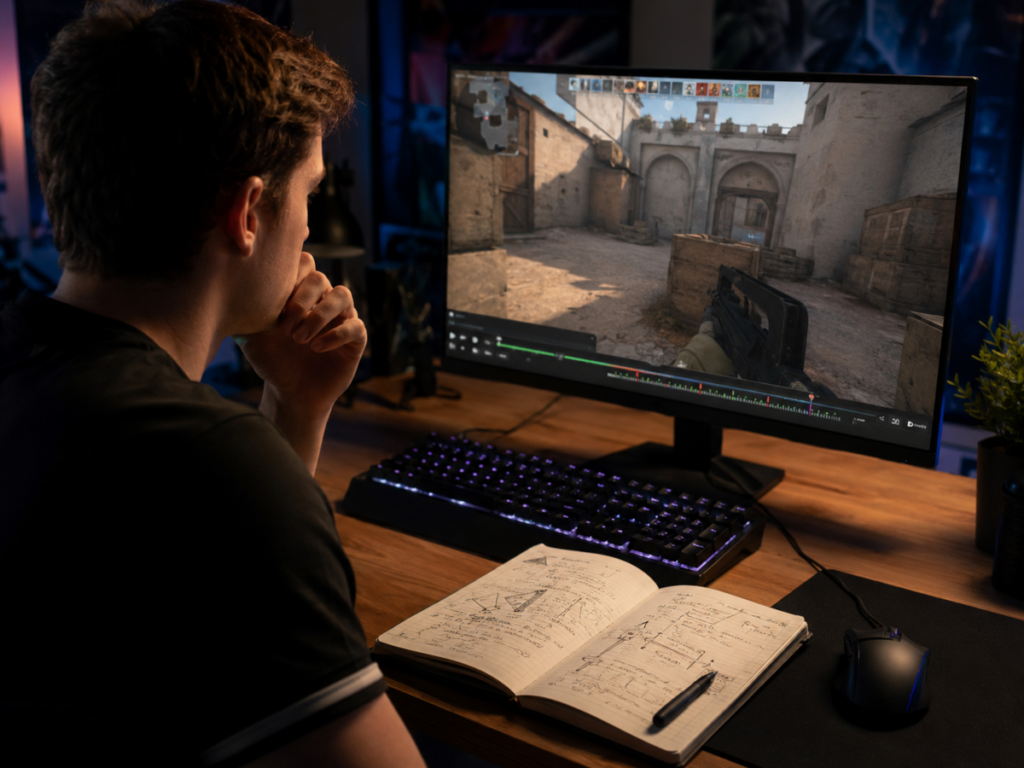
Game review is one of the clearest separators between players who improve and players who stay stuck. Many players watch high-level content. Far fewer watch themselves. Even fewer watch themselves without flinching.
Reviewing your own gameplay can be brutal. You notice missed information, lazy movement, rushed decisions, poor communication, sloppy mechanics, and bad habits you did not feel during the match. In the moment, everything seems reasonable. On replay, the truth is sitting there on the screen like a receipt. That is why review works.
You do not need to analyze every second of every game. In many cases, reviewing deaths, lost rounds, failed pushes, or key turning points is enough. The goal is not to shame yourself. The goal is to find repeatable patterns.
Ask questions like:
- What happened before the mistake?
- Was I missing information?
- Did I have a safer option?
- Did I use resources too early or too late?
- Was I reacting emotionally instead of thinking clearly?
- Have I made this same mistake in other matches?
When the same answer appears several times, you have found the real problem. That problem is often not the final death or lost fight. It is the setup before it. Players who plateau usually remember the dramatic ending. Players who improve study the boring setup.
The Meta Helps, But It Will Not Save You
Competitive players love the meta. They should. Understanding the current strongest strategies, characters, weapons, agents, builds, routes, and team compositions matters. A player who ignores the meta completely risks falling behind. But the meta can also become a hiding place.
Some players constantly switch to whatever is considered strongest, hoping the new tool will fix an old weakness. They change sensitivity, change characters, change roles, change loadouts, change settings, change keybinds, and change routines without giving themselves enough time to master anything deeply.
The result is motion without progress. A strong meta pick in weak hands is still weak. A powerful weapon does not fix poor positioning. A top-tier character does not fix bad timing. A popular strategy does not work if the player does not understand why it works.
The best players study the meta, but they do not worship it. They ask how it fits their strengths, what weaknesses it creates, and how opponents are likely to respond. They know when to adapt and when to stay grounded.
Breaking through requires both awareness and identity. You need to understand the current game, but you also need to build skills that survive beyond one patch.
Communication Can Carry or Collapse a Team
In team-based games, many players plateau because their communication never evolves past basic callouts or emotional reactions. They talk, but they do not communicate. Good communication is timely, clear, useful, and calm. It gives teammates information they can act on. Bad communication floods the channel with frustration, sarcasm, blame, outdated information, or vague panic.
There is a huge difference between “He is over there!” and “Two pushing left, one weak, I am backing up.” There is a huge difference between “Why are you there?” and “Reset, group next objective.” There is a huge difference between leading and complaining.
Veteran online communities understand this well because competitive history is filled with teams that had talent but no structure. The roster looked good. The scrims looked promising. Then pressure hit, comms collapsed, and the team played like five separate people sharing a scoreboard.
Players who break through learn to communicate in a way that stabilizes the team. They do not need to be the loudest voice. They need to be a useful voice.
Consistency Beats Occasional Brilliance
A lot of stuck players are haunted by their best games. They know what they are capable of because they have seen it. They have dropped huge numbers, carried impossible rounds, beaten higher-ranked players, or had nights where everything clicked. That peak performance becomes proof that they “should” be higher ranked.
But competitive ranking systems do not reward your best match. They reveal your average. The question is not, “Can you play like a higher-level player once?” The question is, “Can you play like that often enough that it becomes your normal?”
Consistency comes from reducing unforced errors. It comes from routines, fundamentals, emotional control, warmups, review, and decision discipline. It comes from playing well when you are not feeling perfect. It comes from knowing how to be useful even when your aim is cold or your matchup is rough. Brilliance wins clips. Consistency wins seasons.
Burnout Disguises Itself as Dedication
Another reason players plateau is that they keep grinding after their brain has stopped learning. Competitive games demand focus. When players are tired, tilted, distracted, or physically drained, they do not practice good habits. They rehearse bad ones. They queue again because they want to recover lost points, prove something, or end on a win. Instead, they stack frustration and train themselves to play worse under pressure.
This is where discipline matters. Sometimes the best improvement decision is to stop playing ranked and review a replay. Sometimes it is to run drills for twenty minutes instead of forcing five more matches. Sometimes it is to sleep. That sounds boring, but any veteran competitor knows that tired players make predictable mistakes.
A healthy practice routine is not soft. It is strategic. Players who break through learn when to push and when to reset. They treat focus like a resource. They understand that improvement is built over weeks and months, not one angry midnight session.
Breaking Through Requires a Different Relationship With Losing
The players who escape plateaus usually develop a different relationship with losing. They still hate losing. Competitive people should hate losing a little. That fire matters. But they do not let the loss become the whole story. They turn it into data.
A loss can show a matchup weakness. A failed push can expose poor timing. A bad round can reveal panic habits. A stronger opponent can demonstrate what your next level looks like. Losing only becomes wasted when the player refuses to learn from it.
This is why strong communities matter. Ladders, tournaments, forums, match histories, profiles, and old rivalries all create a record of growth. They remind players that competition is not just about one match. It is about the long arc of getting sharper, smarter, and harder to beat.
The players who break through are not always the ones who start as prodigies. Often, they are the ones who stay honest longer than everyone else.
The Real Breakthrough Is Becoming Coachable
At some point, every serious player has to become coachable, even if they are coaching themselves. Being coachable means you can hear criticism without instantly defending yourself. It means you can separate identity from performance. It means you can say, “That was my mistake,” and actually change the behavior next time. It means you can respect your own effort while still admitting your process needs work.
This is not easy. Games are personal. Rankings feel personal. Public stats feel personal. Nobody wants to be reduced to a number, a badge, or a bad match history. But improvement requires honesty. The breakthrough player stops protecting the version of themselves that is stuck. They start building the version that can climb.
Final Thoughts: The Plateau Is Not the End
Most players plateau because they reach a level where casual effort no longer works. The game stops handing out easy lessons. The old habits stop producing new results. The player must decide whether to keep grinding the same way or change how they train.
Breaking through is not magic. It is not just better hardware, better teammates, better patches, or better luck. Those things can help, but they are not the core. The core is intentional practice, honest review, emotional control, decision-making, adaptability, and the humility to keep learning after you already think you are good.
For veteran competitors, this is part of the beauty of online multiplayer. The ladder is not just a ranking system. It is a mirror. It shows your habits, your discipline, your weaknesses, and your growth over time. The plateau feels like a wall, but it is usually a message. It is the game telling you that the next level requires a different version of you.