

Disclaimer: The views and opinions expressed in this article are solely those of the author. The mention of any products, services, or methods does not constitute an endorsement.
For years, the conversation around gaming peripherals has followed a familiar pattern. Wired equals reliable. Wireless equals convenient. That simple idea shaped buying decisions across generations of players, from early LAN setups to modern competitive environments. But the technology behind wireless devices has changed dramatically, and the gap between wired and wireless is no longer as clear as it once was.
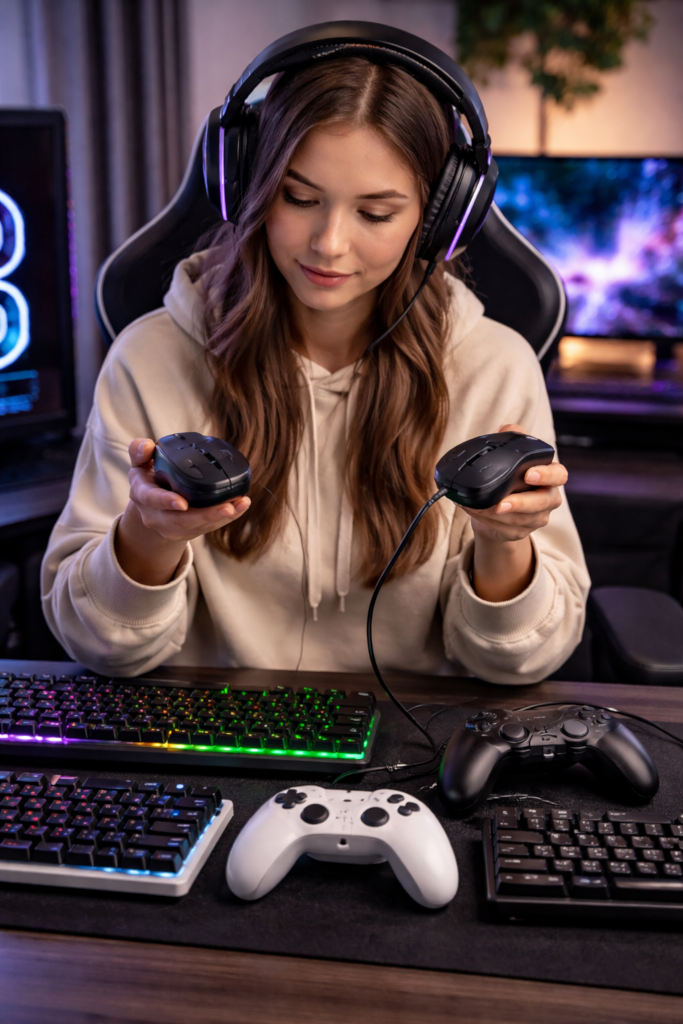
Today, choosing between wired and wireless mice, keyboards, and controllers is less about right or wrong and more about understanding how each option fits your playstyle, environment, and expectations. The differences still exist, but they are more nuanced than many players realize.
The Origins of the Wired Advantage
Wired peripherals built their reputation on consistency. When competitive gaming began to grow in the early 2000s, stability mattered more than anything else. A wired mouse or keyboard provided a direct connection to the system with no interference, no battery concerns, and virtually no added latency.
Back then, wireless technology struggled with several issues. Signal interference was common, especially in environments filled with other electronics. Latency was measurable and often noticeable. Battery life was limited, and devices could lose connection at critical moments.
For players competing in ladders, tournaments, and leagues, those risks were unacceptable. Wired became the standard not just because it worked, but because it removed uncertainty.
How Wireless Technology Changed the Game
Modern wireless peripherals are not the same as their early counterparts. Advances in radio frequency technology, particularly 2.4 GHz wireless connections, have significantly reduced latency and improved reliability. Many gaming-grade wireless devices now operate with response times that are effectively indistinguishable from wired setups under normal conditions.
Manufacturers have also addressed interference issues by improving signal stability and introducing dedicated USB receivers that maintain consistent communication with the device. In many cases, these connections are optimized specifically for gaming rather than general use.
Battery technology has improved as well. Long-lasting rechargeable batteries and efficient power management systems allow players to use wireless devices for extended sessions without interruption. Some devices even offer hybrid modes, allowing them to function as wired peripherals while charging.
The result is a category of wireless gear that no longer feels like a compromise for most players.
Latency and Input Response
Latency is often the first concern when comparing wired and wireless peripherals. In competitive gaming, even small delays can affect performance, especially in fast-paced genres like first-person shooters or fighting games.
Wired devices still hold a theoretical advantage because they transmit data directly through a cable. However, the actual difference in latency between high-quality wired and wireless gaming peripherals is now extremely small. In many cases, it is measured in fractions of a millisecond.
For most players, this difference is not perceptible. Even in competitive environments, many players have transitioned to wireless mice without reporting any loss in precision or responsiveness.
That said, not all wireless devices are equal. Lower-end or non-gaming wireless peripherals can still introduce noticeable delay. When evaluating wireless gear, the quality of the connection technology matters more than whether it is wired or wireless.
Reliability and Stability
Reliability is where wired devices still maintain a clear edge in certain situations. A cable provides a constant connection that is not affected by signal interference or battery levels.
Wireless devices, while much improved, still depend on several factors. Signal strength can be influenced by physical obstacles, distance from the receiver, and the presence of other wireless devices. Battery life introduces another variable, even if modern devices mitigate this with long runtimes and low battery warnings.
In controlled environments, these issues are rarely a problem. But in crowded setups or tournament settings with many wireless signals, wired connections can still offer peace of mind.
For players who prioritize absolute consistency, especially in high-stakes competition, wired remains a dependable choice.
Freedom of Movement and Desk Setup
One of the most obvious advantages of wireless peripherals is freedom. Without cables, players can move more naturally, reduce desk clutter, and create cleaner setups.
For mouse users, this can be particularly important. Cable drag, even when minimized with a mouse bungee, can subtly affect movement. Wireless mice eliminate that factor entirely, allowing for smoother and more consistent tracking.
For keyboard users, the benefit is more about flexibility. Wireless keyboards can be positioned freely, moved easily, and used across multiple devices without reconnecting cables.
Controllers benefit significantly from wireless technology as well. The ability to play from a distance without being tethered to a system has become the standard for console gaming and is increasingly common on PC.
In this category, wireless clearly offers a more flexible and comfortable experience.
Battery Life and Power Management
Battery life is one of the main trade-offs with wireless peripherals. While modern devices can last for days or even weeks on a single charge, they still require active management.
Running out of battery during a session can be frustrating, especially if it happens unexpectedly. Most devices provide warnings or indicators, but it still requires attention from the user.
Some players prefer the simplicity of wired devices, which do not require charging or battery replacement. Others accept the need for occasional charging in exchange for the benefits of wireless use.
Hybrid devices offer a middle ground. These peripherals can be used wirelessly during normal play and connected via cable when charging, effectively eliminating downtime.
Weight and Build Considerations
Weight is another factor that has evolved over time. Early wireless mice were often heavier due to battery requirements, which made them less appealing for competitive play.
Modern designs have addressed this by using lightweight materials and efficient battery systems. Some wireless gaming mice are now comparable in weight to their wired counterparts.
For keyboards and controllers, weight differences are less impactful, but build quality still matters. Wireless devices often include additional components such as batteries and receivers, which can influence durability and design.
Overall, the gap in weight and build between wired and wireless has narrowed significantly.
Cost and Value
Wireless gaming peripherals typically come at a higher price point than their wired equivalents. The added technology, battery systems, and development costs contribute to this difference.
For players on a budget, wired devices often provide better value. High-quality wired mice, keyboards, and controllers can deliver excellent performance without the premium price.
Wireless devices, while more expensive, offer convenience and flexibility that some players consider worth the investment.
The decision often comes down to priorities. If performance at the lowest cost is the goal, wired is a strong choice. If convenience and a cleaner setup are important, wireless may justify the additional expense.
Competitive Play and Real-World Use
In competitive gaming, the choice between wired and wireless is no longer as one-sided as it once was. Many professional players now use wireless mice, and some even prefer them for the freedom they provide.
Keyboards and controllers are more mixed. Wired keyboards are still common in competitive environments due to their simplicity and reliability. Controllers are often used wirelessly, especially in console-based competitions, but wired options are still favored in some settings to avoid potential interference.
For most players, the difference in performance between wired and wireless will not determine the outcome of a match. Skill, consistency, and practice play a far larger role.
Choosing What Works for You
The decision between wired and wireless peripherals is ultimately personal. Both options have strengths, and neither is universally better.
Choose wired if you value simplicity, reliability, and cost efficiency. Wired devices require no charging, offer consistent performance, and are often more affordable.
Choose wireless if you value flexibility, reduced clutter, and freedom of movement. Modern wireless devices provide performance that is close enough to wired for most players, with added convenience.
For some setups, a mix of both makes sense. A wireless mouse paired with a wired keyboard, or a wireless controller alongside wired peripherals, can offer the best of both worlds.
The Bigger Picture
The evolution of wireless technology reflects a broader shift in gaming. As hardware improves, the limitations that once defined certain choices begin to fade. What was once considered a compromise becomes a viable option.
The wired versus wireless debate is no longer about one being better than the other. It is about understanding the trade-offs and choosing what fits your style, your setup, and your priorities.
For a community that values both performance and identity, the choice of peripherals is just another way players shape their experience. Whether wired or wireless, the goal remains the same. Consistency, control, and the ability to play at your best.