Epic Games and BLAST have confirmed that the 2026 Fortnite Global Championship is heading to Antwerp, Belgium, giving Fortnite’s competitive scene a major European stage for its season finale. The event is scheduled for September 26 and 27, 2026, at Lotto Arena, where 50 of the best duos in the world will compete across two days for a $2 million prize pool. That is the headline. The bigger story is what this move says about Fortnite esports right now.
Fortnite has been through several competitive eras. The early World Cup era had massive mainstream heat. The FNCS era built a more consistent competitive identity. The recent global championship model has turned Fortnite back into a live arena product, not just an online ladder race watched by diehard fans. Antwerp now becomes the next checkpoint in that evolution.
For a game that is often treated like a pop culture machine first and an esport second, Fortnite keeps proving that its competitive base is still very real. The players grind. The viewers show up. The production keeps getting bigger. And now Belgium gets its first shot at hosting the biggest Fortnite event of the year.
Antwerp Gets the Fortnite Spotlight
Antwerp is not the obvious choice if someone is only thinking in terms of the usual esports capitals. That is what makes it interesting. Fortnite has already been through major stops like Copenhagen, Fort Worth, and Lyon in recent years. Antwerp gives the 2026 championship a different kind of regional pull, sitting in a strong travel zone for fans from Belgium, the Netherlands, France, Germany, and the wider Benelux area.
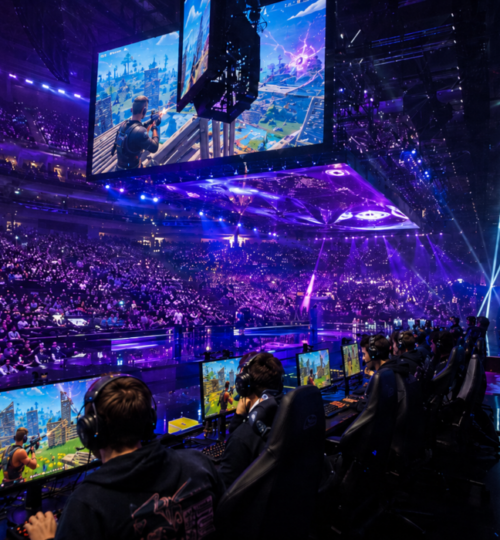
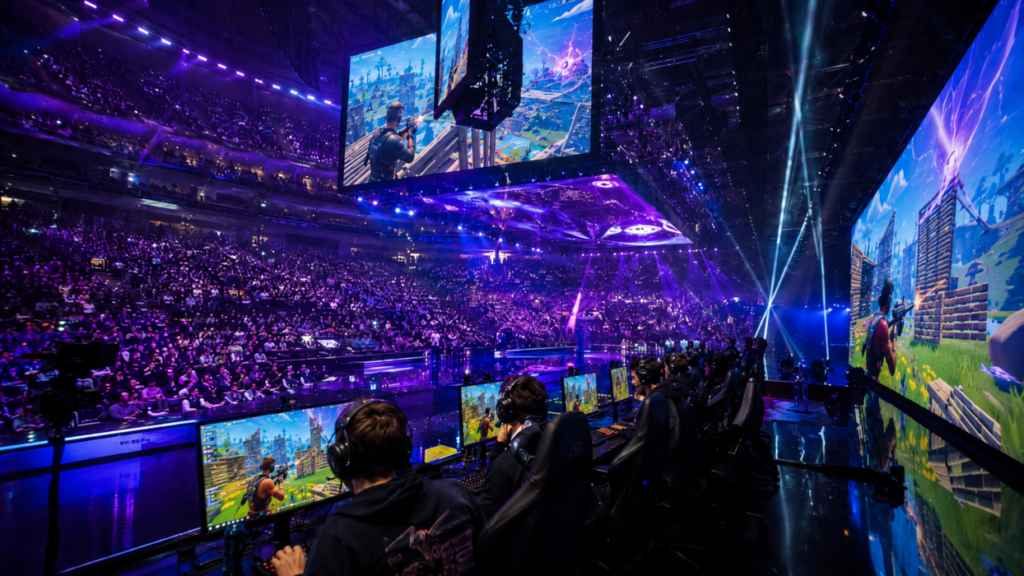
That matters for a live event. Fortnite’s online audience is huge, but a strong arena event needs bodies in seats, fan energy, player walkouts, and the kind of crowd noise that makes late-game rotations feel bigger than a Discord watch party. Lotto Arena gives BLAST and Epic Games a contained, focused venue where the event can feel packed, loud, and built around the players instead of swallowed by an oversized hall.
This is also a smart European play. Fortnite has always had a deep competitive talent pool in Europe, and European players have repeatedly shaped the global meta. Bringing the season finale to Belgium keeps the event close to one of the game’s strongest regions while still making it accessible to traveling fans.
A Two-Day Sprint With 50 Duos
The 2026 Fortnite Global Championship will feature 50 duos competing across 12 games over two days. That format keeps the pressure high from the first match. There is not much room to sleepwalk through a bad start, and there is not enough time for a team to completely vanish for half the event and still expect a miracle.
Duos also brings Fortnite back to one of its most readable competitive formats. Trios can be chaotic and teamfight-heavy, while solos can sometimes feel brutally random from a viewer perspective. Duos sits in the middle. It rewards chemistry, timing, communication, drop discipline, surge planning, and endgame decision-making without making the screen impossible to follow.
A great duo tells a story quickly. One player anchors, one player creates pressure. One takes the risk, the other cleans up the mess. The best pairs know when to split, when to stack, when to burn materials, when to disengage, and when to turn a bad layer into a winning game. That makes duos a strong format for a global final because viewers can follow rivalries and playstyles more easily than they can track a crowded team format.
The 12-game structure also creates real tension. Every match counts, but one disaster does not instantly kill a championship run. A duo can recover from a rough game, but they cannot afford repeated mistakes. That is a good balance for competitive integrity and broadcast drama.
The $2 Million Prize Pool Keeps Fortnite in the Big Event Conversation
The $2 million prize pool is not just a number for a press release. It keeps the Fortnite Global Championship in the serious money tier of esports events, especially for a battle royale scene where long-term stability has been harder to maintain than in traditional team titles.
Fortnite’s competitive ecosystem has always had a strange relationship with money. The game has thrown around massive prize pools before, including the famous Fortnite World Cup era, but prize money alone does not build a healthy scene. Players need a path. Fans need a reason to follow the season. Events need structure. The Global Championship model gives the year a finish line.
That is why Antwerp matters more than the cash figure by itself. The prize pool gives players financial stakes, but the event gives the season meaning. Every qualifier, every Major, every late-game clutch, and every painful second-place finish now points toward a visible final stage.
For veteran esports fans, that matters. Ladders are great. Online cups are useful. Weekly competition keeps a scene alive. But championships give the community memory. People remember who won on stage. They remember who choked, who adapted, who got contested off spawn, and who walked into the final game needing a victory royale.
BLAST Continues Its Push Beyond Counter-Strike
BLAST being attached to Fortnite still feels notable because the company built so much of its reputation around Counter-Strike production. Over time, though, BLAST has expanded into a wider competitive entertainment company, with Fortnite and Rocket League becoming important parts of its work with Epic Games.
That partnership makes sense. Epic needs high-end production partners that understand live esports, and BLAST needs major titles that can reach younger, broader gaming audiences. Fortnite brings a different flavor than Counter-Strike. It is faster, brighter, more chaotic, and more dependent on capturing dozens of simultaneous player stories inside one giant match.
That is not easy to broadcast. Battle royale production is hard because the best action is often happening in five places at once. Observers have to decide which fight matters, which rotation is about to collapse, which team is quietly setting up a win condition, and which popular player is one box away from disaster. A bad broadcast can make Fortnite look random. A strong one makes the chaos readable.
BLAST’s job in Antwerp will be to make 50 duos feel like a championship field, not a blur of nameplates and builds. That means clean observing, sharp desk segments, useful replays, and enough pacing to help casual viewers understand why certain decisions matter.
Fortnite Esports Still Has Something Most Games Want
Fortnite has a rare advantage in esports. It can pull from both competitive diehards and general gaming culture. Some viewers care about drop spots and storm surge tags. Some care about creators and co-streams. Some just like watching elite players turn a doomed box fight into a highlight.
That broad appeal is not always neat. Competitive purists have spent years arguing with Fortnite’s constant updates, shifting loot pools, wild items, mobility changes, and the ongoing tension between spectacle and fairness. Those complaints are not fake. Fortnite can be a frustrating esport because the game never sits still for long.
But that is also part of its identity. Fortnite does not behave like a museum piece. It changes, sometimes too fast, and competitive players are forced to adapt. The best players are not just mechanically gifted. They are fast learners with mental endurance. They study new seasons, rebuild drop plans, test items, and adjust fighting habits while everyone else is still complaining on social media.
That makes a Global Championship different from a standard shooter final. It is not only about who has the cleanest aim or the best team structure. It is about who can solve the current version of Fortnite better than everyone else before the clock runs out.
Why This Event Should Matter to Legacy Multiplayer Communities
For older multiplayer communities, Fortnite’s Antwerp championship is worth watching even if Fortnite is not your main game. The structure around the event shows how modern esports has changed, but it also echoes the old ladder and tournament days in a way that should feel familiar.
A season needs progression. Players need rankings, qualifiers, stakes, and identity. Teams need stories. Fans need names to remember. Communities need a reason to come back every week instead of only checking in during the final weekend. That was true in the early 2000s, and it is still true in 2026.
The difference is scale. What older communities built with forums, match reports, screenshots, clan pages, and admin-run brackets now exists on massive global stages with broadcast crews, ticket sales, sponsors, and international travel. The basic competitive instinct did not change. The machinery around it got louder.
Fortnite’s Global Championship is a reminder that esports is still built on the same core loop. Players want to prove they are better. Communities want a record of it. Spectators want drama with names attached. The tools are newer, but the heartbeat is old-school.
Antwerp Could Give Fortnite a Stronger Arena Identity
Fortnite has never had the same arena identity as games like Counter-Strike, League of Legends, or fighting games. Part of that comes from the nature of battle royale. There are too many players, too many moving parts, and too much randomness for every viewer to track the same central conflict at all times.
A well-run live final can fix some of that. It can turn a wide-open match into a shared crowd experience. Fans react to eliminations, clutch reboots, low-ground steals, impossible refreshes, and final circles that turn the arena into a pressure cooker. The right production can make a Fortnite endgame feel like a stadium sport.
Antwerp has a chance to add to that identity. The venue size, European location, and two-day format all point toward a focused event rather than a bloated festival. That is good for competitive Fortnite. The scene does not need empty hype. It needs clean stakes, strong matches, and a crowd that makes the players feel the moment.
The Qualification Race Now Has a Clear Target
With Antwerp locked in, the rest of the FNCS season gains a sharper edge. Players are no longer chasing an abstract global final. They are chasing a stage, a date, a venue, and a trophy. That changes the way fans follow the season because every Major result now connects directly to the final field.
The qualification path also creates natural pressure points. Top duos can secure their place early, while others will be forced into late-season survival mode. The Last Chance Qualifier path adds another layer of tension because Fortnite is exactly the kind of game where one hot run can send a dangerous team into the biggest event of the year.
That is good television. It is also good competition. Some of the most dangerous teams at a championship are not always the clean favorites. They are the duos that barely got in, caught fire at the right time, and arrived with nothing to lose.
Fortnite’s 2026 Championship Has Real Stakes
The 2026 Fortnite Global Championship is not just another date on the esports calendar. It is a statement that Epic Games and BLAST still see Fortnite as a live championship product with global reach. Antwerp gives the season a destination, Europe gets another major Fortnite stage, and the top duos in the world now have a clear target sitting at the end of September.
For players, the mission is simple and brutal. Qualify, survive 12 games, and be better than every other duo under arena pressure. For fans, Antwerp should deliver the kind of final that turns names into legends and mistakes into clips that get replayed for years.