
Disclaimer: The views and opinions expressed in this article are solely those of the author. The mention of any products, services, or methods does not constitute an endorsement.
Portable Gaming Just Got a New Weight Class
The original Nintendo Switch proved that players would accept serious games on portable hardware, even when the tradeoffs were obvious. Lower resolution, chopped frame rates, long loading times, and delayed ports were part of the deal. Players complained, then bought the games anyway, because the magic was simple. The same game could leave the dock, ride in a backpack, and keep going on a couch, plane, hotel bed, or tournament hallway.
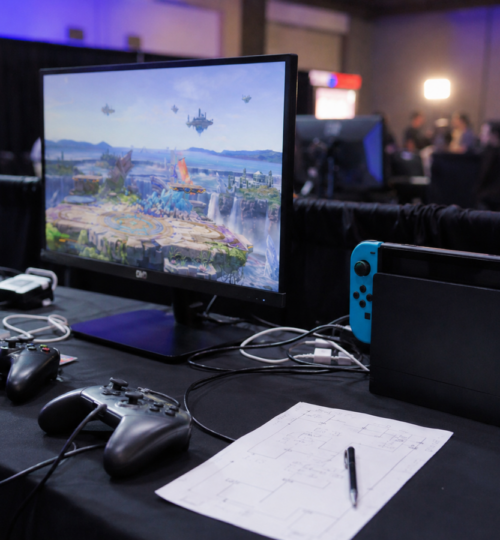
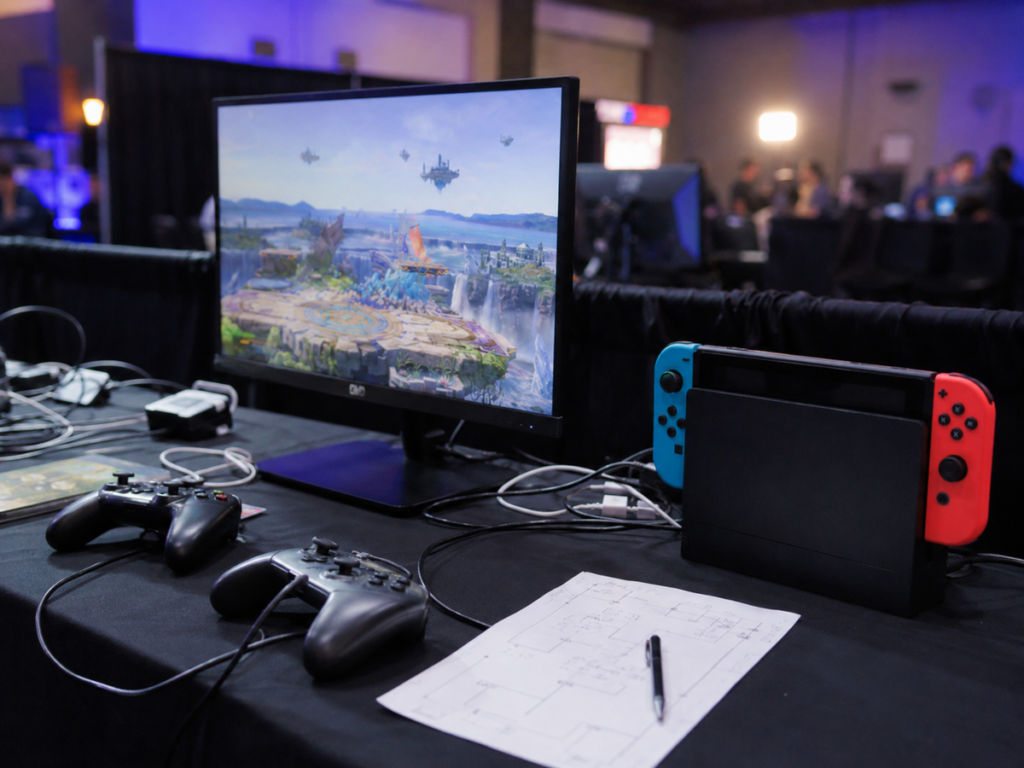
Switch 2 changes that equation. Not because it suddenly replaces a high-end PC or a dedicated console setup, but because it moves portable gaming into a cleaner middle ground. A larger 1080p handheld screen, HDR support, VRR up to 120 Hz, faster storage, NVIDIA hardware, stronger docked output, and better third-party support mean the machine is no longer just “good for a handheld.” It is now good enough to make players rethink where serious play can happen.
That matters for mobile competitive scenes. Not mobile in the phone-only sense, but mobile as in competitive games played away from the desk. Handhelds, hotel setups, college lounges, local events, airports, Discord meetups, LAN weekends, and side stations at tournaments all fall into that category. Switch 2 is entering that space with more power, more serious ports, and more pressure on every platform around it.
The Old Portable Excuse Is Wearing Thin
For years, portable versions of major games came with a built-in excuse. If the Switch port ran poorly, players blamed the hardware. If a competitive game skipped the platform entirely, nobody was shocked. If a downgraded version arrived late, it was treated as a bonus rather than a real part of the game’s ecosystem. That excuse is weaker now.
Cyberpunk 2077: Ultimate Edition arriving on Switch 2 at launch sent a very loud message. This is not a competitive title in the esports sense, but it is a technical signal. If a massive open-world RPG with modern rendering demands can run well enough to be marketed as a major Switch 2 release, then publishers have less room to shrug off portable hardware as a side lane. Add Street Fighter 6, Hitman: World of Assassination, Hogwarts Legacy, Civilization VII, No Man’s Sky, Yakuza 0 Director’s Cut, and Split Fiction, and the pattern becomes harder to ignore.
The point is not that every game will run at max settings. They will not. The point is that portable versions can now be close enough to feel native to the player’s routine. That is what changes habits. Competitive communities are built on habits more than specs.
Players practice where practice is easiest. They lab combos where the game is available. They grind matchups where the queue is active. They show up to side brackets when the hardware is simple enough to carry. Switch 2 makes that easier for more games, and that is where the ripple starts.
Fighting Games May Feel the Impact First
Street Fighter 6 on Switch 2 is one of the clearest examples of how a high-end port can affect a competitive scene. Fighting games have always had a strong local culture. Setups matter. Input delay matters. Controller support matters. Frame stability matters. Nobody wants to lose a close round and blame the box under the screen.
The original Switch had fighting games, but many players treated it as a casual or travel option. Fun, useful, but rarely the preferred competitive standard. Switch 2 has a better chance to be accepted in side events, locals, dorm room sets, convention play, and casual stations at larger tournaments. That does not mean it replaces PlayStation or PC overnight. It means it can become trusted enough for real practice. That trust is everything.
The fighting game community is brutally practical. If a version feels bad, players abandon it. If it feels good, they bring it everywhere. A portable Street Fighter 6 setup that works cleanly gives players more chances to train outside the usual setup. More practice means stronger locals. Stronger locals mean more event activity. More event activity means more players willing to enter.
Switch 2 could become the “always in the bag” fighting game machine, especially for players who cannot drag a monitor, console, stick, and cables across town every week. That kind of convenience can quietly grow a scene.
The Mobile Scene Is Bigger Than Phones
Mobile competitive gaming usually brings phones to mind, especially with titles like PUBG Mobile, Mobile Legends, Honor of Kings, Free Fire, and Call of Duty: Mobile. Those games have massive audiences and strong regional scenes, especially in Asia, Latin America, India, the Middle East, and parts of Europe. Phones are cheap compared to consoles and PCs, easy to distribute, and already owned by billions of people.
Switch 2 is not going to erase that. It is too expensive, too console-like, and too tied to premium game sales. Phone esports will stay huge because access is the main engine. A player can download a free-to-play title and start competing with the device already in their pocket. That model is powerful.
Switch 2 attacks a different part of the mobile competitive space. It targets players who want console-quality games without being locked to a desk or living room. That includes competitive-minded players who travel, older gamers with limited time, college players, military communities, local clubs, and friend groups that still value in-person sessions. For a legacy multiplayer community, that audience matters a lot.
This is not phone esports versus Switch 2. It is a split inside portable competition. Phones own scale. Switch 2 can own depth, comfort, premium controls, and crossover with console communities.
High-End Ports Raise Player Expectations
Once players experience stronger portable versions, tolerance drops fast. Nobody wants to go backward. If Switch 2 players get smoother frame rates, faster loading, better visuals, and more complete editions, then older portable ports start to feel rougher than they did before.
That affects publishers. A lazy port stands out more on better hardware. A bad competitive version gets rejected faster. Players will compare Switch 2 ports against Steam Deck, PlayStation Portal-style remote play, cloud gaming, mobile-native versions, and low-end gaming laptops. The old question was, “Can it run on handheld hardware?” The new question is, “Did the publisher respect the platform?” That is a healthier pressure.
For competitive games, feature parity matters as much as visuals. Crossplay, rollback netcode, ranked modes, private lobbies, replay systems, spectator tools, input options, and stable performance decide whether a version becomes part of the actual scene. A pretty port without the competitive backbone will be treated like a novelty. A stable port with full systems can become a real platform. Switch 2 gives publishers fewer excuses, but it also gives players more reasons to demand better.
Local Events Could Get Easier to Run
Competitive communities do not grow only from giant tournaments. They grow from small weekly habits. Ten players in a game store. Eight friends in a Discord. A college club. A veterans’ gaming group. A hotel room during a convention. A side ladder spun up by people who just want meaningful matches.
Portable hardware helps those scenes because setup friction kills participation. The more cables, monitors, accounts, updates, and weird hardware quirks an event needs, the more likely someone drops out or never shows up. Switch 2 can reduce some of that friction, especially for games that support clean local play, easy controllers, and fast setup.
A group running a small Street Fighter 6 night, a Mario Kart World ladder, a Puyo Puyo Tetris bracket, or a Civilization VII club session can move faster with portable systems. The docked option still matters, but the ability to undock and keep going gives organizers more flexibility. Not every match needs a stage. Sometimes a side table is enough.
That matters for revived communities. Legacy esports hubs were built on player activity first. The huge events came later. If Switch 2 gives players another way to create small, repeatable competition, it becomes more than a console. It becomes infrastructure.
The Steam Deck Comparison Will Not Go Away
The Steam Deck and other PC handhelds already changed the conversation around portable PC gaming. They gave players access to large libraries, modding, storefront flexibility, and PC-style settings. For some competitive players, that is still the better route. More games, more control, and stronger links to PC communities are hard to beat.
Switch 2 has a different pitch. It is cleaner, more standardized, and more console-like. That can be a strength for competition. A tournament organizer does not want five players running five different settings profiles, Proton versions, driver quirks, or background apps. Standard hardware makes rules easier. It makes testing easier. It makes blame easier to reduce.
The Steam Deck is a tinkerer’s dream. Switch 2 is more likely to be the plug-and-play bracket box.
That difference could define where each machine fits. PC handhelds may dominate personal libraries and flexible play. Switch 2 may win in settings where consistency and ease matter more than customization. For competitive scenes, both models have value, but they serve different personalities.
Crossplay Will Decide How Serious Some Ports Become
A high-end port can look great and still fail competitively if the player pool is trapped. Ranked games need population. Team games need matchmaking health. Fighting games need active lobbies. Strategy games need opponents who stick around. Crossplay is the bridge.
If Switch 2 versions of competitive games connect cleanly with PlayStation, Xbox, and PC players, then the platform becomes part of the wider scene instead of a walled-off side room. If crossplay is missing, every game has to build its own Switch 2 population from scratch. That is much harder.
Crossplay also creates tension. Competitive players care about input differences, performance differences, and fairness. A Switch 2 player using Joy-Con mouse controls in a strategy game is not the same as a PC player with a full keyboard and mouse. A handheld player on Wi-Fi is not the same as a wired player on a monitor. Some games can handle that. Others will need input-based matchmaking, platform filters, or clear tournament rules. The best Switch 2 competitive ports will not just run well. They will understand where the platform fits inside the wider player pool.
Mobile Esports May Become More Hybrid
The most interesting effect of Switch 2 may be cultural. Competitive gaming has been split into buckets for too long. Console esports over here. PC esports over there. Phone esports somewhere else. Handhelds floating around as a fun extra. Switch 2 pressures those walls.
A player might practice Street Fighter 6 on Switch 2 during lunch, play ranked on PlayStation at night, and enter a local on the weekend. A strategy player might learn Civilization VII with Joy-Con mouse controls while traveling, then continue on PC later. A racing fan might run Mario Kart World ladders with friends in handheld mode, then dock for a streamed final. These patterns are messy, but real communities are always messy.
That hybrid behavior helps legacy platforms because it creates more entry points. Players no longer need one perfect setup to participate. They need a path in. Switch 2 can be that path for players who want more than phone games but less commitment than a full desktop setup.
For a revived multiplayer hub, that opens the door to portable ladders, travel-friendly events, community nights, and casual-to-ranked pipelines. Not every competition needs to look like a major esports broadcast. Some of the best scenes started with people carrying hardware to wherever the players were.
The Risk Is a Flood of Half-Serious Ports
The upside is real, but the danger is obvious. Publishers may see Switch 2 as a quick revenue lane and push ports that look impressive in trailers but lack the support needed for serious communities. Competitive players have seen this before. A game launches, gets attention for two weeks, then falls behind on patches, matchmaking fixes, DLC timing, or balance updates. That pattern would hurt Switch 2’s credibility fast.
High-end ports must be maintained. If a competitive game gets updates later than other platforms, players notice. If ranked bugs linger, players notice. If DLC characters arrive late, players notice. If performance drops after a patch, players really notice. The mobile nature of the hardware does not lower expectations. If anything, it raises them, because players are already accepting compromises in screen size, battery life, and controller feel.
A serious port needs serious support. Without that, Switch 2 becomes a library of impressive one-time releases instead of a living competitive platform.
Battery Life, Heat, and Wi-Fi Still Matter
Portable competition sounds great until real life walks in. Battery drain matters. Heat matters. Wi-Fi quality matters. Hotel internet is still cursed. Public networks are still unreliable. A player grinding ranked in handheld mode may have a very different experience from someone docked with a stable connection.
For local organizers, this means Switch 2 is not magic. Power strips, docks, wired adapters, monitors, charging plans, and update checks still matter. Players need to keep systems patched. Organizers need to test games before brackets start. Competitive communities are built on trust, and trust dies quickly when a setup fails mid-match. The better hardware reduces some problems, but it does not remove the boring work. Serious scenes always depend on boring work.
The Biggest Winners Are Mid-Tier Competitive Communities
Major esports scenes will not rebuild around Switch 2 unless the game, publisher, and player base all line up. That is rare. The bigger impact will land in mid-tier and grassroots communities. The scenes that are competitive but not rich. The players who care deeply but do not have sponsor money. The groups that need lower setup friction and more ways to keep people active. That is where Switch 2 has real bite.
A platform with strong ports, portable play, docked flexibility, and standard hardware can help communities run more matches with less drama. It can give old games new side activity and new games faster grassroots testing. It can bring console-quality experiences into places where a full setup would never happen.
High-end Switch 2 ports will not replace PCs, phones, or home consoles. They will add another serious lane, and that lane is built for players who move. For competitive gaming, that is not a gimmick. That is a new kind of venue.