
Disclaimer: The views and opinions expressed in this article are solely those of the author. The mention of any products, services, or methods does not constitute an endorsement.
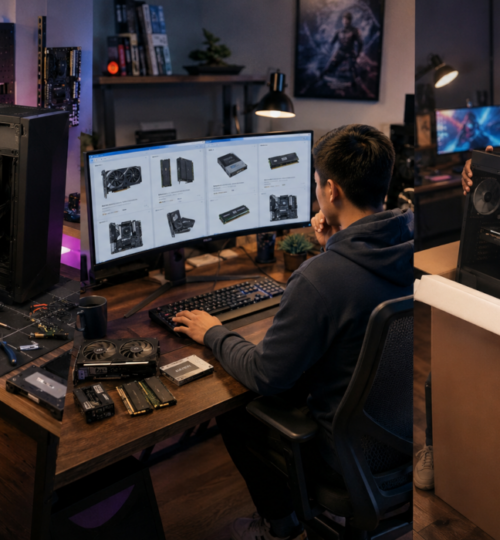
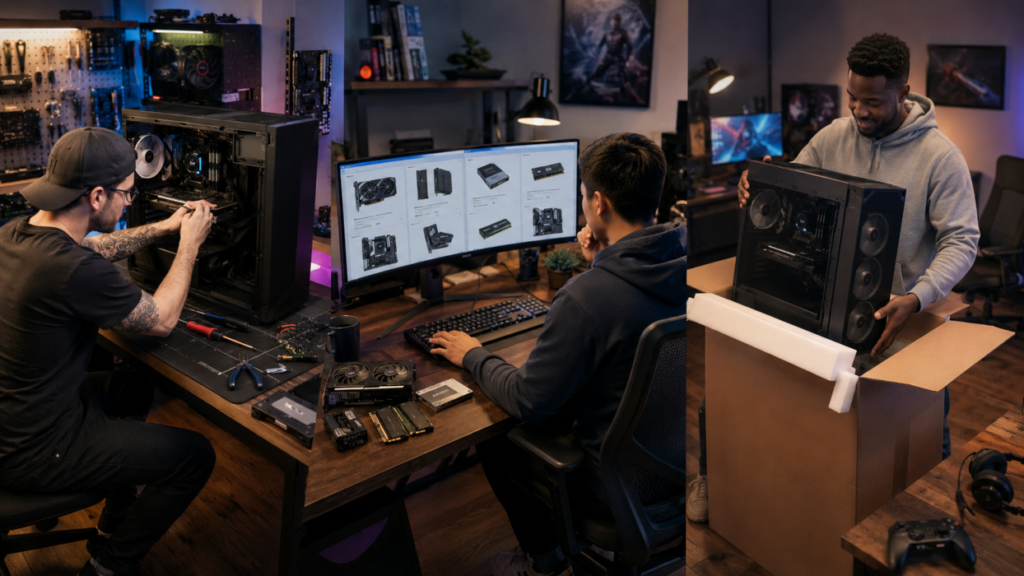
For years, PC ownership in gaming could be divided by a familiar argument: build it yourself or buy it ready-made. That debate always flattened several very different buyers into the same two camps. In practice, there have long been at least three kinds of PC owners: the craft builder chasing a specific performance target, the value builder assembling parts because DIY was cheaper, and the buyer who simply wants a prebuilt system that works.
In 2026, those groups are separating more clearly. The craft builder is still alive, still reading motherboard manuals, comparing VRM layouts, measuring GPU clearances, and deciding whether a faster memory kit is worth the stability tradeoff. The value builder, however, is getting squeezed out of the middle because the old assumption that buying parts separately saves money no longer holds consistently. Meanwhile, prebuilts have become more attractive to gamers who once would have considered them an unnecessary markup.
Three Buyers Who Were Never Really the Same
The craft PC builder builds because the machine itself is part of the hobby. This person may care about frame-time consistency, cooling behavior, noise, power delivery, upgrade paths, RAM timings, case pressure, BIOS controls, cable routing, and exactly which model of GPU goes into the system. A prebuilt with the same CPU and GPU is not automatically equivalent because the supporting parts matter.
The value builder approaches the same parts list differently. The goal is usually straightforward: get the most gaming performance possible for a fixed budget, avoid paying labor and brand markup, and end up with a system that can be repaired or upgraded without depending on one manufacturer. For much of PC gaming history, that calculation made DIY the easy recommendation for anyone willing to spend an evening with a screwdriver.
The traditional prebuilt buyer has different priorities again. Setup time, warranty coverage, financing, technical support, and one-box convenience can matter more than choosing the exact power supply or motherboard. That buyer has always existed, but the group is now gaining people who know how to build PCs and simply cannot justify doing it on price.
The Cheap-DIY Formula Has Broken Down
The biggest change is that several parts once treated as predictable line items have become expensive at the same time. Memory and storage are the clearest examples. TrendForce reported that conventional DRAM contract prices were expected to rise another 13 to 18 percent quarter over quarter in the third quarter of 2026, while NAND flash contract prices were expected to rise 10 to 15 percent. The same firm has described NAND as undersupplied through 2026 as AI-related demand absorbs capacity and suppliers direct more production toward higher-margin server markets.
That matters because RAM and SSDs used to be the friendly parts of a budget build. A builder could often spend modestly on 32 GB of memory and a decent 1 TB or 2 TB NVMe drive, then reserve most of the budget for the graphics card. In the current market, memory and storage can consume enough of the total budget to force compromises elsewhere, even before the CPU, motherboard, case, cooler, and power supply enter the cart.
Retail behavior is already reflecting that pressure. PC Gamer recently highlighted motherboard, CPU, cooler, RAM, and SSD bundles as a way to reduce the damage from unusually high memory prices, including packages that still paired relatively expensive platforms with only 16 GB of DDR5. Bundles can help, but their growing appeal also tells us something about the market: buying every part independently is no longer automatically the strongest value play.
Graphics Cards Still Distort the Entire Budget
The graphics card remains the part that can wreck a carefully planned build in a single click. Nvidia still lists the GeForce RTX 5070 with a starting price of $549 and the RTX 5080 at $999, but street pricing can move far away from those reference figures depending on model and availability. Nvidia’s own RTX 5070 listing recently showed the $549 Founders Edition as out of stock, while current retail tracking has shown several higher-tier cards selling above launch pricing.
Tom’s Hardware’s current U.S. tracking, updated in mid-August 2026, listed the lowest RTX 5090 price near $3,979 against a $1,999 launch MSRP, the RTX 5080 around $1,256 against $999, and the RTX 5070 around $599 against $549. Those numbers move constantly, but the broader problem is stable enough to affect buying decisions: a DIY builder pays today’s retail component price, not the launch-slide price remembered from an announcement.
There is pressure lower in the stack too. PC Partner, which manufactures graphics cards for several major brands, warned this month about rising costs and possible shortages in lower-priced GPUs during the second half of 2026. That is especially bad news for value builders because the budget and midrange segments depend on small price gaps between parts; a $100 increase on the GPU can erase the entire advantage of assembling the system yourself.
Why a Prebuilt Can Beat the Parts Cart
A large system builder does not buy hardware the way an individual gamer does. It can purchase components in volume, negotiate contracts, spread assembly and support costs across many units, and sometimes sell systems built from inventory acquired before the latest retail price increase. The company may also accept a thinner margin on a discounted configuration to clear stock, move a particular chassis, or support a larger sales campaign.
That creates situations that would have sounded backward to experienced builders a few years ago. A gamer can find a prebuilt with a competent CPU, 32 GB of RAM, a 1 TB or 2 TB SSD, Windows, and a desirable graphics card for less than the current street total of comparable retail parts. Tom’s Guide documented this reversal during the late-2025 memory spike, when some comparable DIY configurations cost hundreds more than discounted prebuilts, and the pressure has not disappeared in 2026.
Current deal listings reinforce the point without proving that every prebuilt is a bargain. PC Gamer’s August 2026 roundup includes sub-$1,000 gaming desktops as well as systems between $1,000 and $2,000 using GPUs such as the RTX 5060 Ti and RTX 5070, with some configurations also offering 32 GB of DDR5. A careful DIY shopper can still beat individual deals, especially during component sales, but the old blanket rule that self-building is cheaper is no longer safe advice.
There are still catches. Prebuilt vendors can save money on the motherboard, power supply, cooling, case fans, SSD, or memory kit because those parts are less visible in a product listing than the CPU and GPU. Some systems use proprietary cases, unusual connectors, restrictive BIOS settings, or limited cooling that makes later upgrades annoying. The new value equation does not mean every prebuilt is good; it means buyers now have to compare the complete machine against the complete parts list instead of assuming the DIY column wins.
The Craft Builder Is Still Building, Just Less Often
The enthusiast who builds for a specific result is reacting differently. If the current system already delivers the frame rates, latency, and visual settings needed for the games being played, replacing it during a component spike makes little sense. A well-chosen AM4 or AM5 platform, a strong GPU from the previous generation, adequate DDR4 or DDR5, and a quality power supply can remain competitive far longer than the upgrade culture around PC hardware sometimes suggests.
This is especially true in esports-oriented play. A player running Counter-Strike 2, Valorant, Rainbow Six Siege, Fortnite, Overwatch 2, or another competitive title is often targeting stable high refresh rates rather than the most demanding 4K path-traced settings available. Once the system can feed a 240 Hz or 360 Hz display consistently enough for the player’s settings and workload, an expensive full rebuild can produce a poor return compared with keeping the platform and replacing one limiting component later.
Craft builders also tend to do the math beyond average FPS. They look at 1 percent lows, CPU limits at competitive resolutions, memory latency, cooling headroom, power consumption, acoustics, platform lifespan, and whether a new board actually adds anything that affects their use. That kind of buyer is less likely to replace a machine merely because a new generation exists, especially when the new GPU alone can cost what an entire upper-midrange gaming PC once did.
The result is a longer ownership cycle. Instead of rebuilding every two or three years, more enthusiasts have a reason to stretch a good platform, replace the GPU when pricing improves, add storage when needed, or wait for a platform jump large enough to justify new memory and a motherboard. The build itself remains part of the hobby, but timing becomes part of the skill.
The Value Builder Is the Group Most Likely to Switch Sides
The most interesting change is happening among gamers who never cared about building for its own sake. They learned to assemble PCs because it saved money, gave them better parts, and avoided the weak power supplies and odd proprietary designs once common in mass-market gaming desktops. If those economic benefits disappear, there is no identity crisis in buying a finished system instead.
That buyer can now shop prebuilts the same way an experienced builder shops parts. Check the exact GPU model when possible, confirm the RAM capacity and stick configuration, identify the SSD, look for the power supply wattage and certification, inspect motherboard expansion, read thermal testing, and verify that the case uses standard components. A prebuilt that survives that inspection and costs less than the equivalent retail parts is simply the better deal.
This shift also explains why the old build-versus-buy argument feels increasingly outdated. The right answer now depends on which of the three owners is asking. A craft builder may gladly pay more to choose every component. A convenience buyer may gladly pay more for support and simplicity. The former value builder is the one most willing to cross the line because price was the reason for building in the first place.
Keeping a Good Rig Has Become a Performance Decision
High component prices do not mean PC gaming has stopped moving forward. Faster GPUs, newer CPUs, better displays, improved upscaling, frame generation, lower-latency peripherals, and faster storage continue to give players reasons to upgrade. The difference is that a full rebuild now has to clear a higher bar before it makes financial sense.
For competitive players, that can be healthy. A stable machine with known BIOS behavior, known thermals, tested drivers, and predictable frame times has real value. Chasing a new platform during a period of expensive RAM, storage, and GPUs can introduce cost and troubleshooting without changing the actual competitive experience very much.
The craft builder is still at the workbench, but may be planning one major rebuild instead of two smaller ones. The prebuilt buyer has more credible options than before, and the former budget DIY builder is increasingly standing beside them with a calculator open. In 2026, the smartest PC purchase may be the one that recognizes which kind of owner is actually paying the bill.