
Disclaimer: The views and opinions expressed in this article are solely those of the author. The mention of any products, services, or methods does not constitute an endorsement.
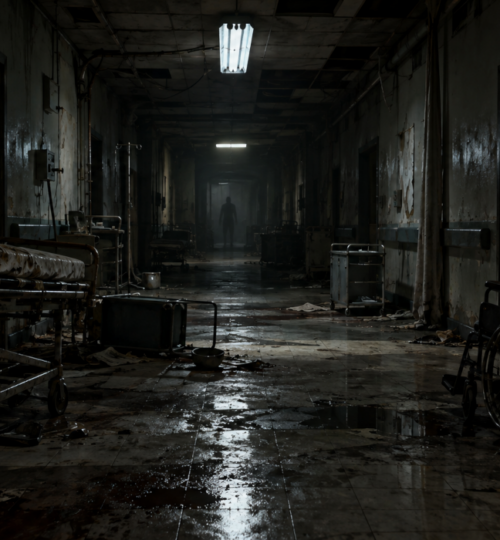
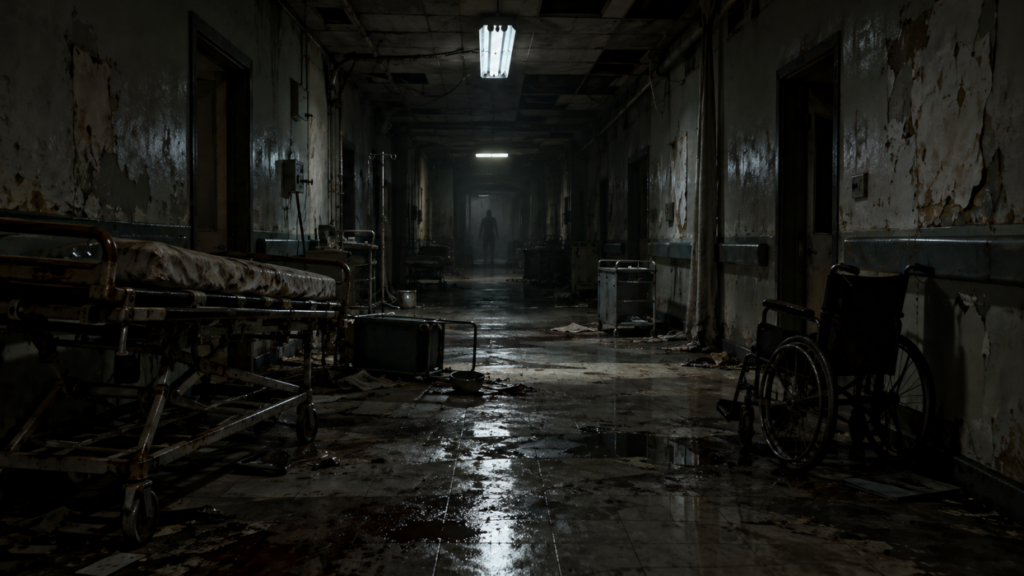
A player moves through an abandoned hospital corridor, following the faint sound of something dragging across the floor. The lights flicker, a door creaks somewhere behind them, and the music gradually fades until only footsteps remain. Nothing attacks, yet the expectation of danger makes every additional step uncomfortable. By the time the player reaches the end of the hallway, the anticipation has become more disturbing than an actual encounter might have been.
Creating that experience requires deliberate decisions about pacing, environmental design, sound, movement, and enemy behavior. Modern game engines can produce detailed environments, realistic lighting, and convincing character animations, but technological sophistication alone cannot make a horror game frightening. Developers must understand how players interpret danger, recognize patterns, and react when familiar systems behave unexpectedly.
In 2026, horror developers have access to advanced rendering systems, sophisticated audio tools, physics-driven interactions, and increasingly capable enemy AI. Independent studios are also demonstrating how distinctive creative ideas can support compelling experiences without enormous production budgets. The challenge lies in determining which techniques serve the intended experience and how they interact once players begin making their own decisions.
Understanding How Fear Works in Interactive Entertainment
Horror games operate differently from films because the audience controls the character experiencing the danger. A film director determines exactly when the camera enters a dark room, while a game developer must accommodate players who hesitate at the doorway, search every corner, or sprint through the entire sequence. That freedom complicates suspense because carefully scripted moments can unfold differently depending on player behavior.
Anticipatory fear develops when players expect danger without knowing when it will arrive, while immediate fear follows a visible threat demanding a response. Psychological horror introduces uncertainty about the environment, the characters, or the player’s interpretation of events. These reactions can coexist, although each requires different design decisions. A monster pursuing someone through narrow corridors creates immediate pressure, while a previously explored room that has inexplicably changed encourages suspicion long after the player leaves it.
The Silent Hill series demonstrates how setting and narrative identity contribute to psychological horror. Konami’s official introduction to Silent Hill f describes a story set in 1960s Japan, where a familiar town becomes threatening through environmental transformation and disturbing imagery. Its historical setting and distinctive artistic direction give the horror an identity rooted in the story rather than relying exclusively on monsters or darkness.
Developers creating original horror games benefit from establishing a similarly coherent foundation. The central fear might involve isolation, helplessness, pursuit, bodily transformation, or distrust of familiar surroundings. That decision influences everything from enemy design to environmental details, helping maintain consistency as the project grows.
Building Gameplay Around Vulnerability and Player Agency
Player vulnerability remains an effective tool for horror designers. Limited ammunition, restricted visibility, unreliable equipment, and dangerous encounters make ordinary decisions feel consequential. However, players still need meaningful opportunities to influence their circumstances, particularly when survival depends on understanding the environment.
A survival horror game might provide only three rounds of ammunition before introducing a corridor containing several enemies. The player must decide whether to fight, conserve resources, or attempt to avoid combat. Each approach creates different risks, and the consequences may extend into later encounters. Those decisions become more compelling when the player understands enough about the game’s systems to make an informed choice.
Resource management can deepen this uncertainty when supplies have competing uses. Fuel might power a generator that illuminates a building, but the same limited supply could support equipment needed elsewhere. Spending resources for immediate safety introduces the possibility of facing greater danger later, making preparation part of the psychological experience.
Capcom explored the relationship between fear and player capability in Resident Evil Requiem. In a January 2026 interview with director Koshi Nakanishi, the development team explained how Grace’s survival-oriented gameplay contrasts with Leon’s greater combat capabilities. Their different approaches allow the game to move between intense horror and more action-focused sequences.
That variation addresses an important pacing problem. Uninterrupted helplessness can eventually become predictable, particularly when players learn that every encounter demands the same response. Occasional opportunities to regain control create room for exploration and experimentation before the next dangerous situation develops.
Creating Monsters That Players Cannot Easily Predict
Enemy behavior has become a particularly interesting area of horror development. Traditional scripted encounters remain useful for scenes requiring precise timing, but reactive systems can make familiar environments threatening across multiple playthroughs. Their effectiveness depends on whether the enemy responds convincingly to the player’s actions.
A successful horror antagonist needs a recognizable behavioral identity. Players should gradually learn whether a creature responds to sound, investigates light, tracks movement, or searches locations where it previously detected someone. Those rules provide a basis for decision-making, while variations in patrol routes and reactions prevent encounters from becoming completely predictable.
Amnesia: The Bunker provides a strong example of systemic enemy design. In a December 2025 technical discussion with Frictional Games developers, AI and Games examined how the creature known as the Beast operates within interconnected gameplay systems. The developers described an antagonist that investigates disturbances, tracks player activity, and responds differently depending on environmental conditions.
The Beast’s behavior also illustrates how sophisticated encounters can emerge from established programming techniques. Its AI uses a finite-state machine, with behavioral states connected through rules governing the creature’s actions. That system allows the monster to patrol, investigate noises, and interact with obstacles while maintaining a consistent behavioral foundation.
A developer designing a similar antagonist might track recent player noise, movement, and defensive actions to influence where a creature searches. Randomization can introduce variation, but excessive unpredictability risks making encounters feel arbitrary. Players need opportunities to learn from mistakes, even when they cannot determine exactly what the enemy will do next.
Animation contributes to that impression of awareness. A creature that pauses before entering a doorway, reacts to an unexpected noise, or appears to inspect a hiding place can seem observant without requiring an unusually complex AI system. Small behavioral details often communicate intelligence more effectively than elaborate scripted sequences.
Designing Environments That Create Unease
Environmental design establishes much of a horror game’s atmosphere before danger appears. Architecture influences movement, visibility, and the player’s understanding of surrounding spaces. Narrow corridors restrict escape routes, while large abandoned rooms can expose players to threats approaching from several directions.
The arrangement of these spaces must also support exploration. A dark building filled with nearly identical corridors may initially seem unsettling, but excessive repetition can leave players confused about their objectives. Recognizable landmarks, distinct room layouts, and environmental clues help establish orientation without making the location feel completely safe.
Environmental storytelling contributes to this process. A damaged security station, abandoned medical supplies, or a hastily barricaded doorway can suggest what happened to a location while helping players understand its history. These details become especially effective when they relate to threats or mechanics encountered elsewhere in the game.
Modern lighting technology provides additional opportunities for environmental design. Unreal Engine’s Lumen global illumination and reflections system supports dynamic indirect lighting and reflections, allowing changes in illumination to affect surrounding surfaces. Developers can use these capabilities to create spaces where malfunctioning electrical systems, moving light sources, and changing environmental conditions alter the player’s perception of a location.
Lighting still requires careful control. Excessive darkness can prevent players from distinguishing obstacles, doors, or enemy silhouettes, turning intended suspense into frustration. Effective horror lighting conceals selected information while preserving enough visual clarity for players to make decisions.
Sound Design and the Psychology of Uncertainty
Sound communicates danger beyond the player’s immediate field of view. A metallic impact in another room, footsteps above the ceiling, or a distant animal-like vocalization can suggest activity that remains unseen. When spatial audio provides convincing directional information, players may change their behavior based entirely on what they hear.
An effective technique involves establishing a familiar sound and then changing it. A ventilation system might produce a steady mechanical rhythm throughout several rooms, only to stop abruptly when the player enters a particular area. That silence becomes meaningful because the player has already learned what the environment normally sounds like.
Contemporary audio middleware allows sound to respond dynamically to gameplay. Audiokinetic’s Wwise Game Syncs documentation explains systems for changing audio behavior through states, switches, real-time parameters, and triggers. These tools let developers connect audio properties to conditions such as player location, character movement, or enemy activity.
A horror game could gradually alter ambient sound as a creature approaches, reducing familiar background noises while introducing subtle environmental disturbances. Such changes can communicate increasing danger without revealing the threat’s exact position. The player receives enough information to become concerned but must still interpret what is happening.
Frequent loud noises can undermine this process. Sudden audio spikes may startle players, but repetition encourages them to anticipate the technique and can make the experience physically unpleasant. Quiet passages, believable environmental sounds, and restrained music create space for more intense encounters to register.
Writing Horror That Supports the Gameplay
Narrative design becomes challenging when players control exploration and discover information in unpredictable sequences. Important story developments must remain understandable even when someone overlooks optional documents, explores rooms out of order, or spends considerable time avoiding the intended route.
Environmental storytelling helps accommodate that freedom. A laboratory containing damaged equipment, abandoned research materials, and signs of emergency evacuation can establish circumstances without interrupting gameplay. Players gradually assemble an understanding of events through details encountered during exploration, allowing the narrative to develop alongside their decisions.
The relationship between player knowledge and character knowledge can also generate tension. A player who discovers evidence contradicting a companion’s explanation may begin distrusting that character before the story explicitly identifies any deception. The uncertainty becomes more effective when later discoveries provide additional context without immediately resolving every unanswered question.
Horror narratives benefit from carefully controlled information, but mystery requires consistency. Players should encounter enough reliable evidence to develop theories about the world and its inhabitants. A creature connected to the story’s central ideas can become more disturbing through its appearance, behavior, and relationship to the environment, giving encounters meaning beyond immediate survival.
The Growing Appeal of Cooperative Horror
Multiplayer horror introduces complications because other players can weaken the atmosphere developers have carefully established. Voice communication, jokes, and cooperative problem-solving provide frightened players with a social outlet. Yet those same interactions can create unexpected situations that would be difficult to reproduce in a single-player experience.
A teammate disappearing during exploration, a distant voice coming through proximity chat, or a group accidentally attracting an enemy can produce memorable moments. These experiences emerge from the interaction between gameplay systems and human behavior. Their unpredictability can become an important part of a multiplayer horror game’s appeal.
R.E.P.O., which entered Early Access on February 26, 2025, demonstrates this approach. Its official Steam description highlights cooperative extraction, physics-based object handling, proximity voice chat, and dangerous creatures. Players must transport valuable objects while dealing with environmental hazards and the possibility that their own mistakes will attract unwanted attention.
The physics system makes cooperation particularly unpredictable. A dropped object, poorly coordinated movement, or sudden panic can disrupt an otherwise successful attempt to complete an objective. These situations allow players to create their own problems without requiring developers to script every encounter.
Designing around cooperative behavior requires careful balance. A monster threatening to one player may become manageable when confronted by an organized group, while enemies that quickly eliminate isolated teammates can leave those players waiting through lengthy stretches of gameplay. Communication range, revival mechanics, resource distribution, and enemy aggression all influence how dangerous an encounter feels.
Network performance also affects the experience. Reliable synchronization of player positions, physics interactions, and enemy behavior becomes particularly important when survival depends on timing. If players see inconsistent object movements or disagree about an enemy’s location, technical problems can interfere with the game’s intended rules.
Balancing Modern Technology With Performance
Visually convincing horror environments can be demanding to render. High-resolution textures, complex lighting, dense geometry, and advanced character animation all compete for available hardware resources. These demands become particularly noticeable when detailed environments contain multiple dynamic light sources or extensive reflective surfaces.
Performance problems can disrupt the atmosphere developers are attempting to establish. Frame-time spikes during exploration interfere with camera movement, while stuttering during enemy encounters may affect the player’s ability to react. Consistent responsiveness is especially valuable in games that rely on precise movement, hiding, or limited opportunities to escape.
Developers targeting PC audiences must account for widely different hardware configurations. Scalable graphics settings, sensible memory budgets, and appropriate performance targets should influence production from an early stage. Optimization may require reducing shadow complexity, managing asset streaming, simplifying distant geometry, or adjusting the quality of dynamic lighting.
Smaller studios can benefit from concentrating their resources on carefully designed locations. A compact building with distinctive rooms and changing environmental conditions may support more effective horror than a sprawling environment containing repetitive assets. Strong art direction can also establish a recognizable identity without attempting to reproduce the visual complexity of a major publisher’s production.
Accessibility Without Removing the Horror
Horror developers must consider how players with different abilities and comfort requirements experience frightening content. Flashing lights, sudden camera movement, difficult-to-read environments, and audio-dependent mechanics can create barriers unrelated to the intended gameplay challenge. Addressing these issues during initial development is generally more practical than rebuilding systems after production is nearly complete.
The Game Accessibility Guidelines recommend that essential gameplay information should not depend exclusively on audio. In a horror game, this might involve optional visual indicators for enemy sounds that players must recognize to survive. Such features can communicate necessary information without revealing every detail about a nearby threat.
Additional options might include adjustable camera movement, separate audio controls, readable subtitles, customizable inputs, and settings that reduce intense visual effects. These choices give players more control over how they experience the game while preserving its underlying mechanics.
Capcom’s inclusion of first-person and third-person perspectives in Resident Evil Requiem illustrates how presentation affects comfort. Director Koshi Nakanishi explained that some players struggled with first-person horror in previous entries, influencing the decision to provide both viewpoints. Camera perspective can significantly affect how players experience proximity, visibility, and danger.
Accessibility choices require evaluation within the specific design. An alternate camera angle may expose areas previously concealed from view, while visual audio cues need to communicate useful information without overwhelming the interface. Testing these features alongside ordinary gameplay helps developers preserve the intended experience across different settings.
Prototyping Fear Before Building the Entire Game
One of the hardest parts of horror development is determining whether an idea actually frightens people. A concept that appears effective during planning may produce little reaction once players can control the situation. Familiarity also makes internal evaluation difficult because developers already understand hidden triggers, enemy routes, and scripted events.
A short playable prototype can reveal problems before substantial production resources have been committed. A single location containing basic movement, environmental audio, one enemy behavior, and a simple objective may be sufficient to evaluate central mechanics. This allows developers to examine how players react to uncertainty before building an entire game around an untested idea.
Testing should include people unfamiliar with the environment. Observing a player spend several minutes avoiding a hallway may suggest that sound and lighting are effectively communicating danger. Watching someone discover that a supposedly threatening creature cannot follow them through an open doorway may expose a mechanical limitation that needs attention.
These observations are often more useful than asking whether a sequence was scary. Developers can examine where players hesitate, which resources they conserve, how frequently they die, and whether unsuccessful attempts teach them something useful. Repeated confusion may indicate poor communication rather than effective psychological tension.
Pacing deserves similar attention. Developers should study how often players encounter danger, how much time they spend exploring, and whether moments of relative safety provide opportunities to understand the environment. A game that constantly threatens players can exhaust its strongest techniques before the experience has developed sufficiently.
Giving Horror a Lasting Identity
Horror development in 2026 offers considerable creative freedom, but familiar conventions can make originality difficult. Abandoned hospitals, malfunctioning flashlights, disturbing creatures, and unreliable electrical systems have appeared in enough games that experienced players often anticipate their intended effects. Reusing those elements requires a clear understanding of how they contribute to the specific experience.
One approach is to change the relationships between established mechanics. A flashlight might repel certain enemies while attracting others, or a protective shelter might become increasingly dangerous the longer a player remains inside it. Such systems require consistent rules and meaningful consequences if they are expected to support more than a single memorable encounter.
The strongest ideas often influence several parts of the game simultaneously. An enemy that responds to electrical activity could affect lighting decisions, resource management, exploration routes, and the player’s willingness to activate equipment. These interconnected mechanics allow ordinary environmental interactions to carry consequences without constantly introducing new threats.
A familiar hallway can remain disturbing when earlier decisions change the conditions encountered during a return visit. An enemy might search differently after hearing the player’s movements, a generator failure could alter visibility, or a previously overlooked detail might acquire new meaning through the story. By designing these changes into the underlying systems, developers can make relatively small environments support repeated exploration while directing production resources toward the spaces where players spend the most time.