Disclaimer: The views and opinions expressed in this article are solely those of the author. The mention of any products, services, or methods does not constitute an endorsement.
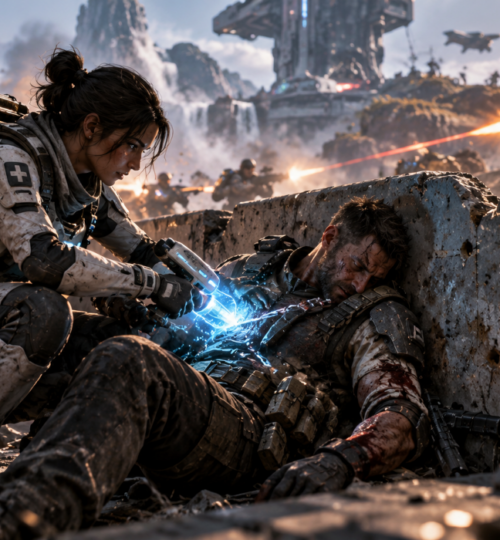
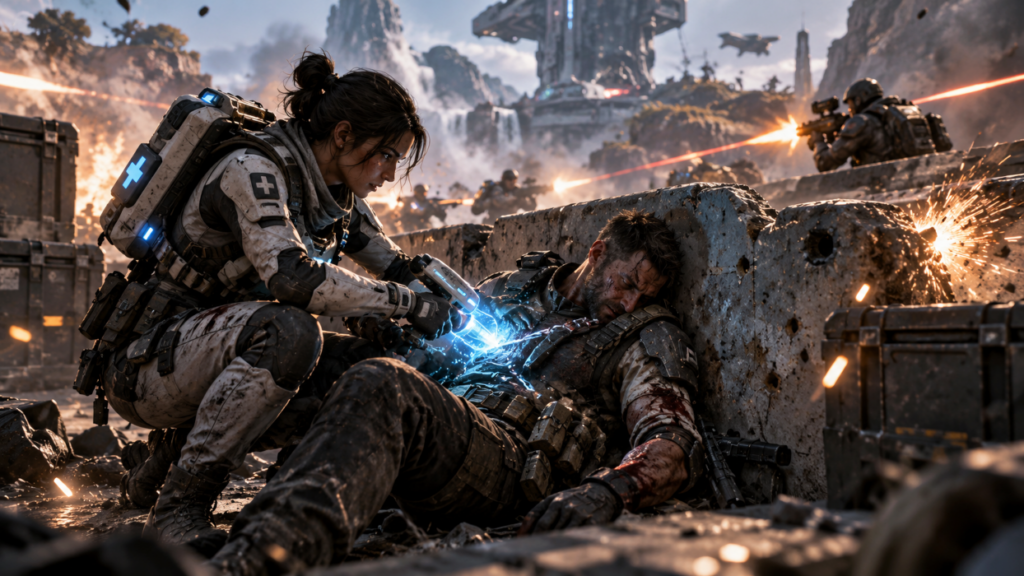
A team fight is falling apart. Two players are critically wounded, the frontline is losing ground, and an enemy flanker has slipped behind the formation. The team’s healer has seconds to decide who needs immediate attention, where to reposition, and whether an offensive ability might turn the engagement around. Meanwhile, the damage dealers are concentrating on eliminations, and the scoreboard will probably give them most of the credit if the team wins.
This situation captures a persistent design challenge in competitive shooters. Healing can be one of the most influential contributions a player makes, yet convincing people to voluntarily dedicate themselves to that responsibility remains difficult. The challenge becomes more pronounced in games built around aggressive movement, rapid eliminations, and individual mechanical performance, where the most immediately satisfying moments often belong to players dealing damage.
Games such as Overwatch, Marvel Rivals, and Team Fortress 2 demonstrate different approaches to support gameplay. Their designs also reveal why keeping dedicated healers engaged requires more than increasing their healing output, improving their survivability, or offering additional experience points.
The Visibility Problem: Healing Rarely Gets the Highlight
Competitive shooters have traditionally rewarded actions that are easy to recognize. Eliminations appear in the kill feed, damage statistics provide numerical comparisons, and spectacular offensive plays become highlights that players can share. Healing contributes to those same victories, although its effects are often less obvious to everyone except the players directly involved.
Consider a support player who keeps a teammate alive through sustained enemy fire. That teammate secures two eliminations and captures an objective, producing an impressive sequence of events. The healer may have made the entire play possible, but the game can struggle to communicate how much that contribution mattered. The surviving teammate receives visible credit for the eliminations, while the support player’s contribution becomes another addition to a healing statistic.
A damage dealer can generally connect successful aim or positioning with an opponent’s elimination. A healer must frequently judge success through prevented deaths, maintained pressure, and opportunities created for teammates. Those contributions become especially difficult to appreciate when the players receiving assistance fail to capitalize on them.
Raw healing statistics offer only a partial solution. A player repeatedly restoring health to teammates taking unnecessary damage might accumulate impressive numbers without meaningfully advancing the team’s position. Another healer who prevents a single elimination at the right moment could have a greater impact on the outcome despite producing substantially less total healing. Recognizing effective support performance requires understanding the circumstances surrounding an action rather than simply counting how much health was restored.
Team Fortress 2 Was Wrestling With This in 2008
The difficulty of attracting dedicated healers predates the modern hero shooter. In Team Fortress 2, the Medic became an essential class because the healing beam and ÜberCharge could sustain an offensive push or break through a heavily defended position. Effective Medic play required awareness, positioning, survival instincts, and coordination with teammates, yet the class competed for attention against characters whose weapons offered more immediate opportunities for eliminations.
Valve recognized the imbalance early. During a 2008 presentation covered by Game Developer’s reporting on Team Fortress 2’s development, designer Robin Walker explained that Medic had been among the least-played classes even though the company’s gameplay data showed teams performed better when someone selected the role. Increasing Medic participation therefore offered a way to improve team performance without fundamentally changing the game’s combat mechanics.
Valve responded with a Medic-focused update featuring new equipment and achievements. The additions rewarded players for healing, encouraged experimentation with different equipment, and created new reasons to spend time with the class. Walker reported that Medic participation initially climbed to 32 percent of players before settling into a position as the game’s third most popular class at the time of his presentation.
The experiment also exposed a weakness in achievement-based incentives. Some objectives encouraged players to pursue particular accomplishments at the expense of their team’s immediate needs. Valve discovered that achievements worked better when players could earn them naturally through productive gameplay rather than abandoning normal responsibilities to complete specific tasks.
That lesson remains relevant nearly two decades later. Rewards can introduce players to support roles and encourage them to try unfamiliar mechanics, but poorly designed objectives can undermine the cooperation those roles are supposed to promote. The incentive has to reinforce useful behavior during actual matches.
Role Queue Guarantees Healers, but Cannot Make Them Enjoyable
One response to uneven role selection has been to impose a structured team composition. When Blizzard introduced Role Queue to Overwatch in 2019, players selected Tank, Damage, or Support before entering matchmaking. The original system organized teams around two players in each role, preventing matches from becoming contests over who would reluctantly switch to a needed position.
Role Queue improved composition consistency and allowed matchmaking to consider a player’s skill within a particular role. However, it also introduced a dependency between matchmaking speed and the availability of players willing to fill less popular positions. When a large proportion of the player population preferred Damage, the matchmaker still needed to find enough players selecting the other roles.
In a 2024 discussion of Overwatch’s transition between 6v6 and 5v5, game director Aaron Keller explained how the original Role Queue system produced longer waits because matchmaking required specific proportions of players from each role. Tank participation was a particularly significant constraint, demonstrating that Support is not necessarily the least popular position in every competitive shooter.
Blizzard had experimented with priority passes and other rewards to encourage participation in underrepresented roles. Keller described how priority passes initially produced positive results before their influence faded, while additional rewards failed to substantially reduce the preference for Damage. The change to a five-player composition with one tank addressed part of the mismatch between role demand and team requirements.
These experiences reveal the limitations of using matchmaking rules to solve a problem rooted in player preferences. A structured system can ensure every team receives the necessary number of support players, but it cannot guarantee those players enjoy their responsibilities. Someone selecting Support solely to earn a reward may approach the role differently from someone who genuinely enjoys its demands.
Fast-Paced Combat Makes Traditional Healing More Demanding
Modern competitive shooters frequently feature rapid repositioning, powerful burst damage, vertical movement, and abilities that allow players to bypass defensive positions. These mechanics create opportunities for skilled attackers, but they also place considerable pressure on characters responsible for keeping their teammates alive. The faster a fight develops, the less time a healer has to recognize danger and respond effectively.
A healer who must maintain line of sight may struggle when teammates spread across multiple elevations or pursue different targets. A support character with limited mobility can become vulnerable to coordinated dives, while a highly mobile healer may spend more time escaping attackers than assisting teammates. Both situations can leave players feeling disconnected from the contributions their teams expect them to make.
Support gameplay can be mechanically and mentally demanding. Players must track enemy threats, anticipate incoming damage, monitor cooldowns, preserve escape routes, and decide which teammate needs attention most urgently. A healer may be managing several simultaneous threats while teammates concentrate on individual engagements.
Problems emerge when that responsibility provides insufficient control over the outcome. A healer might correctly identify an approaching threat but lack the tools needed to survive it. Teammates may ignore repeated warnings or move outside healing range, leaving the support player unable to prevent an elimination despite making reasonable decisions.
A role becomes frustrating when its responsibilities consistently exceed the player’s ability to influence the fight. Developers therefore need to evaluate the options available to support characters under pressure, including their ability to retreat, defend themselves, and recover from positioning mistakes. Simply increasing healing output does little to address situations where a support player cannot safely perform the role.
Support Characters Need Opportunities to Make Their Own Plays
The most engaging support designs allow players to contribute beyond continuously replenishing health bars. Overwatch illustrates this through characters with different forms of utility, including Lúcio’s movement speed, Ana’s Sleep Dart and Biotic Grenade, and Brigitte’s ability to help control space. These tools allow players to influence engagements through timing, positioning, and defensive decisions.
Such abilities create opportunities for mechanical expression and tactical judgment. A player can prevent incoming damage by disrupting an attack, repositioning allies, or denying opponents access to an important area. The support character becomes an active participant in determining how an engagement develops.
However, increasing offensive capabilities creates another balance challenge. If a support character provides strong healing while matching dedicated damage dealers in combat effectiveness, teams may gain excessive value from compositions built around additional sustain. Opponents can struggle to secure eliminations when offensive pressure is repeatedly neutralized by defensive abilities and rapid health restoration.
Restricting support characters to passive healing creates different frustrations. The player’s opportunities to influence a fight become heavily dependent on teammates making effective offensive decisions. Even flawless healing may accomplish little when the team cannot eliminate opponents or secure an objective.
Developers need to provide enough offensive and defensive agency for the role to feel rewarding while preserving meaningful advantages for characters specializing in damage. The appropriate balance depends on a game’s time-to-kill, mobility systems, and available defensive abilities. A support tool that works well in one shooter might create excessive sustain or frustrating defensive combinations in another.
Marvel Rivals Shows How Healing Incentives Affect Combat Balance
Marvel Rivals offers a useful example through its Strategist role, which includes characters capable of healing teammates while contributing other forms of combat utility. Many Strategists can participate directly in engagements rather than remaining entirely behind the frontline. Their abilities allow players to influence battles through damage, healing, defensive effects, and timely use of ultimate abilities.
The relationship between healing and ultimate generation gives developers another way to adjust role incentives. Healing teammates contributes toward abilities that may substantially influence later engagements, creating a connection between routine support activity and potentially decisive moments. The mechanic also makes healing efficiency relevant to the timing of major team fights.
In its September 11, 2026 balance update, NetEase reduced Strategists’ healing-to-ultimate-energy conversion efficiency from 70% to 65%, alongside a reduction in their damage-to-energy conversion from 55% to 50%. These changes demonstrate how developers can adjust the rate at which support activity translates into ultimate availability without directly changing every character’s healing abilities.
The system also introduces competing incentives. Generating ultimate energy through healing can encourage players to restore health even when offensive pressure, repositioning, or defensive utility would offer more immediate value. Excessive ultimate generation can also contribute to engagements dominated by repeated defensive abilities, particularly when multiple support characters coordinate their cooldowns.
These interactions make support balance more complicated than adjusting healing per second. Developers must account for how healing contributes to ability generation, how frequently powerful abilities become available, and whether opponents retain reasonable opportunities to secure eliminations. Changes to a single resource-generation mechanic can affect the pacing of engagements across multiple team compositions.
THE FINALS Demonstrates the Appeal of Flexible Support Loadouts
THE FINALS approaches healing through equipment and loadout choices rather than traditional hero categories. Its Medium build has access to support-oriented tools, including the Healing Beam and Defibrillator, while retaining conventional firearms and other equipment. Players can commit to a healing-focused setup without surrendering their ability to participate in ordinary gunfights.
This design creates a different relationship between support and offensive contribution. A player can revive an eliminated teammate, restore health during an engagement, and then help defend an objective with a weapon. The support role emerges from equipment choices and how those tools are used rather than an exclusively assigned character identity.
Maintaining the attractiveness of those tools still requires active balancing. In THE FINALS Season 8 update in 2025, Embark increased the Healing Beam’s healing rate from 40 to 46 per second. The developers explained that the introduction of other healing options, including the H+ Infuser and Healing Emitter, had reduced the beam’s appeal. The adjustment was intended to make the Healing Beam a more desirable specialization.
That situation captures an important aspect of support-role design. When healing competes directly with equipment that provides offensive strength, mobility, or defensive advantages, players need convincing reasons to select it. A healing tool becomes attractive when it reliably helps a coordinated team survive engagements, maintain pressure, or preserve an advantageous position.
Flexible loadouts also change how support responsibilities are distributed. A team can include players who provide occasional healing without requiring anyone to spend the entire match performing that function. The approach offers greater freedom, although it can produce compositions with insufficient healing when players favor other equipment.
Scoreboards Can Recognize Contributions Without Encouraging Stat Farming
Support players often experience a gap between the importance of their actions and the recognition those actions receive. Traditional scoreboards emphasize eliminations, assists, deaths, and damage, while healing statistics provide a limited picture of defensive performance. A large healing total does not necessarily distinguish effective intervention from repeated recovery of avoidable damage.
A more informative performance system could recognize timely saves, successful defensive ability usage, or meaningful participation in objective engagements. It could also provide post-match information about survival-related contributions without converting every individual action into a public numerical competition. The challenge lies in identifying whether an action helped the team rather than simply recording that an ability was used.
Blizzard took a step toward improving recognition in its June 2025 Overwatch update. The official patch notes described changes to the Play of the Game algorithm intended to give support characters greater opportunities for highlights. The adjustments included recognizing saves that kept teammates alive for at least five seconds, as well as unusually high healing contributions.
This approach acknowledges that support actions can be highlight-worthy without producing a sequence of eliminations. A well-timed defensive ability can require considerable skill, particularly when a player must anticipate an enemy attack and respond within a narrow window. Recognizing those moments makes the relationship between support performance and match outcomes more visible.
Automated recognition still needs careful design. Awarding excessive credit for raw healing could encourage players to prolong engagements or prioritize easy healing opportunities. Giving rewards for defensive abilities based solely on activation would similarly overlook whether those abilities were used effectively.
The value of a support action depends on what happened during the engagement, what alternatives were available, and how that decision affected the team’s position. Game systems may never capture all of that context reliably, but better performance feedback could help players understand the impact of their decisions.
Why Extra Experience Points Are Only a Temporary Incentive
Developers often respond to shortages in particular roles by offering bonus experience, progression rewards, or faster matchmaking. These incentives can convince players to experiment with unfamiliar characters and help matchmaking systems handle temporary population imbalances. They are particularly useful when players have little experience with support mechanics and need an initial reason to try them.
Their long-term effectiveness is less certain. A player who dislikes healing will not necessarily begin enjoying it after receiving several bonus rewards. Once the incentive disappears or becomes less valuable, the original preference for another role may return.
Reward structures can also attract players who are primarily interested in completing progression objectives. Those players might select a support character but spend the match seeking offensive opportunities instead of performing the responsibilities their teammates expect. This creates friction when the selected role implies a particular contribution that the player never intended to provide.
Better onboarding offers a more sustainable opportunity. Training modes could teach players how to position safely, recognize threatening engagements, coordinate cooldowns, and judge when healing is less valuable than offensive pressure. Dedicated support tutorials could demonstrate how specific decisions affect the survival of teammates and the outcome of a fight.
A training scenario might show how an early defensive ability prevents an elimination or how repositioning allows a healer to assist multiple teammates. These examples would help players recognize the skill involved in support gameplay before entering a competitive match. Players who discover that healing rewards prediction, positioning, and mechanical precision may develop an interest that lasts beyond temporary bonuses.
Competitive Teams Have Their Own Responsibility
Game systems cannot completely compensate for poor team behavior. A support player becomes much more effective when teammates understand healing range, maintain useful positioning, and recognize when an enemy is attempting to eliminate their backline. Basic cooperation can substantially change the experience of playing a vulnerable support character.
Competitive teams that consistently abandon their healer create circumstances where the role feels unrewarding regardless of its statistical strength. A support player repeatedly eliminated by an uncontested flanker has fewer opportunities to demonstrate skill or contribute to the team’s success. When those deaths are treated solely as individual positioning failures, teams can overlook the defensive responsibilities shared by everyone in the composition.
The responsibility also works in the opposite direction. Effective healers must understand when teammates are making reasonable aggressive plays and adapt their positioning accordingly. A support player who refuses every calculated risk can limit a team’s offensive potential just as easily as an overly aggressive damage dealer can compromise its survivability.
Organized competition provides a setting where these relationships become easier to develop. Teams can establish expectations about positioning, target priority, cooldown coordination, and defensive responsibilities. Over time, players learn which engagements require immediate healing and which situations call for a more aggressive response.
This shared understanding also changes how support performance is evaluated. Experienced teammates can recognize whether a defensive rotation preserved an advantage or whether a missed cooldown contributed to a failed engagement. Those observations provide more useful feedback than simply comparing healing totals at the end of a match.
Designing a Healer Players Actually Want to Master
A compelling healer should have meaningful decisions to make even when teammates are at full health. That might involve controlling access to an objective, anticipating an enemy ultimate, preparing a defensive position, or deciding whether to participate in an aggressive push. Healing remains central to the character’s identity, but the player stays engaged with the broader tactical contest.
Developers can reinforce that experience through responsive abilities, clear feedback, reasonable opportunities for self-defense, and recognition of effective support play. They must also preserve enough offensive counterplay that eliminating a protected target remains possible through coordinated execution. Excessive survivability can make support characters frustrating to fight, while insufficient defensive options can make them frustrating to play.
The difficult part is creating a support role that appeals to players because of its gameplay rather than because their team needs someone to fill an unpopular position. A healer who can make demanding, skillful decisions and see the consequences of those decisions has a reason to keep selecting the role. That motivation is more durable than a progression bonus or a temporary matchmaking reward.
The enduring appeal of the Team Fortress 2 Medic demonstrates how much satisfaction can come from mastering a specialized responsibility. Holding an ÜberCharge until the right moment, coordinating its deployment, and breaking a defensive position creates a distinct competitive experience. The Medic’s effectiveness depends heavily on teammates, yet the player controlling that ability makes decisions that can determine whether an offensive push succeeds.
This offers a useful direction for dedicated healer design. Players need opportunities to develop mastery through timing, positioning, resource management, and coordination, with enough control to recognize the impact of their performance. When the role provides those opportunities consistently, healing becomes a competitive specialty worth learning rather than an obligation someone must accept before the match can begin.