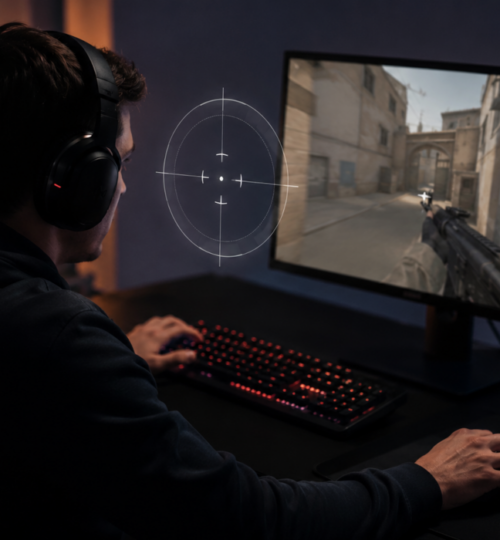
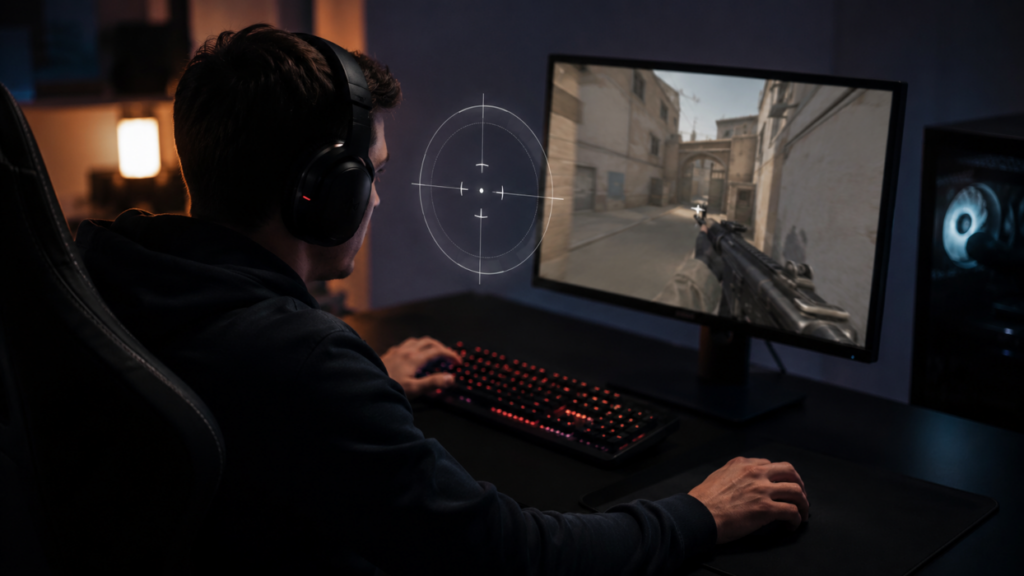
Competitive shooters have always had a cheating problem, but the shape of that problem has changed. The old-school rage hacker was obvious. The crosshair snapped across the screen, heads exploded through smoke, and everyone in the server knew the match was cooked. Server admins could spectate for five minutes, make the call, and swing the ban hammer.
That version still exists, but it is not the real headache anymore. The more dangerous threat is quiet. It is the player who looks almost clean. Their aim is not snapping like a machine. Their movement is believable. Their stats are strong, but not absurd. Their crosshair only gets a little help at the exact moment it matters. That is where behavioral anti-cheat enters the fight.
Modern cheat detection cannot rely only on finding forbidden files, blocked drivers, suspicious overlays, or known cheat signatures. Cheat developers adapt too quickly, and some modern cheats avoid directly touching game memory in ways older systems were built to catch. Anti-cheat teams are now being pushed toward a harder question: does this player behave like a human under pressure, or like a human being quietly corrected by software?
The Problem With “Soft” Aim Assist Cheats
Subtle aim-assist modifications are built to live in the gray area. They are not always designed to make a bad player look like a god. They are often designed to make a decent player look unusually consistent. That difference matters.
A blatant aimbot turns every encounter into evidence. A soft assist tries to hide inside normal skill variation. It may smooth out micro-corrections, reduce over-aim, help keep tracking glued to a target, or nudge the final adjustment just enough to win more duels. The player still moves the mouse. The player still misses sometimes. The player still has bad games. That is the cover.
This is why older community judgment can struggle with modern cheating. In a legacy ladder environment, the old question was often, “Did that look impossible?” The modern question is meaner: “Did that look a little too repeatable across hundreds of fights?”
That is not easy to answer with a clip. A single replay can make anyone look guilty or innocent depending on the angle, the tick rate, the observer, and the bias of the viewer. Behavioral detection works because it does not obsess over one highlight. It studies patterns across time.
Behavioral Analysis Looks for the Fingerprint, Not the Weapon
Traditional anti-cheat often tries to identify the tool. Behavioral anti-cheat studies the outcome. That sounds simple, but it changes the entire model. Instead of asking only whether a cheat file exists, a behavioral system asks how a player aims, reacts, tracks, stops, corrects, and fires. It can compare crosshair paths, reaction windows, target transitions, recoil handling, visibility timing, engagement choices, and performance changes under different match conditions.
Call of Duty’s RICOCHET team has openly discussed machine learning systems that look at areas such as kills, deaths, damage ratios, movement, aiming angles, reaction times, ping behavior, map activity density, and team-level stats. That list matters because it shows where the industry is moving. The point is no longer just catching the cheat executable. The point is finding abnormal play behavior at scale.
This is a big shift for competitive integrity. A player using a tiny assist may avoid obvious mechanical tells, but they still produce data. Their aim path may be too clean after target acquisition. Their correction timing may be too uniform. Their success rate in messy aim duels may separate from their normal movement, positioning, or decision quality. Their performance may spike in very specific scenarios where assistive software gives the most value. Real players are messy. Even elite players are messy in consistent human ways.
Human Aim Has Imperfections That Matter
Great aim is not robotic. That is the funny part. The best players in the world do not move like perfect machines. They overshoot. They undershoot. They hesitate. They panic spray. They make ugly corrections. They lose duels they should win. Their skill shows in how quickly and intelligently they recover from imperfection, not in the absence of imperfection.
Behavioral anti-cheat can study those imperfections. A human aiming pattern has rhythm, fatigue, variance, and context. A player might track beautifully in one fight, then whiff the next because the target strafed weirdly, a teammate crossed their view, or pressure got to them. A subtle assist can flatten that variance. It does not need to make every shot perfect. It just needs to remove enough of the human wobble to tilt the odds. That is the core signal. Not perfection. Reduced imperfection.
A strong behavioral system can examine how aim behaves before, during, and after target exposure. It can look at whether a player’s crosshair changes character once an enemy becomes available. It can compare aim movement against the player’s own baseline, not just against the global population. That last part is huge. A veteran player with 10,000 hours should not be judged like a new player, and a new player should not be excused just because their stats are not outrageous. The best detection is personal, contextual, and slow enough to avoid panic bans.
Why One Clip Is Not Enough
Gaming communities love clips. Clips fuel drama, reports, accusations, ban appeals, and Discord arguments that somehow last three days longer than the match itself. Clips are useful, but they are weak evidence by themselves.
A player can hit a suspicious shot cleanly. A cheater can miss on purpose. A replay can desync. Spectator views can lie. Compression can hide tiny movements. Aim assist from the game itself, controller input, mouse smoothing, latency, server interpolation, and animation quirks can all make a moment look stranger than it really was.
Behavioral anti-cheat is valuable because it is not emotionally impressed by a clip. It can examine thousands of engagements. It can compare the same player across maps, weapons, ping ranges, opponents, and match pressure. It can weigh repeated patterns instead of viral moments.
For a legacy esports hub, that distinction matters. Communities die when cheating goes unchecked, but they also rot when every strong player gets treated like a suspect. Old-school admins knew this pain well. Ban too slowly and honest players leave. Ban too aggressively and the best competitors stop trusting the ladder. Behavioral systems do not remove human judgment, but they can give admins better evidence.
The Rise of Server-Side Aim Analysis
One reason behavioral detection is gaining attention is that server-side analysis can avoid some of the trust problems tied to invasive client software. Kernel-level anti-cheat is still common in major shooters, and some publishers have paired anti-cheat with PC security requirements such as Secure Boot and TPM 2.0. That approach remains controversial because players worry about privacy, compatibility, and control over their own systems.
Server-side behavioral detection does not need to see every file on a player’s machine to be useful. It can work from gameplay telemetry. Research systems are already exploring this direction. XGuardian, a 2026 research project focused on FPS anti-cheat, describes a server-side method for detecting aim-assist cheats using pitch and yaw data to study aim trajectories across different games.
That idea is powerful because pitch and yaw are basic ingredients of aiming in first-person shooters. If a detection method can learn meaningful patterns from those signals, it becomes less dependent on chasing each new cheat build. Cheat signatures change. Human input patterns are harder to fake perfectly over long periods.
This does not mean server-side behavioral detection is magic. It can still be beaten, poisoned, or confused if built poorly. But it gives the industry another path besides the endless arms race of deeper client access.
Subtle Cheating Changes the Meaning of Skill
Soft aim assist does more than help a player shoot better. It distorts the entire competitive ladder. In a ranked or ladder-based ecosystem, small advantages compound. A player who wins 53 percent of aim duels instead of 49 percent may climb faster, hold rank longer, dodge fair losses, and influence team outcomes in ways that are hard to see from the scoreboard alone. The damage is not always dramatic in one match. It becomes obvious across seasons.
That is why behavioral anti-cheat needs to care about small edges. The community usually notices the rage hacker first, but the soft cheater may do more long-term harm. They take prize spots, inflate team records, poison rivalries, and make honest players question whether practice is worth it.
Veteran communities understand this better than most. Back in the ladder era, reputation mattered. A player’s name carried weight. Teams remembered who played clean, who dodged, who disputed every loss, and who always seemed to have a miracle round when money or rank was involved. Behavioral anti-cheat is the modern version of that memory, except it can track patterns no admin team could manually watch at scale. The goal is not to replace community instinct. The goal is to give that instinct teeth.
The False Positive Problem Cannot Be Ignored
The biggest risk with behavioral anti-cheat is obvious: great players can look abnormal. Some players really do have freakish tracking. Some have trained flicks for years. Some play with strange sensitivity settings, unusual hardware, or unorthodox mechanics. Some improve rapidly after changing routines, switching input devices, upgrading monitors, or grinding aim trainers. A system that treats every outlier as a cheater will punish the exact players competitive games should celebrate.
That is why behavioral detection should work in layers. A single signal should rarely be enough. Clean detection should combine aim data with broader gameplay context, confidence scoring, review tools, and appeal paths. Suspicion should trigger deeper review before irreversible action in cases where the evidence is not overwhelming.
Explainability also matters. If a system flags someone, anti-cheat teams need to understand why. A black-box model that says “trust me” is not enough for serious competitive environments. Research in this space is already moving toward explainable detection, where systems can point to the behavioral features that influenced a decision instead of producing a mystery score.
Players do not need every detection secret. Giving away too much helps cheat makers. But admins and security teams need enough clarity to avoid blind enforcement.
Cheat Developers Are Training Against Detection Too
Anti-cheat is not a one-sided science project. Cheat developers watch, adapt, and test. If detection systems look for obvious snap speed, cheats get smoother. If systems look for perfect tracking, cheats add noise. If systems look for impossible reaction times, cheats delay assistance. Every new rule teaches the other side what to hide.
That is why behavioral anti-cheat cannot rely on simple thresholds forever. The future belongs to systems that study sequences, context, and adaptation. A cheat that mimics human aim for ten seconds may still fail across ten hours. A player trying to hide assistance may reveal strange patterns in when they toggle help, which fights they take, how their aim changes around visibility, or how their confidence shifts when information should be limited.
Academic work has started treating cheating as an adaptive problem, not a static one. A 2025 research framework for ESP cheater simulation modeled cheaters and detectors as opponents that change behavior over time, which reflects the real fight between cheat makers and anti-cheat teams. That matters for aim-assist detection too. Static rules get farmed. Adaptive systems have a better chance.
Visual Aimbots Make Behavior Even More Important
The nastiest part of modern cheating is that some tools can operate through visual information instead of classic memory manipulation. A visual aimbot can respond to what appears on the screen, which can make it harder for traditional anti-cheat to catch through old methods. That pushes more attention toward what the player does in-game, not only what is running on the machine.
Recent research on visual aimbot defense has explored adversarial textures that can hide real players from visual aimbots or lure them toward fake targets, producing stronger evidence of cheating. The AimTrap paper, published in June 2026, reported high defense and lure success rates in testing against a visual aimbot, while aiming for low overhead and low false positives.
That kind of research points toward a more aggressive future. Anti-cheat may not only observe behavior. It may create controlled situations where cheats reveal themselves. Done carefully, that could give developers cleaner evidence than “this player looked suspicious.” Done recklessly, it could create new problems for fair play, performance, and trust. The direction is clear though. The fight is moving from file detection to behavior, bait, verification, and proof.
What This Means for Community Ladders
For a revived esports community, behavioral anti-cheat should not be viewed only as a AAA publisher problem. Community ladders, tournaments, and private leagues face the same trust issues, just with fewer resources. In some ways, the stakes feel more personal. A cheater in a massive matchmaking pool is annoying. A cheater in a tight legacy community becomes a name everyone knows.
The practical path for community platforms is not to pretend they can build a RICOCHET-scale system overnight. The smarter move is to build anti-cheat culture and data discipline from the start. Match reports should preserve useful metadata. Disputes should separate emotional accusations from reviewable evidence. Admin tools should track repeat patterns across matches. Player reports should be structured enough to help reviewers find behavior, not just drama.
Communities can also design competition rules that make cheating harder to hide. Required demos, replay submission, server logs, match screenshots, roster history, device rules for live events, and clear dispute windows all help. None of these are perfect. Together, they create friction.
Old GWL-style ladder systems were built on records, rivalries, and reputation. The modern version needs those same pillars, plus better data.
The Best Anti-Cheat Will Be Hybrid
No single anti-cheat method wins this fight alone. Client-side protection can still catch known tools and block common attack paths. Server-side behavioral analysis can catch patterns that file scanning misses. Replay review can add human context. Machine learning can prioritize suspicious cases. Community reporting can surface problems early. Legal pressure against cheat sellers can reduce supply. The strongest systems combine all of it.
Activision’s RICOCHET team has described upgraded machine learning detections trained on millions of gameplay hours, alongside broader enforcement and mitigation work. In 2025, the team also discussed using machine learning tools side by side to remove cheaters faster. That is the model more games will chase. Not one silver bullet. Many smaller nets.
For players, the hope is simple. Better detection should mean fewer ruined matches, fewer witch hunts, and fewer players walking away because they no longer trust the scoreboard. For cheat makers, the pressure increases when every movement, correction, timing choice, and engagement pattern can become part of the evidence trail.
The crosshair still tells a story. The difference now is that anti-cheat systems are learning how to read the whole book.