Competitive gaming has always been more than aim, movement, reaction time, map knowledge, or team composition. Those things matter, of course. They are the visible skills. They are the things players practice, debate, clip, rank, and argue about after a match. But underneath every clean headshot, every clutch defuse, every last-second rotation, and every failed push is a quieter part of competition that many players never get taught: the mental game.
For a long time, esports communities treated frustration as something players simply had to “get over.” If you lost three games in a row, you queued again. If your teammate threw, you yelled, muted, or rage quit. If your rank dropped, you blamed the matchmaking system, the meta, the patch, the controller, the ping, or the one guy who refused to play the objective. Sometimes those complaints were fair. Anyone who has spent real time in competitive multiplayer knows that not every loss is clean, balanced, or deserved.
But the deeper issue is that most players are never taught how to process losing. They are taught mechanics. They are taught builds. They are taught callouts. They are taught rotations. They are taught tier lists. They are rarely taught what to do when their decision-making collapses after a bad round, when anger starts driving their play, or when a losing streak turns a game they love into something that feels like work.
That is where tilt, burnout, and losing streaks become more than casual gaming complaints. They become part of the competitive experience itself.
Tilt Is Not Just Being Mad
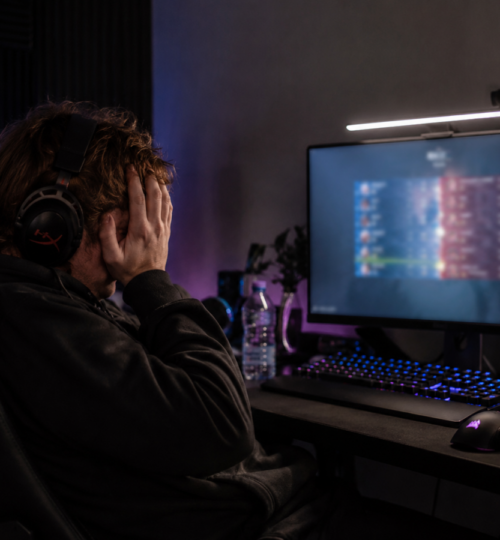
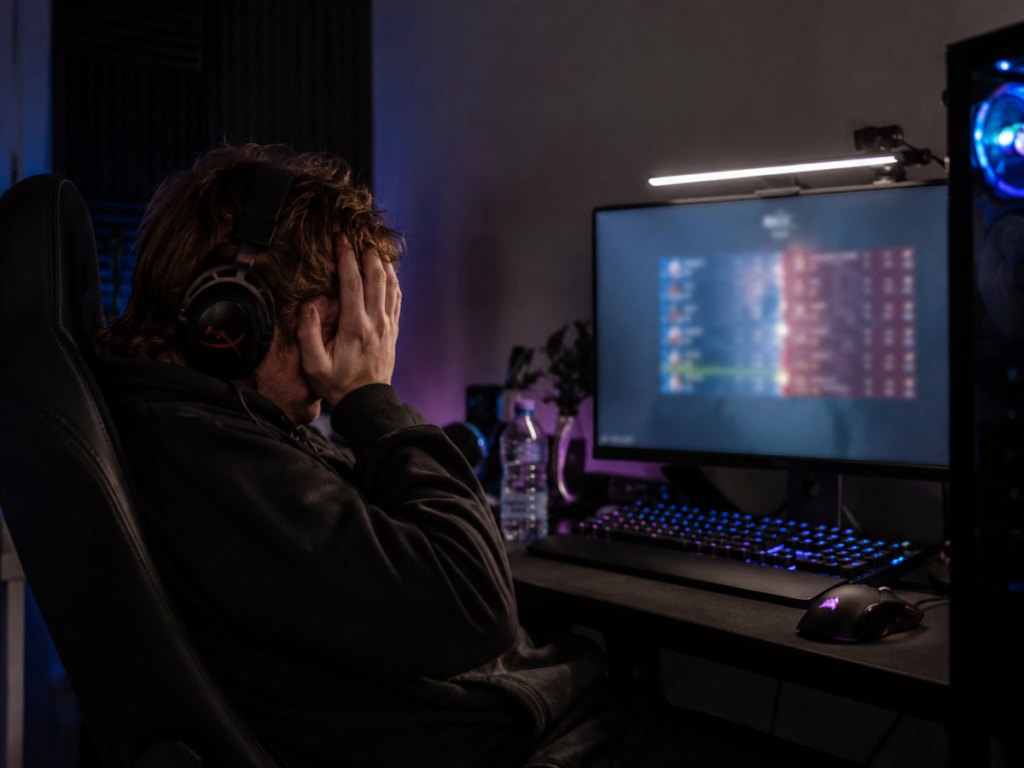
In gaming, “tilt” usually means emotional frustration that starts affecting how a player performs. The term became especially common in competitive card games and online multiplayer, but the experience is universal. You make one bad play, then another. You get caught out of position. You overpeek. You chase a revenge kill. You ignore the smarter rotation because you want to prove a point. Suddenly, you are not playing the match in front of you. You are playing against the last mistake.
That is the dangerous part of tilt. It changes the target. The goal stops being “win the match” and becomes “fix how I feel right now.” Tilt can look different depending on the player. Some players get loud and aggressive. Some go silent. Some start blaming teammates. Some become reckless. Some play too passively because they are afraid to make another mistake. Others queue again and again, convinced the next match will erase the frustration from the last one.
Recent esports psychology research has started treating tilt as a real performance issue, not just gamer slang. A 2025 study on tilt and coping strategies in video games examined how tilt affects player experience and how players attempt to manage it, highlighting why esports psychologists are paying closer attention to emotional regulation in competitive play.
For veteran players, none of this is shocking. We have all seen a match swing because one player lost composure. We have all seen a team with better skill fall apart after a bad start. We have all watched someone turn one mistake into five because they could not mentally reset. The lesson is simple but often ignored: tilt is not weakness. Tilt is a signal. It tells you that your emotional state is starting to interfere with your competitive judgment.
Losing Streaks Mess With Your Sense of Reality
A losing streak is not just a number on a match history page. It changes how the game feels. After one loss, you might still be focused. After two, you start questioning the lobby. After three or four, every teammate looks suspicious, every opponent feels lucky, and every mistake feels personal. By the time the streak gets ugly, you may not even be evaluating matches honestly anymore.
That is one of the nastiest parts of competitive gaming: the more tilted you become, the worse your ability to diagnose the problem gets. A player on a losing streak might say, “I keep getting bad teammates.” Sometimes that is true. But they may also be taking worse fights, communicating less clearly, forcing plays, skipping warmups, or refusing to adapt. The brain wants a clean explanation. Competitive games rarely give one.
This is especially brutal in team-based esports because performance is shared. You can play well and lose. You can play poorly and win. You can top frag while still hurting the team. You can have bad stats while making smart support plays. A scoreboard tells part of the story, but not the whole story.
That uncertainty makes losing streaks mentally exhausting. Players want justice from ranked systems, but ranked systems are built on volume. One match may be unfair. Ten matches may reveal patterns. The problem is that many players emotionally collapse before they reach a useful sample size.
The best competitors learn to separate match outcomes from performance review. They ask better questions after a loss: Did I make the right decisions with the information I had? Did I communicate clearly? Did I adapt after the enemy changed tactics? Did I manage my economy, cooldowns, positioning, or timing? Did I lose because of execution, strategy, teamwork, or emotional control? Those questions do not remove the sting of losing. But they turn losses into information instead of punishment.
Burnout Is What Happens When the Grind Stops Giving Back
Tilt is usually immediate. Burnout is slower. It builds over time. Burnout happens when the game becomes a constant demand instead of a challenge. You keep playing, but the joy gets thinner. You still care, but caring feels heavier. You log in because you are supposed to practice, supposed to grind, supposed to keep up with the meta, supposed to maintain rank, supposed to help the team, supposed to prove you are still good.
At first, this can look like dedication. That is why burnout is hard to spot. Competitive communities often reward the grind. More hours means more commitment. More matches means more improvement. More scrims means more seriousness. But there is a difference between disciplined practice and endless emotional debt.
Modern esports research has increasingly focused on burnout, resilience, and mental toughness among competitive players. A 2024 study specifically investigated burnout profiles among esports players and examined their relationship with mental toughness and resilience, showing that burnout is now being studied as a serious competitive concern rather than dismissed as ordinary frustration.
Burnout can show up as irritability, lack of motivation, poor sleep habits, reduced focus, resentment toward teammates, or the feeling that every match is just another chore. Some players stop improving because they are not actually practicing anymore. They are only repeating. They queue tired, play angry, lose focus, and call it commitment.
In older community ladder systems, burnout often looked different. Players might challenge for rank, defend their spot, or compete in scheduled matches. Today, many games never really stop. Ranked seasons refresh. Battle passes expire. Limited-time events rotate. Meta patches land. New characters, maps, weapons, and balance changes keep moving the target. The modern player is not only competing against opponents. They are competing against the game’s calendar. That constant pressure can turn entertainment into obligation.
Esports Has Mechanics Coaches, But Not Enough Mental Coaches
One of the strange things about esports is how advanced the strategy has become while mental training still feels underdeveloped for many players. Competitive communities will spend hours breaking down aim settings, sensitivity curves, frame timing, draft strategy, recoil patterns, VOD reviews, and patch notes. But when a player mentally collapses during a match, the advice is often just “stop tilting.” That is not coaching. That is a bumper sticker.
Traditional sports have long understood that performance includes the mind. Athletes work on composure, breathing, visualization, preparation, recovery, confidence, and emotional control. Esports is catching up, but unevenly. Professional organizations may have access to psychologists, performance coaches, or structured support, while amateur players and community competitors are often left to figure it out alone.
The gap matters because most esports players are not professionals. They are students, workers, parents, hobbyists, streamers, grinders, weekend competitors, and community veterans trying to balance life with competition. They may not have staff around them. They may not have a coach watching their habits. They may not even recognize when their routine is hurting them.
A 2026 scoping review on mental health and well-being in esports reflects the growing academic interest in how esports participation relates to mental health challenges, motivation, and player well-being. That attention is important because competitive gaming is no longer a fringe hobby. It is a serious ecosystem with serious pressure, even outside the professional tier.
The Queue Again Trap
Every competitive player knows the temptation: “I am not ending on a loss.” That sentence has probably destroyed more ranks than bad aim ever has.
The “queue again” trap is powerful because it feels logical. You lost, so you want to recover. Your rank dropped, so you want it back. You played badly, so you want to prove that was not the real you. But emotional recovery and competitive recovery are not the same thing.
Sometimes the best move is not another match. Sometimes the best move is standing up, getting water, stretching, reviewing the loss, or simply ending the session. That can feel like surrender, especially to competitive players who take pride in toughness. But there is nothing tough about donating points because your ego wants revenge.
A useful rule is to decide your stopping conditions before you start. For example, a player might say: “I stop after three losses,” or “I stop when I catch myself blaming everyone else,” or “I stop if I am no longer communicating constructively.” The exact rule matters less than having one before emotion takes over. Good competitors do not only know when to push. They know when the next match is no longer practice.
Team Tilt Is Even More Dangerous
Individual tilt is bad. Team tilt is contagious. One frustrated player can change the entire mood of a match. A sarcastic comment after round two becomes silence by round four. Someone stops calling out. Someone else starts forcing plays. The support player gets blamed. The entry player gets defensive. The team begins fighting the scoreboard, the opponent, and each other at the same time.
At that point, strategy barely matters. The team has lost its shared reality. Strong teams build communication habits before pressure hits. They know how to correct mistakes without turning every error into a trial. They know the difference between useful feedback and emotional dumping. “Next time, wait for my flash” is useful. “Why would you even swing that?” usually is not.
In community esports, this matters even more because players often compete with friends. A bad team environment can damage more than a match record. It can hurt clans, guilds, Discord groups, forums, and long-running communities. Many teams do not break because they lack skill. They break because losing exposes communication problems nobody wanted to address. The mental game is not only personal discipline. It is culture.
Building a Better Competitive Routine
A healthier competitive routine does not mean becoming soft. It means becoming more consistent.
Players should warm up with purpose instead of jumping directly into ranked cold. They should review mistakes without turning every VOD into self-punishment. They should track patterns across multiple matches rather than obsess over one bad game. They should take breaks before frustration becomes identity. They should sleep, hydrate, and eat like their brain is part of their setup, because it is.
The best players are not emotionless machines. They are players who can feel pressure without letting pressure drive the mouse, controller, or keyboard.
A strong mental routine might include a short warmup, a ranked goal for the session, a stop-loss rule, and a quick review afterward. The goal should not always be “gain rank.” Sometimes the goal is cleaner communication, better positioning, fewer ego fights, stronger objective timing, or staying composed after early mistakes. That kind of progress is harder to screenshot, but it is real.
Losing Without Becoming a Loser
Competitive gaming has a way of making players attach identity to outcomes. Win, and you feel validated. Lose, and you feel exposed. That emotional swing is part of what makes esports exciting, but it can also become unhealthy if every match becomes a referendum on your worth as a player.
The truth is that good players lose. Great players lose. Entire dynasties lose. The difference is not that elite competitors avoid failure. The difference is that they process failure better. A losing streak does not automatically mean you are washed. A bad match does not erase your skill. A tilted night does not define your ceiling. But refusing to learn from those moments can keep you stuck.
For a legacy community like Global Warfighter League, this lesson matters. Many of us came from an older era of online competition where ladders, clans, forums, rivalries, and reputation shaped the scene. We remember when a match result could follow you around the community. Today’s esports world is faster, larger, and more automated, but the mental challenge is still familiar. Players want to compete, improve, represent their teams, and earn respect.
That requires more than mechanics. It requires patience, maturity, and the ability to lose without falling apart.
The Mental Game Is Part of the Game
Tilt, burnout, and losing streaks are not side issues. They are part of competitive gaming. Every serious player eventually meets them. The question is whether they recognize them early enough to respond.
The next evolution of esports communities should not only be better ladders, better tournaments, better rankings, or better stat tracking. It should also be better competitive education. Players need to understand how to practice, how to review, how to communicate, how to rest, and how to keep the game from becoming a source of constant stress.
Because the mental game nobody teaches is often the difference between a player who improves and a player who spirals.
Winning matters. Skill matters. Rank matters. But long-term competition requires something deeper than grinding until frustration wins. It requires the discipline to reset, the humility to review, and the awareness to know when the real opponent is no longer on the other team. Sometimes the hardest match in esports is the one happening inside your own head.