
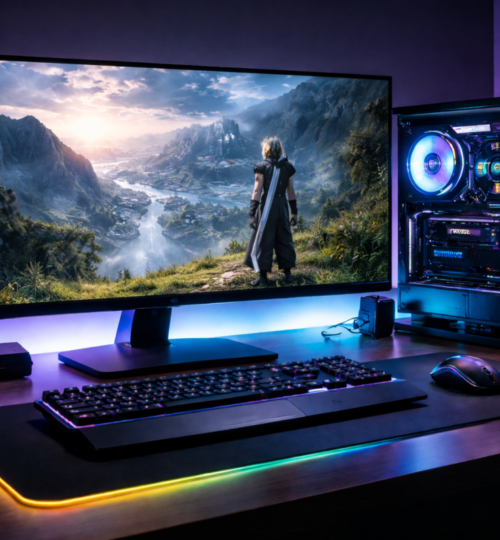
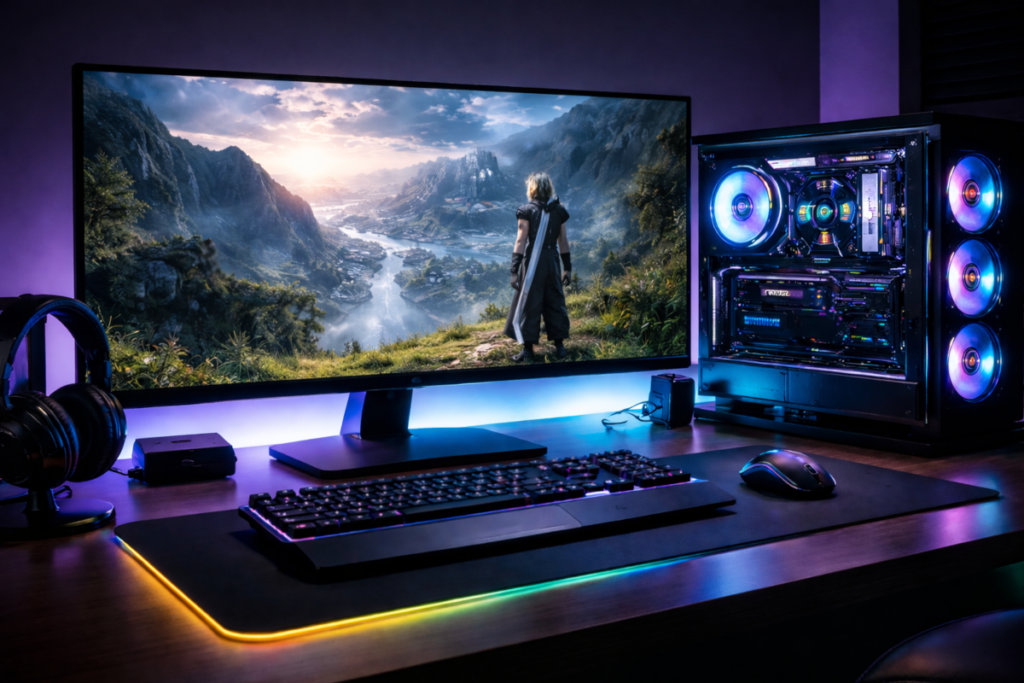
When Final Fantasy VII Rebirth launched as the second chapter in Square Enix’s ambitious remake trilogy, it carried more than just the weight of nostalgia. It represented a continuation of one of gaming’s most iconic narratives, rebuilt with modern design philosophy, cinematic storytelling, and large-scale open environments. Now, with the long-anticipated June 3rd PC release date confirmed and strong rumors surrounding a potential debut on the upcoming Switch successor, the conversation has shifted from story beats to performance expectations.
For a community like ours, one rooted in competitive history and technical curiosity, this moment matters. Not just because of what the game is, but because of how it will run, who it will reach, and whether it can scale across platforms without losing the experience that made it stand out on PlayStation hardware.
Why June 3rd Matters More Than a Release Date
The June 3rd release is not just another delayed PC port finally arriving. It reflects a growing shift in how major Japanese titles approach platform ecosystems. Square Enix has been gradually moving away from strict console exclusivity windows, recognizing that the PC audience is no longer secondary. It is essential.
Historically, Final Fantasy titles often arrived late to PC, sometimes years after their initial console debut. That gap has been shrinking. The timing of this release suggests a deliberate strategy to capture momentum while the game is still part of active conversation.
From a competitive and community standpoint, this matters. A wider player base means more discussion, more modding potential, more performance experimentation, and ultimately more longevity. For a legacy platform like ours that thrives on long-term engagement, this kind of staggered but timely expansion is exactly what keeps a title alive beyond its launch window.
The PC Audience: Expectations Have Changed
The PC gaming landscape in 2026 is not what it was even five years ago. Players are no longer satisfied with basic ports that simply “run.” They expect scalability, optimization, and meaningful graphical options.
Titles like Cyberpunk 2077 and Elden Ring have reshaped expectations in different ways. One demonstrated the cost of poor optimization at launch. The other showed how strong design can overcome technical limitations, but still faced criticism for stuttering and inconsistent performance on PC.
Final Fantasy VII Rebirth enters this space with pressure from both directions. It must deliver visual fidelity worthy of modern hardware while maintaining stability across a wide range of systems.
The question is not whether it will look good. It almost certainly will. The question is whether it will run well for the average player, not just high-end enthusiasts.
Breaking Down Expected PC Requirements
While official system requirements may evolve closer to release, we can build a realistic expectation based on the game’s PlayStation 5 performance profile and Square Enix’s previous PC ports.
Minimum Expectations
At the lower end, players can likely expect requirements comparable to:
- CPU: Mid-tier 6-core processor such as Ryzen 5 3600 or Intel i5-10400
- GPU: NVIDIA GTX 1660 or AMD RX 5600 XT
- RAM: 16GB
- Storage: SSD required, likely 100GB or more
This tier will likely target 1080p at 30 to 60 FPS with reduced settings. Given the scale of Rebirth’s open regions and dynamic environments, traditional hard drives are unlikely to provide a smooth experience.
Recommended Performance Tier
For players aiming at the “intended” experience:
- CPU: Ryzen 5 5600X or Intel i7-10700K
- GPU: RTX 3060 or RX 6700 XT
- RAM: 16GB to 32GB
- Storage: NVMe SSD strongly recommended
This configuration should reasonably target 1440p at 60 FPS with high settings, assuming optimization is handled well.
High-End and Enthusiast Tier
For those pushing visual limits:
- CPU: Ryzen 7 7800X3D or Intel i7-13700K
- GPU: RTX 4070 and above or RX 7800 XT and above
- RAM: 32GB
- Storage: High-speed NVMe
This tier is where features like ray tracing, higher resolution textures, and advanced lighting effects may fully come into play, potentially targeting 4K at 60 FPS or higher with DLSS or FSR support.
The Real Bottleneck: Engine Optimization
Specs alone never tell the full story. The biggest variable will be how well Square Enix adapts the game’s engine for PC.
Rebirth was designed with PlayStation 5 architecture in mind. That means fast SSD streaming, unified memory, and a tightly controlled hardware environment. Translating that into the fragmented PC ecosystem is where many ports struggle.
We have seen this before. Shader compilation stutter, inconsistent frame pacing, and CPU bottlenecks can all emerge when a game is not properly optimized for diverse configurations.
The best-case scenario involves:
- Precompiled shaders or background shader generation
- Scalable asset streaming that adapts to different storage speeds
- Flexible graphics settings that allow granular tuning
If these elements are handled well, the game could become one of the standout PC releases of the year. If not, even powerful systems could experience frustrating inconsistencies.
DLSS, FSR, and the Performance Safety Net
Upscaling technologies are no longer optional. They are expected.
Support for NVIDIA DLSS and AMD FSR will likely play a critical role in how Rebirth performs across different hardware tiers. These technologies allow players to render at lower internal resolutions while maintaining visual clarity, effectively boosting performance without sacrificing too much image quality.
For mid-range GPUs, this could be the difference between a stable 60 FPS and a choppy experience. For high-end systems, it opens the door to higher resolutions and more demanding visual features.
Given Square Enix’s recent trends, it would be surprising if these technologies were not included at launch. The real question is how well they are implemented.
The Switch 2 Factor: Ambition Meets Constraint
The rumored arrival of Rebirth on a next-generation Nintendo platform introduces a completely different challenge.
While unofficial, industry speculation suggests that the successor to the Nintendo Switch will offer significantly improved hardware, potentially comparable to a lower-end modern console with DLSS-like capabilities.
Even with that leap, running a game as demanding as Rebirth on portable hardware is not trivial.
What Could Make It Work
To bring Rebirth to this platform, several compromises or innovations would be necessary:
- Dynamic resolution scaling to maintain stable performance
- Reduced texture quality and asset complexity
- Aggressive use of upscaling technologies
- Possible segmentation of environments to reduce streaming load
If executed well, this version could introduce the game to an entirely new audience. If not, it risks becoming a compromised experience that fails to capture what made the original release special.
What This Means for the Community
For a legacy competitive community, the significance of this release extends beyond single-player storytelling.
First, there is the modding scene. A PC release opens the door for visual enhancements, gameplay tweaks, and entirely new experiences built on top of the base game. Historically, Final Fantasy titles on PC have attracted dedicated modders who extend their lifespan far beyond official support.
Second, there is the technical conversation. Performance benchmarks, optimization guides, and hardware comparisons become part of the community dialogue. These discussions are not just about the game. They are about the evolving relationship between software and hardware.
Third, there is accessibility. More platforms mean more players. More players mean more shared experiences, more discussion, and more cultural impact.
Lessons from Past Ports
Square Enix’s PC track record is mixed, but improving.
Earlier ports often suffered from limited options and inconsistent performance. More recent releases have shown clear progress, offering better scaling, more graphical settings, and improved stability.
The key takeaway is that expectations are higher now. Players are no longer willing to accept barebones ports. They expect parity, if not superiority, compared to console versions.
Rebirth represents an opportunity for Square Enix to fully embrace that expectation and deliver a PC version that stands on its own merits.
The Bigger Picture: Cross-Platform as the New Standard
The industry is moving toward a future where platform exclusivity is less about restriction and more about timing.
Rebirth’s expansion beyond PlayStation signals a broader trend. Developers are recognizing that long-term success depends on reaching players wherever they are, not locking them into a single ecosystem.
For communities like ours, this shift is critical. It aligns with the idea that gaming is not defined by hardware, but by the players and the experiences they create together.
Final Thoughts: A Defining Moment for Rebirth’s Legacy
June 3rd is more than just a date. It is a test.
Can Final Fantasy VII Rebirth deliver a PC experience that meets modern expectations? Can it scale across hardware tiers without losing its identity? And if it reaches new platforms like a next-generation Switch, can it maintain the essence of what made it special in the first place?
If the answer to those questions is yes, Rebirth will not just be remembered as a successful remake chapter. It will be remembered as a game that successfully bridged generations of hardware and players.
For a community built on legacy, competition, and the long memory of gaming history, that kind of impact is exactly what keeps a title relevant long after the credits roll.