
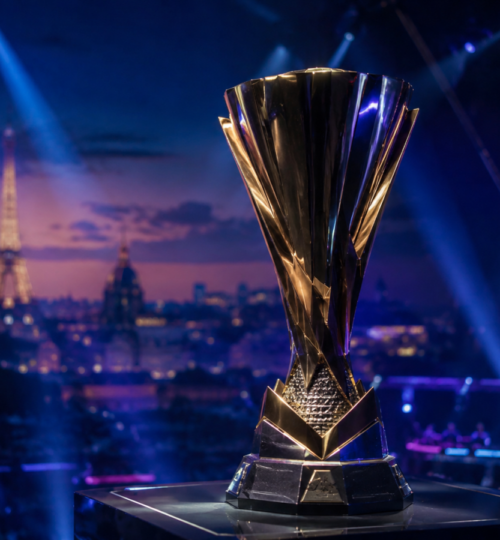
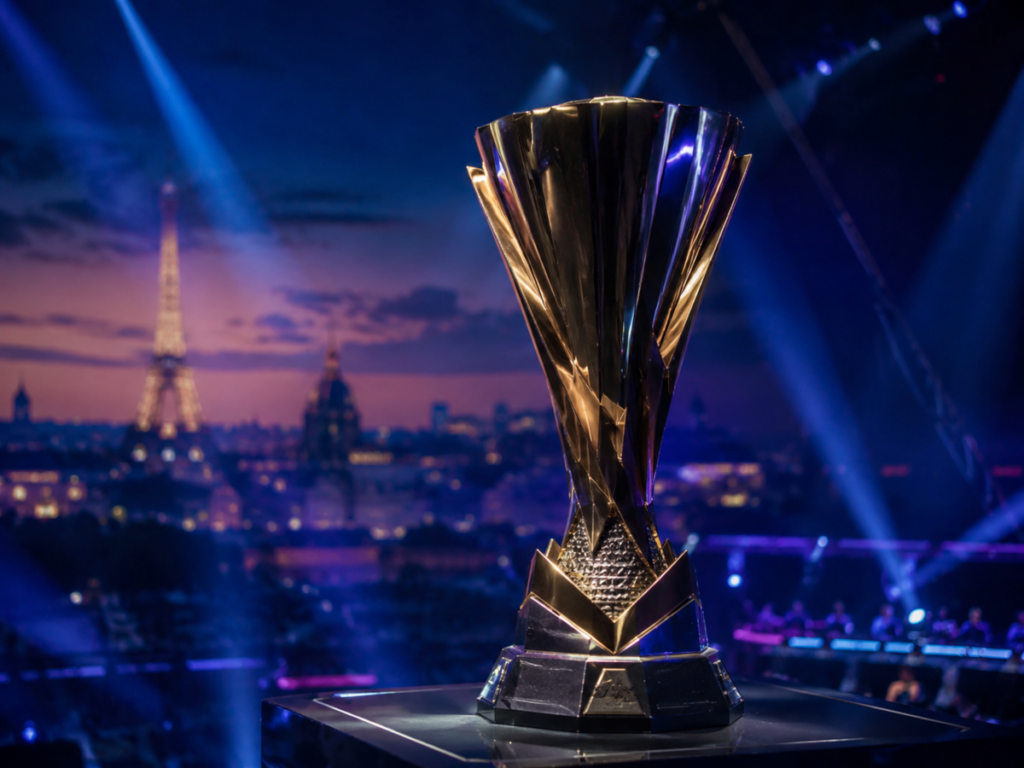
The Esports World Cup has returned for its third year, but almost everything surrounding the 2026 edition feels bigger. The tournament opened in Paris with more than 2,000 players, 200 esports clubs, and competition spanning 25 tournaments across 24 games. The event runs through August 23 at Paris Expo Porte de Versailles, with a total prize pool of $75 million, the largest announced purse in esports history.
Those numbers alone would have guaranteed attention. The opening ceremony made the organizers’ larger ambition even clearer. This was not presented as a collection of disconnected game tournaments. It was staged as a global sports and entertainment event, complete with a major concert venue, internationally known musicians, government involvement, and a broadcast operation built to reach viewers far beyond the usual competitive gaming audience.
For an esports industry that has spent the past several years dealing with layoffs, failed leagues, declining sponsorships, and unstable team finances, $75 million is more than a headline. It represents a new center of financial power.
Paris Replaces Riyadh at the Center of the Event
The Esports World Cup was originally scheduled to return to Riyadh, Saudi Arabia, where the first two editions were held. The January prize-pool announcement described Riyadh as the 2026 host and confirmed the July 6 through August 23 schedule.
The event was later moved to Paris amid security concerns connected to conflict in the Middle East. That relocation turned the 2026 competition into the first international edition of the Esports World Cup. It also placed the tournament in one of Europe’s most recognizable sports and entertainment capitals.
Paris gives the EWC something Riyadh could not offer this year. It places the tournament within easy reach of established European esports audiences, organizations, media companies, and sponsors. France already has deep roots in competitive gaming, from early Electronic Sports World Cup events to major Counter-Strike, League of Legends, fighting game, and publisher-run competitions.
The move also gives the EWC a stronger claim to being a traveling global championship rather than a large Saudi-hosted invitational. That distinction matters. A “World Cup” must eventually move beyond one permanent home if it expects fans to treat the name literally. Paris gives the organizers a chance to show that the production can travel, adapt, and still function at an enormous scale.
The Opening Ceremony Looked Beyond Esports
The official opening ceremony took place July 8 at La Seine Musicale, a major performance venue located on Île Seguin outside central Paris. DJ Snake, Aya Nakamura, and Theodora were the headline performers. Mosimann was also included in the entertainment lineup. The show was streamed through the official Esports World Cup channels, allowing the ceremony to work as both a live concert and an international broadcast. The choice of performers was deliberate.
DJ Snake provides international recognition and the kind of high-energy electronic production that fits naturally beside competitive gaming. Aya Nakamura brings massive French and European appeal, while Theodora represents a younger generation of French music culture. The lineup connected the tournament to its host city without making the ceremony feel like a regional side event.
The production also helped separate the EWC from the traditional esports opening formula. Competitive gaming events often begin with player introductions, dramatic lighting, a trophy reveal, and a short promotional video. Paris received something much closer to the opening of a major international sporting festival.
That approach has advantages. Music can attract viewers who do not follow any of the games being played. It gives sponsors more material to promote and provides mainstream media with recognizable personalities who require no explanation.
There is a tradeoff. A ceremony packed with celebrity performances can make the players feel secondary if the competitive side is treated as another piece of entertainment programming. Esports fans have seen organizers spend heavily on stages and musical guests while tournament formats, practice conditions, or player treatment received less attention.
The real measure of the Paris production will not be the size of the opening-night show. It will be whether that same attention carries into match scheduling, observer quality, competitive rulings, stage consistency, and the individual championship broadcasts.
A Tournament Built Around Clubs, Not Just Games
The most distinctive part of the Esports World Cup remains its Club Championship. Each game still crowns its own winner, but results also generate points for the organizations represented across the event. Clubs that compete successfully in several titles can climb a combined ranking and pursue an additional championship prize.
Of the $75 million total, $30 million is assigned to the Club Championship standings. The top 24 organizations will receive a share, while the overall winner earns $7 million. More than $39 million is distributed through the individual game championships, with the remaining money going toward qualifiers, most valuable player awards, and other performance incentives. This system rewards organizational depth.
A club with one elite roster can win a game championship and still leave Paris with a major victory. A club seeking the overall EWC title needs competitive teams across several games. That favors organizations capable of funding large international operations rather than those built around a single community or title. Team Falcons enters 2026 as the two-time defending Club Champion after winning in both 2024 and 2025.
The structure gives fans a larger season-long storyline. A Counter-Strike result may affect the same club’s standing before its Rocket League, Dota 2, Mobile Legends, or fighting game competitors take the stage. Supporters are encouraged to follow the organization across several communities instead of disappearing once their preferred tournament ends. That is smart event design. It also pushes esports toward a model that resembles traditional multi-sport clubs.
What $75 Million Actually Changes
Prize money does not fix every financial problem in esports. It can, however, alter team behavior very quickly. Organizations now have a direct financial reason to sign rosters in games they previously ignored. A club that traditionally operated in two or three PC titles may decide that adding a mobile team, fighting game player, or racing division improves its chances in the combined standings.
That expansion can create jobs for players, coaches, analysts, managers, editors, and production staff. It can also raise salaries or signing bonuses for competitors likely to earn championship points. The risk is that some of those positions may exist only for the EWC cycle.
Esports has a long history of organizations entering a game shortly before a profitable tournament and leaving once the opportunity disappears. A large annual prize pool could support more teams, but it could also produce temporary rosters assembled to collect points and prize money.
The difference will depend on contracts and long-term commitments. Players need agreements that protect them after the final Paris match, not just during the qualification and tournament period.
The prize distribution also favors winning at the highest level. That sounds obvious, but many esports scenes need support below the top 20 organizations. Amateur leagues, semi-professional teams, local tournament organizers, collegiate programs, and independent community ladders remain the entry points that produce future champions.
The Road to EWC system involved more than 1.5 million players across 330 qualification events, publisher leagues, and international circuits. That gives the competition a broader base than a closed invitational, even though the largest financial rewards remain concentrated at the top. For smaller teams, simply reaching Paris can provide exposure. Staying alive afterward is another issue.
The Scale Creates Pressure on Other Tournament Operators
The EWC does not exist in an empty part of the calendar. Every week assigned to its championships overlaps with publisher circuits, regional leagues, player breaks, transfer periods, and independent events. Seven weeks is a major block of time.
Publishers will increasingly have to decide whether to build their competitive seasons around the EWC, work beside it, or challenge it. Teams will favor schedules that lead toward the largest available rewards. Players may also place greater value on an EWC qualification route than a historic tournament offering more prestige but far less money.
That could weaken older events if dates collide. It could also improve coordination across the industry if publishers treat Paris as a shared endpoint. The inclusion of 24 games gives the EWC considerable influence over which titles receive global attention during the summer. Games included in the program gain a major stage, a dedicated prize pool, and access to a huge broadcast network. Games left out may struggle for attention during the same period.
Organizers reported more than 100 broadcast partners, 5,000 co-streamers, and plans to produce over 7,000 hours of live content during the event. That volume is extraordinary. It is also difficult to manage.
Few viewers will follow every competition. Most will select a handful of games, teams, or personalities. The challenge is helping fans move between titles without reducing every broadcast to an advertisement for the Club Championship.
Big Money Does Not Erase the Political Debate
The Esports World Cup Foundation and the broader Saudi investment campaign remain controversial. Saudi Arabia’s Public Investment Fund and related companies have spent heavily across gaming and esports, including investments, acquisitions, event operations, publishers, and tournament platforms. Critics describe part of that activity as “esportswashing,” arguing that sports and entertainment spending is being used to improve the country’s international image while drawing attention away from its human rights record.
Moving the tournament to Paris does not remove that debate. In some ways, it expands it. The event received a formal welcome from Paris officials, while the French government supported the relocation and assisted with practical matters such as visa processing. Le Monde reported that Saudi Arabia was covering the organizational expenses and that French officials projected significant indirect economic activity from hosting the event.
Some French esports figures have also criticized the limited participation of local production companies and questioned how much the domestic industry will gain once the stages are dismantled. Those concerns deserve space beside the match results.
Fans do not have to ignore the competition to discuss who finances it. Players do not surrender their achievements because of the event’s ownership. Both realities can exist at once. The games are real, the careers are real, and the political strategy behind the spending is real. Pretending otherwise only makes esports coverage weaker.
The Record Prize Pool Raises the Standard for Everyone
The $75 million purse rises from $71.5 million in 2025, continuing an expensive growth pattern that few other organizers can match. That money establishes a new benchmark, but prize totals should not become the only measure of success. Esports history is filled with ambitious events that looked unstoppable until budgets changed, sponsors disappeared, or owners shifted direction.
A healthy competition must become valuable beyond its purse. Players should want the title because of who they defeated. Fans should remember the matches, rivalries, comebacks, and upsets. Clubs should build lasting identities instead of treating each game as another row in a financial spreadsheet.
The 2026 Esports World Cup has the money, scale, venue, and production strength to control the summer esports conversation. Its harder task is building a championship that players would still chase even if the prize pool stopped breaking records.