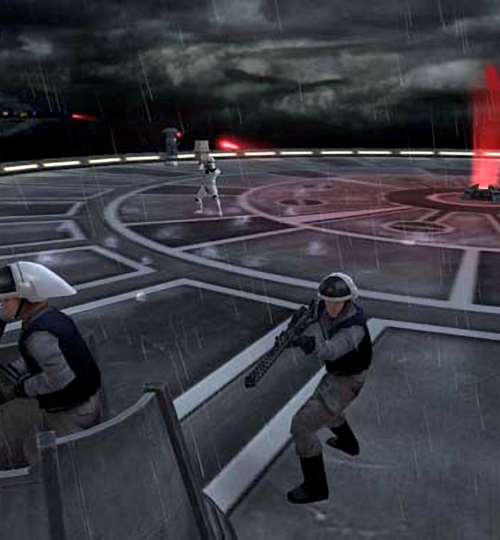
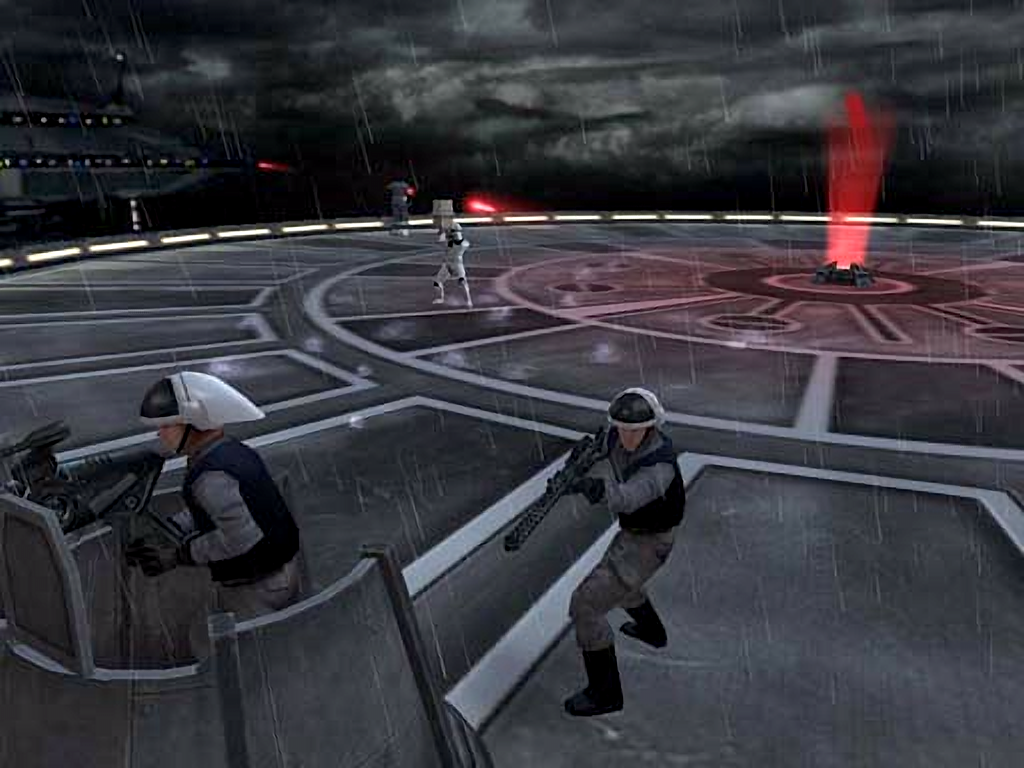
A big, loud Star Wars sandbox that still understands what “fun multiplayer chaos” means.
Some games age like a museum piece. Others age like a well-worn controller: the plastic gets shinier, the sticks get loose, but when you pick it up, your hands remember exactly what to do.
Star Wars: Battlefront II (Classic 2005) is the second kind.
 Released in late 2005 and developed by Pandemic Studios, this was the Battlefront that took the idea of “play the movies” and made it work at scale. It did not just add content. It improved the whole structure. It tightened infantry combat, expanded the class system, made vehicles feel more readable, and, most importantly, added space battles that were not a gimmick but a full mode with its own rhythm.
If you only know the modern Battlefront era, the Classic version might look simple at first glance. Then you drop onto a planet, hear the command post alarm blaring, watch a walker stomp through the skyline, and realize the game is doing something modern shooters sometimes forget: it is letting you play.
The core loop: capture, hold, escalate
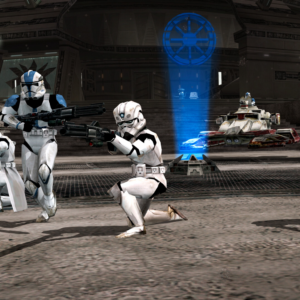 At its heart, SWBF2 Classic is built around Conquest, a mode that feels like an arcade-friendly cousin of Battlefield. Two teams fight over command posts, your team’s ticket count drains as you lose ground, and the match becomes a push-pull over the map’s most valuable positions. It is easy to understand in 30 seconds, but it stays interesting because of how many tools the game gives you to solve the same problem.
You can win a fight by outshooting someone. You can win by flanking with a faster class. You can win by taking a vehicle and breaking a stalemate. You can win by ignoring the fight entirely and stealing the “quiet” command post that flips the whole scoreboard.
That flexibility is why the game supports both casual and organized play so well. Even when everyone is just messing around, the match still has shape. When people get serious, the rule set is already there.
Classes that actually matter
SWBF2 Classic’s infantry is built around distinct roles, and for a 2005 shooter it is surprisingly readable. You generally have:
- A standard trooper that handles mid-range fights
- A heavy class with explosive pressure and anti-vehicle utility
- A stealth or recon style class that specializes in positioning
- A support class with team value and survivability tools
- Faction variations that keep the “feel” consistent while still staying Star Wars
This is one of the game’s quiet strengths. The class system is not overloaded with perks and unlock trees. It is built to be understood quickly and replayed endlessly. You switch roles based on what the match needs right now, not because your build demands it.
That also helps competitive formats, because the game’s choices are tactical instead of grind-based. Your advantage comes from decisions and teamwork more than “who has the better unlocks.”
Gunplay, hit detection, and why it still feels stable
The shooting in SWBF2 Classic is not modern-milsim crisp, but it is consistent. Blasters have personality without turning every engagement into randomness. Projectile speeds, recoil behavior, and faction weapon identity create a predictable combat language. You learn what a fight looks like before it happens.
On PC, the game’s stability and responsiveness became a major reason it held multiplayer communities for so long. Even today, it is a game where you can play a long session and feel like outcomes generally match what you did, not what the netcode guessed you did.
There are still quirks, because it is a product of its era, but the foundation holds up.
Vehicles: powerful, not invincible
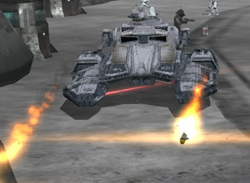 Vehicles in SWBF2 Classic are a big part of the fantasy. Walkers, speeders, tanks, and flying craft let you lean into Star Wars scale. The important part is that they are strong without being “the whole game.”
A good pilot can dominate, sure, but vehicles are also clear targets. Infantry has answers. Maps have chokepoints and cover that create counterplay. If someone is farming in armor, the match usually provides tools for the other team to respond, especially if players coordinate.
This balance is why Conquest stays fun. Vehicles are spice, not the entire meal.
Space battles: the feature that changed everything
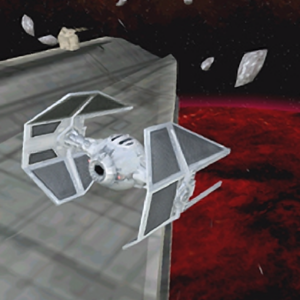 The original Battlefront had space as more of a background theme. SWBF2 Classic made it a mode with structure.
Space battles are not just dogfights. They are multi-stage objectives. You fight outside the capital ships, disable key systems, board the enemy ship, and destroy it from the inside. The mode blends flying skill with infantry pressure in a way that is still satisfying now. It is chaotic, but it is not random chaos. There is a plan underneath the lasers.
Space also becomes a different type of teamwork game. You can be the ace pilot. You can be the support ship that plays objective. You can be the person who boards and blows the guts out of the enemy systems. The match has roles, even if nobody formally assigns them.
Heroes and villains: messy balance, incredible fun
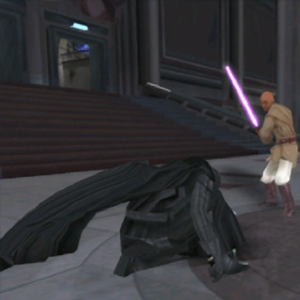 Let’s be honest: heroes in SWBF2 Classic are not perfectly “fair” in the modern esports sense. They are power spikes. They are momentum swings. They are also part of why people remember this game with so much affection.
The hero system works because it is tied to performance and flow. When you earn a hero, it feels like a reward. When the enemy gets one, it feels like a threat you need to answer. On some maps, a smart hero player can crack a stalemate. On others, a hero can get focused down if they overextend.
In modes like Heroes vs Villains, the game becomes a different beast: tighter duels, ability timing, positioning, blaster discipline, and map control. It is a more personal kind of fight than Conquest, and it is one of the reasons the community found so many ways to organize competition around the game over the years.
Modes and variety that actually stick
One underrated part of SWBF2 Classic is just how many modes it supports without feeling like filler. Beyond Conquest and Space Battles, you get:
- Capture the Flag, which works well because movement and map routes are readable
- Hunt, which is silly and surprisingly replayable as a palate cleanser
- Assault-style objectives depending on map and platform variations
- Instant Action and offline options that made the game last for people who were not living online
This spread matters because it keeps a community from collapsing into one format. People can rotate. They can run events. They can keep the vibe fresh even when the core gameplay stays the same.
Single-player and Galactic Conquest: a smart “extra”
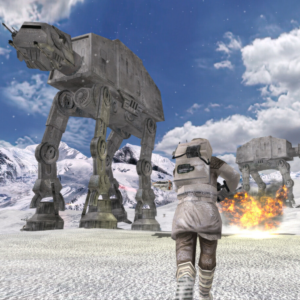 SWBF2 Classic’s single-player content is not trying to be a cinematic campaign in the modern sense. It is more like a structured way to learn the game and live inside the Star Wars fantasy.
The standout is Galactic Conquest, which turns Battlefront’s matches into a strategic board-game layer. You pick planets, manage resources, and fight battles that have consequences.
It is not super deep strategy, but it is exactly deep enough to make “just one more planet” a real problem at 2 a.m. For a lot of players, this mode was the bridge between casual play and multiplayer confidence.
Sound and atmosphere: still doing heavy lifting
This is a Star Wars game, so vibes matter. SWBF2 Classic nails the essentials: iconic sound effects, the familiar weapon audio language, the chaos of battle chatter, and music cues that make a random firefight feel like a scene.
Visually, it is clearly a 2005 title, but art direction does the work. Silhouettes are readable. Factions are distinct. Maps feel like places you remember, even if the geometry is simpler than modern games. The result is a game that still looks like Star Wars in motion, not just in screenshots.
Playing it today on PC
If you are on PC, the Steam version makes it easy to get running on modern systems, and it remains widely accessible there.
Multiplayer history gets complicated because the classic era leaned on services that did not last forever. The GameSpy shutdown era hit a lot of older games, including Battlefront II, but the community has historically found ways to keep things alive through alternate services and hosted solutions.
Also worth knowing: the game has a long mod culture, and that mod culture is a big part of why it stayed relevant. Mods can add maps, tweak balance, and refresh the experience, but they can also create fragmentation depending on what servers are running. In other words, it is the classic PC blessing and curse. Huge creativity, occasional compatibility headaches.
The real reason it endured
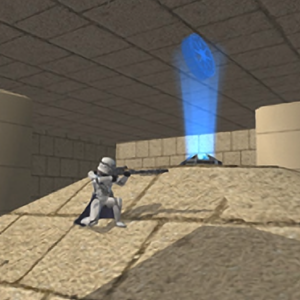 Plenty of shooters from 2005 are “good for their time.” SWBF2 Classic is better than that. It endures because it nailed three things at once:
- A simple objective structure that always produces a real match
- Enough variety to support different moods and skill levels
- A Star Wars fantasy that still feels playful instead of over-scripted
It is not trying to be a hyper-optimized competitive shooter. It is a sandbox with rules, and that is why both casual chaos and organized play can live in the same game without it falling apart.
Who should play it now
You will get the most out of SWBF2 Classic if you are one of these people:
- You want a Star Wars multiplayer game that is more about momentum and moments than progression systems
- You miss the era where shooters shipped with a bunch of modes and offline options
- You enjoy “structured arcade warfare” more than strict simulation
- You like communities that keep a game alive through events, mods, and private servers
If you need modern matchmaking polish, modern anti-cheat expectations, and perfectly tuned competitive balance, you will feel the game’s age. But if you want a Star Wars game that still understands the joy of big battles and quick resets, it delivers.
Verdict
Star Wars: Battlefront II (Classic 2005) is a legacy multiplayer game that still earns its reputation. It expands the original Battlefront in every direction that mattered, and it does it with a design philosophy that feels refreshingly direct today: give players a battlefield, give them roles and toys, and let them create the stories.
Even two decades later, it remains one of the most replayable “jump in and fight” Star Wars games ever made, not because it is perfect, but because its core is strong, flexible, and built for the long haul.
GWL Star Wars Battlefront 2 Classic (2005) Game Page
Available: Star Wars Battlefront 2 Classic (2005) on Steam